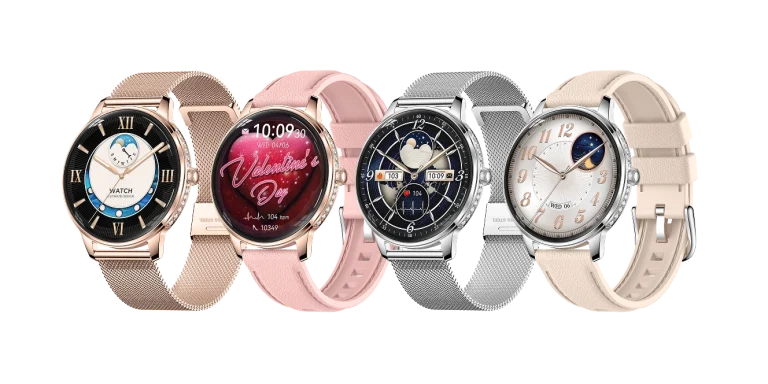
1. Medical-Grade Non-Invasive Physiological Monitoring
The future of female smartwatches lies in the transition from basic wellness metrics to actionable clinical insights. Modern OEM production lines are integrating dual-frequency PPG optical sensors capable of continuous blood oxygen (SpO2) saturation analysis, nocturnal HRV tracking, and non-invasive blood glucose trend evaluation. Advanced algorithms calculate temperature fluctuation deltas (+/- 0.1°C precision) during sleep cycles, providing users with highly accurate natural cycle predictions and stress index scores directly on their wrist or white-label mobile app.
2. Ultra-Thin Hardware Integration & High-Density Battery Chemistry
Historically, adopting smaller watch cases resulted in severe battery life trade-offs. Recent hardware advancements sourced by Worldwell incorporate Silicon-Carbon anode lithium polymer batteries, offering a 15% to 20% higher energy density than traditional graphite anode cells. When paired with 22nm low-power dual-engine Bluetooth SoCs (which automatically switch processing loads between high-performance cores and ambient sensor-monitoring cores), 38mm-42mm women's smartwatches can now effortlessly maintain 5 to 7 days of real-world operational battery life.
3. Skin-Friendly Hypoallergenic Materials & PVD Finish Innovations
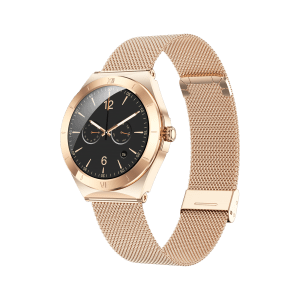
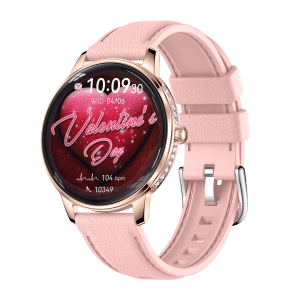
Consumer satisfaction in female wearables is heavily dictated by material touch and tactile luxury. Brands are increasingly moving away from cheap electroplating toward vacuum Physical Vapor Deposition (PVD) titanium-gold coatings and ceramic bezels. These materials resist sweat oxidation, cosmetic corrosion, and color fading over extended usage. Furthermore, straps made from food-grade liquid silicone, Milanese magnetic mesh, and genuine top-grain Italian leather undergo strict REACH nickel-release tests to eliminate contact dermatitis risks.
4. On-Device AI Voice Agents & Context-Aware UI
With the rapid miniaturization of micro-speakers and noise-canceling dual microphones, modern Women's Smart Watch designs now support native AI voice interaction. Users can initiate calendar entries, query fitness stats, control smart home devices, and receive audio responses. Custom firmware engines now allow B2B brand owners to embed localized voice models and proprietary brand avatars into the watch OS, strengthening customer retention and brand equity.