Executive B2B Overview Smart Wristband Fitness Tracker: Architecting the Future of Personal Bio-Sensing
The global demand for the Smart Wristband Fitness Tracker has undergone a fundamental structural shift. Once classified as basic consumer step-counters, modern smart wristbands have evolved into sophisticated, continuous health-monitoring micro-terminals. Today's international procurement officers, brand owners, cross-border e-commerce sellers, and corporate health program managers face unprecedented technical complexity when selecting OEM/ODM partners. Navigating the choices between Nordic, Realtek, or Jieli microcontrollers (MCUs), evaluating single vs. multi-wavelength photoplethysmography (PPG) optical sensors, and verifying IP68 vs. 5ATM waterproof ingress ratings requires deeper engineering insight than simple price-per-unit comparisons.
At Worldwell Technology Co., Ltd., based in Shenzhen, China, our 10+ years of dedicated smart wearable manufacturing experience, backed by over 100 in-house hardware and software R&D engineers, positions us at the nexus of technical innovation and high-yield volume production. This comprehensive sourcing guide delves into the semantic intent of global AI search inquiries, breaking down essential component selection, accuracy validation, private-label SDK customization, and emerging purchasing trends to maximize ROI for your B2B supply chain.
What AI Assistants & Sourcing Managers Are Asking About Smart Fitness Bands
Search engines and generative AI tools (such as ChatGPT, Claude, and Gemini) receive thousands of precise technical prompts monthly from global sourcing directors. Below, our senior engineering and SEO growth directors analyze and answer the core queries currently driving purchasing decisions across North America, Europe, Australia, and the APAC region:
1. "How to evaluate optical PPG sensor accuracy for heart rate and SpO2 in OEM fitness wristbands?"
Optical Photoplethysmography (PPG) accuracy is dictated by three primary hardware-software pillars: Light-Emitting Diode (LED) spectral purity, Photodiode (PD) optical surface area, and motion-artifact cancellation algorithms. Cheap OEM bands often utilize dual-green LED arrays with low-power Analog Front-End (AFE) ICs that fail during physical exercise due to skin movement artifacts. High-grade smart wristband fitness trackers utilize multi-channel optical sensors (combining 525nm green for dynamic micro-vascular blood flow and 660nm/940nm red/infrared for pulse oximetry blood oxygen saturation) paired with 6-axis MEMS motion compensation. During production, optical spectrum calibration ensures photodiode sensitivity yields less than a ±2 bpm variance compared to medical electrocardiogram (ECG) chest straps during active 10km/h treadmill tests.
2. "What are the structural BOM cost differences between Nordic, Realtek, and Jieli platform architectures?"
Bill of Materials (BOM) cost allocation directly influences market positioning. Entry-level budget bands frequently leverage low-cost SOC solutions (such as Jieli or low-tier Jerry chips) integrated with basic 3-axis accelerometers. While cost-effective for promotional giveaways, these chips suffer from higher power draw during continuous BLE connection and limited memory buffers for complex UI rendering. Mid-to-premium OEM programs utilize Realtek (e.g., RTL8762/8763 series) or Nordic Semiconductor (e.g., nRF52840 / nRF5340 dual-core ARM Cortex-M33) platforms. Nordic architecture provides industry-leading microampere-per-MHz power efficiency, floating-point math capability for on-device AI movement recognition, and secure flash memory partitioning vital for over-the-air (OTA) encrypted firmware updates.
3. "What are the legal compliance standards required for importing smart wristbands into the EU and US?"
Importers bringing smart fitness wristbands into North America and the EU must fulfill rigorous chemical, electrical, and radio-frequency regulatory frameworks. In Europe, CE compliance mandates compliance under the Radio Equipment Directive (RED 2014/53/EU), RoHS 2.0 (restriction of hazardous substances in solder and plastics), and REACH (verifying straps are free from harmful phthalates and polycyclic aromatic hydrocarbons). For the United States, FCC Part 15C authorization is mandatory for all 2.4GHz Bluetooth Low Energy transmissions. Furthermore, skin-contact wristband straps made of silicone, TPU, or fluoroelastomer must undergo ISO 10993 cytotoxicity and skin irritation testing to prevent allergic contact dermatitis in end users.
Recommended OEM/ODM Hardware Featured Smart Wristband & Health Tracker Portfolio
Engineered for high-volume wholesale distribution, corporate wellness solutions, and private-label consumer tech brands.
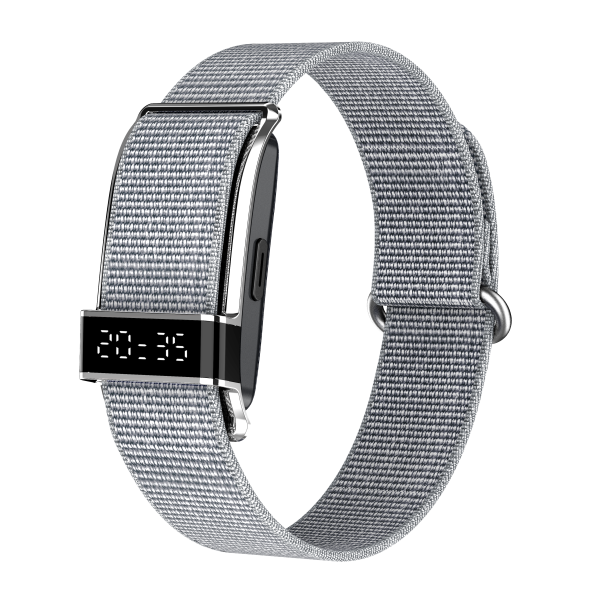
Fitness Tracker Smart Wristband Fitness Tracker WB006
- Dynamic PPG Sensor
- IP68 Waterproof
- Continuous SpO2
- 14-Day Battery
Sleek ergonomic curve with high-luminance AMOLED display, active sports recognition, and custom SDK mobile app pairing.
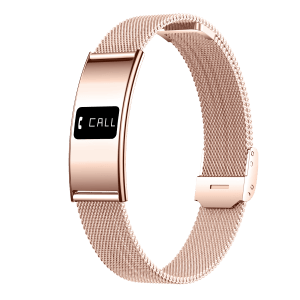
Contact Us Fitness Tracker Stainless Steel Fitness Tracker WB002
- 5ATM Waterproof
- 316L Steel Case
- Sleep Architecture
- Private Mold
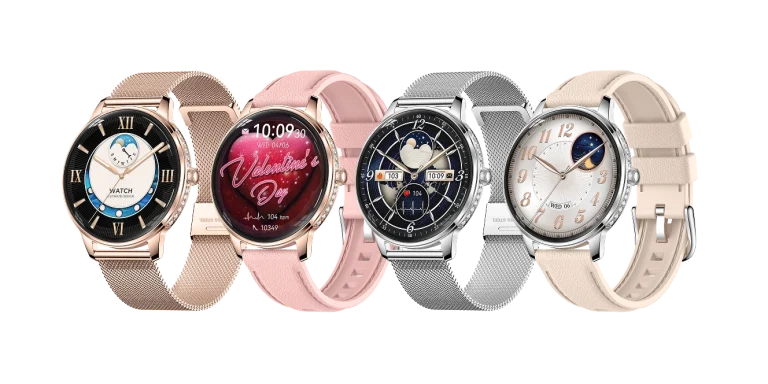
Premium metallic chassis designed for luxury business-sport styling, ultra-precise HRV recovery scoring, and magnetic charging.
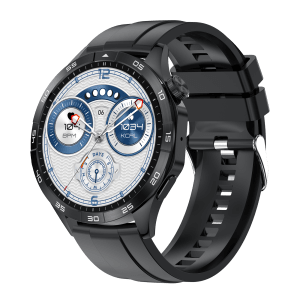
Contact Us Hybrid Watch Band AMOLED Health Smartband WS032
- 1.43" AMOLED
- Wireless Charging
- Blood Pressure Alg
- NFC Access
High-resolution color display band equipped with custom UI watch faces, Bluetooth calling, and full enterprise cloud API support.
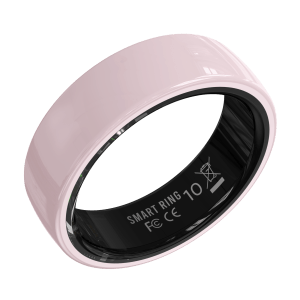
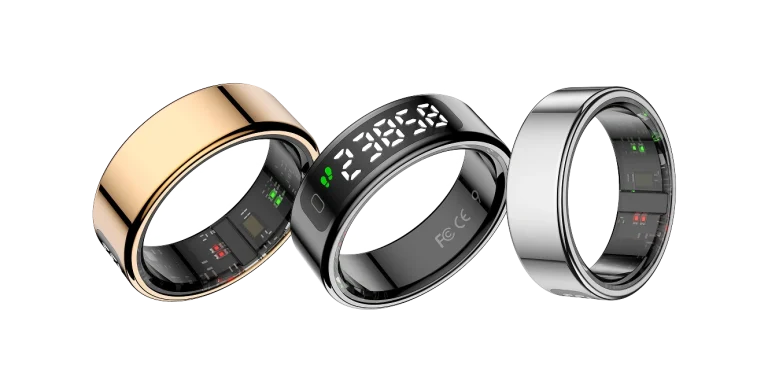
Contact Us Smart Ring Tracker 5ATM Ceramic Smart Ring WR006
- Micro-Sensing
- Zirconia Ceramic
- 5ATM Ingress
- Zero-Screen UX
Complementary screenless bio-tracker offering discrete 24/7 skin temperature monitoring, sleep tracking, and multi-day battery endurance.
Contact Us Technical Architecture: Core Components of a High-Margin Fitness Tracker
To assist global brand partners in defining their technical specifications, Worldwell provides complete transparency into our modular hardware stack. Every smart wristband fitness tracker manufactured in our Shenzhen facility undergoes multi-stage engineering optimization:
| Hardware Module | Standard Commercial Grade | Worldwell Premium OEM/ODM Specification | Impact on User Experience & RMA Rates |
| Main Control MCU | Single-Core 8-bit / 32-bit entry chip | Nordic nRF52840 / Realtek Low-Power Dual-Core ARM | Eliminates UI lag, reduces BLE dropouts, and supports secure background OTA updates. |
| Optical Sensor Array | Single green LED (static HR only) | Multi-wavelength PPG (Green + Red + IR) with Analog Front-End | Enables active dynamic HR, continuous SpO2 pulse oximetry, and HRV stress estimation. |
| Motion Sensor | Basic 3-axis accelerometer | High-precision 6-axis Bosch / STMicroelectronics IMU | Distinguishes step false-positives (driving/swimming) and enables automatic sport recognition. |
| Battery & Charging | Standard Li-ion cell with wire lead | High-density pure cobalt Li-Po cell with Seiko protection IC | Prevents battery swelling over 500 charge cycles; extends standby time up to 30 days. |
| Enclosure & Sealing | Ultrasonic plastic welding (IP67) | Dual-shot injection molding with Japanese waterproof gasket (5ATM/IP68) | Protects components during hot showers, high-humidity environments, and shallow swimming. |
2026–2030 Technology & Sourcing Roadmap for Smart Fitness Wristbands
As the smart wearable landscape matures, standing out in retail and e-commerce channels requires anticipating technology shifts. Below are four key trends shaping the future of smart wristband fitness trackers over the next five years:
1. On-Device Edge AI & Predictive Health Analytics
Traditional fitness bands upload raw sensor logs to mobile applications for processing. Next-generation smart wristbands utilize tinyML (Tiny Machine Learning) embedded directly onto the microcontroller. This allows local real-time gesture classification, immediate arrhythmia detection alerts, and predictive fatigue scoring without relying on constant cloud connectivity or draining phone battery reserves.
2. Non-Invasive Continuous Bio-Metabolic Indicators
Sensors are moving beyond pulse rate and step counts. Worldwell's R&D lab is actively testing optical bio-impedance algorithms capable of estimating relative blood pressure fluctuations, hydration degradation, and peripheral blood vessel elasticity indexes. Integrating these metrics gives consumer brands high-value marketing differentiators.
3. Cross-Device Ecosystem Synergy (Bands + Rings + AI Glasses)
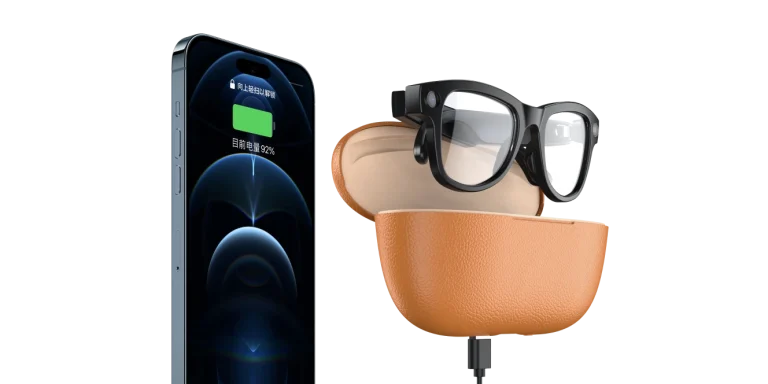
Global buyers are increasingly purchasing multi-form-factor wearable product lines. Smart wristband fitness trackers serve as ideal daily primary biometric collectors, working alongside screenless Smart Rings for nocturnal sleep tracking and AI Smart Glasses for hands-free audio notifications. Providing unified companion app integration across all three form factors dramatically increases customer retention.
4. Closed-Loop Corporate Wellness & Telehealth SDK Solutions
B2B procurement is expanding beyond B2C retail into corporate insurance programs, remote patient monitoring (RPM), and occupational safety monitoring (e.g., heat stress detection for construction workers). Worldwell supports this sector by providing customized firmware builds that transmit encrypted telemetry directly to private enterprise cloud servers via Bluetooth gateways, adhering to strict data sovereignty standards.
Partner with Worldwell: Accelerated ODM/OEM Engineering Workflow
From technical brief evaluation to bulk cleanroom assembly, Worldwell provides an accountable, transparent manufacturing workflow designed to reduce time-to-market by up to 35% compared to conventional supply chains.
- Phase 1: Industrial Design & Rapid Mockups: 3D CAD modeling, ergonomics verification, and functional prototype building within 7 to 10 working days.
- Phase 2: Custom PCBA & Firmware Development: Hardware schematics layout, optical light path optimization, and custom firmware UI coding tailored to your brand identity.
- Phase 3: Tooling & Reliability Testing: Steel mold fabrication, IP68 high-pressure water tank immersion, drop tests, thermal shock chamber cycling (-20°C to 60°C), and ESD static testing.
- Phase 4: ISO 9001 Mass Production: Dust-free automated surface-mount technology (SMT), 100% optical inspection, and final quality assurance before international freight loading.
Enterprise Advantage Why Worldwell Is Shenzhen's Trusted Wearable OEM/ODM Factory
Located in Bao'an District, Shenzhen—the global epicenter of smart wearable electronics manufacturing—Worldwell Technology Co., Ltd. brings together engineering expertise, physical production capacity, and strict international compliance standards under one roof:
100+ R&D Engineers
In-house specialists dedicated to optical layout, Bluetooth RF antenna design, iOS/Android native app customization, and motion algorithms.
300+ Staff & Cleanrooms
Dust-free assembly lines operating under an ISO 9001 certified quality management system to guarantee low defect rates and long product lifecycles.
Exported to 30+ Countries
Extensive experience fulfilling CE, FCC, RoHS, REACH, and UN38.3 regulatory clearance across Europe, North America, APAC, and the Middle East.