High-precision smart wearable hardware engineered for enterprise distribution, corporate procurement, and retail brand expansion in Vietnam.
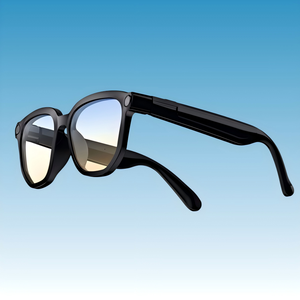
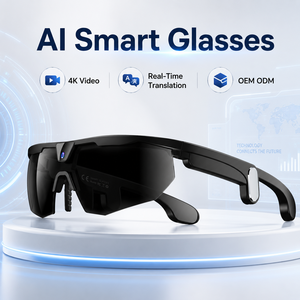
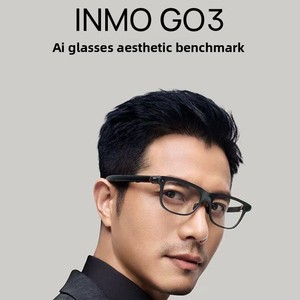
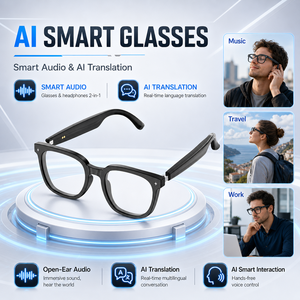
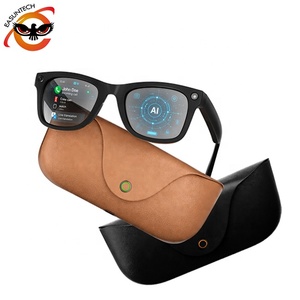
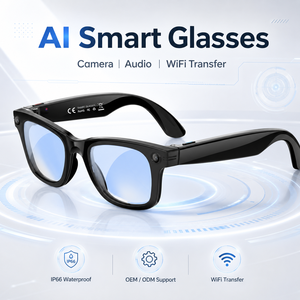

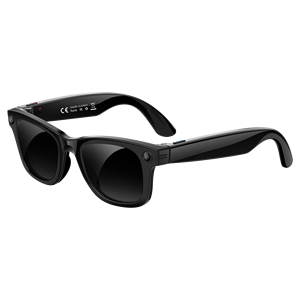
The convergence of wearable micro-electronics, spatial computing, and Large Language Models (LLMs) has catapulted AI smart glasses into the vanguard of next-generation consumer electronics. As Southeast Asia’s digital economy accelerates, Vietnam has emerged as a high-growth market for AI wearable devices. Localized business negotiations, cross-border commerce between China and Vietnam, tourism, urban scooter commuting, and industrial factory management are driving unprecedented demand for real-time translation, hands-free video recording, and audio-assisted smart eyewear.
For B2B buyers, electronics importers, and brand owners based in Ho Chi Minh City, Hanoi, Da Nang, and key manufacturing hubs such as Bac Ninh and Binh Duong, partnering directly with experienced Chinese original design manufacturers (ODMs) provides a distinct competitive advantage. This whitepaper analyzes technical architectures, localized application scenarios, regulatory compliance frameworks, and supply chain efficiencies essential for importing AI smart glasses into Vietnam.
When sourcing AI smart glasses from China factories, procurement managers must evaluate hardware and software parity across four core technological pillars:
The core value proposition for the Vietnamese consumer lies in seamless language interpretation. China’s leading AI wearable factories incorporate hybrid cloud-edge architectures. By embedding neural processing units (NPUs) into ultra-low-power Bluetooth System-on-Chips (SoCs), audio recording is digitized, pre-filtered for noise, and transmitted to cloud-based LLMs in milliseconds.
From 1080P resolution frames to ultra-HD 8MP 4K sensor configurations (such as the MT5 ULTRA series), micro-optics require delicate mechanical balancing. Lightweight frame engineering (down to 35g) prevents nasal bridge fatigue while incorporating electronic image stabilization (EIS) to counteract micro-vibrations generated during motion.
Vietnam’s urban transport ecosystem is uniquely reliant on motorbikes and scooters. Conventional in-ear headphones block ambient road noise, creating severe safety risks. OEM AI smart glasses utilize directional open-ear speaker systems or bone conduction transducers. Sound waves are focused directly into the ear canal, minimizing acoustic leakage while preserving total situational awareness of nearby traffic.
Vietnam experiences high relative humidity and sudden tropical monsoons. Chinese manufacturing partners specializing in Vietnam export lines enforce IP65 to IP66 ingress protection via conformal hydrophobic coatings on PCBAs, ultrasonic frame sealing, and rubber-gasketed micro-USB/magnetic charging ports.
How end-users and commercial clients in Vietnam deploy AI Smart Glasses across key industries.
Vietnamese traders handling agricultural, electronic, and textile logistics at Huu Nghi, Lang Son, and Mong Cai border gates utilize real-time voice translation glasses for instant Chinese-Vietnamese price negotiations without handheld translation devices.
In congested streets of Ho Chi Minh City and Hanoi, riders access audio turn-by-turn AI navigation while recording 1080P/4K travel vlogs hands-free, keeping both hands firmly on motorcycle handlebars.
Factory supervisors in Bac Giang, Dong Nai, and Binh Duong industrial zones wear camera-equipped AI smart glasses to live-stream field assembly issues to overseas technical consultants via low-latency Wi-Fi 6 connectivity.
As a top-tier Chinese smart wearable manufacturer, Worldwell provides end-to-end OEM and ODM capabilities engineered specifically for international trade compliance.
Decade-long mastery in PCBA layout, micro-acoustic tuning, and wearable battery safety management.
Dedicated hardware, firmware, and companion application developers capable of private mold realization.
Strict anti-static assembly environments ensuring minimal defect rates and optical lens clarity.
Fully compliant documentation ready for Vietnam customs clearance and global market distribution.
White-label iOS/Android apps localized with Vietnamese interface language and brand-specific SDKs.
Provision of China-ASEAN Free Trade Certificate of Origin (Form E) for preferential import duties in Vietnam.
Critical insights for Vietnamese procurement teams importing AI smart glasses from Chinese factories.
Yes. Our complete OEM service covers custom silkscreen logo printing on frame temples, customized power-on voice prompts (in Vietnamese or English), custom retail packaging boxes, and fully rebranded companion mobile apps (iOS and Android) featuring your brand logo and customized UI themes.
Our AI software engine integrates deep-learning speech recognition models trained on diverse Vietnamese datasets. This ensures high recognition accuracy across Northern (Hanoi), Central (Hue/Da Nang), and Southern (Saigon) accents, seamlessly converting them into English, Chinese, Japanese, Korean, or 160+ other global languages.
Standard sample orders are dispatched within 3-5 business days. Mass production OEM runs take approximately 15-25 days depending on tooling and component customization. Freight can be coordinated via land transportation (Shenzhen -> Pingxiang -> Huu Nghi -> Hanoi) within 3-5 days, or via air cargo directly to Noi Bai (HAN) or Tan Son Nhat (SGN) airports.
Absolute transparency is provided. As an authorized Chinese exporter, Worldwell issues official China-ASEAN Free Trade Agreement Certificate of Origin (Form E) documentation, allowing Vietnamese buyers to claim preferential low or zero import tariff rates upon customs clearance.
For ready-to-ship neutral inventory, MOQ starts at 10 to 50 units. For custom logo laser engraving, MOQ is typically 100-200 units. Deep OEM customization (custom packaging, app localization, firmware modifications) starts at 500-1,000 units per batch.
Connect directly with our engineering and B2B export team in Shenzhen for wholesale pricing, sample requests, and OEM project evaluations.