As the global wearable tech market transitions from basic step tracking to precision biometrics and AI-assisted real-time processing, sourcing partners must evaluate suppliers beyond mere unit costs. This benchmark report analyzes supply chain capabilities, component standards, software integrations, and strict quality control frameworks required for international distribution.
Directly sourced from certified manufacturing lines. Ready for custom logo branding, localized firmware tuning, private molds, and international compliance certification.
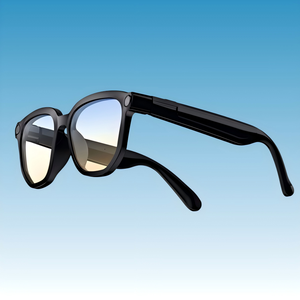
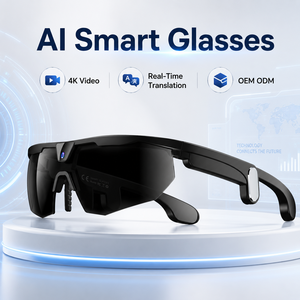

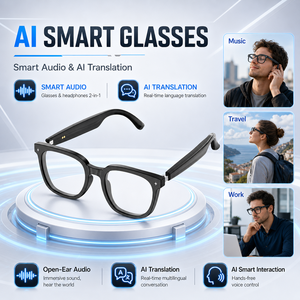
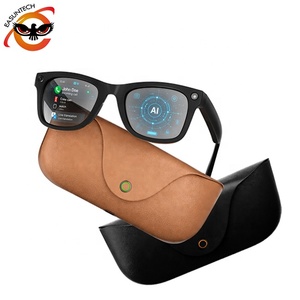
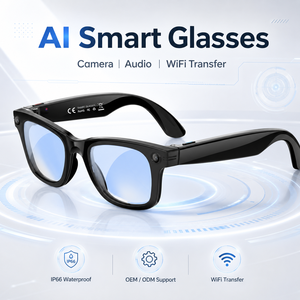

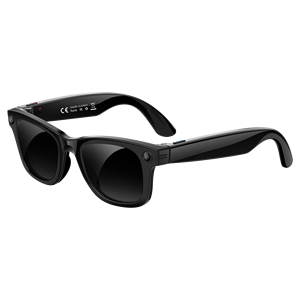
Distinguishing leading manufacturers from generic assembly workshops requires evaluating sensor calibration standards, power management IC design, and micro-encapsulation techniques.
Entry-level smart wristbands rely on single-channel green LEDs that suffer from optical interference during motion. Advanced OEM suppliers utilize multi-wavelength (Green, Red, Near-Infrared) sensor arrays paired with optical signal filters to continuously calculate SpO2, heart rate variability (HRV), and vascular impedance even under high-intensity movement.
Battery longevity dictates consumer retention. Elite manufacturing partners leverage low-power dual-core ARM Cortex-M architecture with integrated Power Management ICs (PMIC). This yields ultra-low standby power consumption (<15µA/h), granting devices a 10 to 14-day continuous operation window on a single 150–220mAh Li-Po cell.
Meeting true 5ATM / IP68 standards demands high-precision automated liquid silicone rubber (LSR) injection molding alongside structural glue dispensing. Premium suppliers perform 100% automated hydrostatic pressure chamber testing on every production lot, preventing water vapor ingress under real-world swimming conditions.
Technical Insider Note: When auditing potential B2B suppliers, demand proof of sensor signal-to-noise ratio (SNR) test reports, Bluetooth RF power output validation (TRP/TIS), and battery cycle test logs. Low-cost factories frequently skip post-assembly thermal cycling tests.
| Evaluation Parameter | Tier 1 Premium Manufacturers (e.g., Worldwell) | Generic Assembly Workshops |
|---|---|---|
| Optical PPG Sensors | Multi-channel array with dual Red+IR for precise SpO2 & HRV | Single-channel green light (high error rate during exercise) |
| Waterproof Rating | True 5ATM (50 meters pressure test) + LSR Gasket Seal | IP67 rating (glue sealant only, degrades over 6 months) |
| Firmware & SDK Support | Full API access, Android/iOS SDKs, OTA server customization | Closed fixed firmware, unbranded third-party app sharing |
| Quality Management System | ISO 9001 certified cleanrooms with 100% automated ATE testing | Manual visual inspection, sampling QA only (<5% batch check) |
| Compliance & Certifications | CE, FCC, RoHS, REACH, TELEC, BC battery safety certified | Self-declared compliance certificates without lab test reports |
Understanding macro trends allows enterprise buyers to preempt consumer demand and avoid stocking obsolete inventory. Here are five paradigm shifts redefining the smart wearable industry.
Future smart wristbands and connected AI wearables are moving processing off the cloud and directly onto tiny Neural Processing Units (NPUs) built into the SoC. This enables real-time voice translation, offline anomaly detection, gesture recognition, and instantaneous sleep stage analysis without requiring continuous smartphone pairing or cloud latency.
R&D investments are heavily focused on optical micro-spectroscopy and NIR (Near-Infrared) sensors aimed at tracking metabolic fluctuations and blood glucose trends. Suppliers offering pre-calibrated optical modules will capture massive market share in corporate wellness and medical-adjacent consumer electronics.
While smart bands remain the volume leader for fitness tracking, consumer demand is fragmenting into hybrid form factors—including lightweight smart rings with micro-sensors and AI-assisted audio glasses with integrated cameras and real-time voice assistants. Leading exporters are consolidating production across these inter-connected device ecosystems.
Regulatory changes in North America and the EU now emphasize repairability, circular economy materials, and toxic chemical elimination. Top suppliers are shifting to bio-based TPU straps, 100% recycled aluminum alloys, and packaging compliant with the upcoming EU Digital Product Passport (DPP) traceability standards.
Integration of Bluetooth 5.4 LE Audio and ultra-wideband (UWB) chips allows smart bands and smart wearables to serve as digital keys, seamless payment nodes, and cross-platform biometric authentication tokens for smart home systems and corporate security perimeters.
High-precision skin temperature sensors with 0.01°C resolution are becoming standard. When combined with advanced algorithmic modeling, suppliers can deliver tailored ovulation tracking, stress level scoring, and circadian rhythm optimization directly inside custom white-label mobile applications.
Backed by more than a decade of specialized R&D, Worldwell Technology Co., Ltd. empowers B2B brands, telecom operators, and retail distributors in 30+ countries with complete end-to-end hardware and software engineering.
From preliminary industrial design (ID) and mechanical engineering (MD) to PCBA layout design, embedded firmware creation, app companion development, and final packaging—Worldwell delivers turnkey hardware solutions under one roof.
Our in-house R&D powerhouse consists of 100+ hardware, optical, acoustic, algorithm, and cloud software engineers. We possess extensive patents in health monitoring algorithms, noise-cancellation acoustics, and power management.
Operating dust-free cleanroom assembly facilities in Bao'an District, Shenzhen, our factory executes strict 100% inline quality inspections. All exported models carry valid CE, FCC, RoHS, and REACH certifications issued by recognized testing labs.
Addressing key operational, technical, compliance, and logistical inquiries before starting a private label or custom ODM project.
For standard OEM projects (custom logo silk-printing, customized boot screen, customized gift box packaging using existing tooling), MOQ typically starts at 1,000 units per colorway. For complete ODM custom mold and PCBA developments, MOQ starts at 3,000 to 5,000 units depending on component specification and tooling complexity.
Our R&D team implements dynamic automatic gain control (AGC) algorithms paired with multi-wavelength LED drive circuits. The optical sensor automatically adjusts light intensity and sensor gain according to tissue density and melanin levels, ensuring reliable SpO2 and heart rate measurement across global demographic profiles.
Yes. We provide full white-label app customization services for both iOS and Android platforms. This includes customized app logo graphics, color themes, UI layout tweaks, server endpoint re-routing, localized multi-language translation, and SDK integration into your existing digital health ecosystem.
All products shipped by Worldwell comply with international safety, health, and environmental standards. We supply CE-RED, FCC ID, RoHS 2.0, REACH, UN38.3 (battery safety transport), and MSDS documentation. Testing reports from international labs such as SGS/TÜV/Intertek are available upon project confirmation.
Standard OEM orders with customized packaging and branding are produced within 20 to 25 calendar days following artwork approval. Complex ODM programs involving industrial design, tooling fabrication, SMT runs, and certification testing generally require 45 to 60 days from final blueprint sign-off.
Our ISO 9001 system enforces Incoming Quality Control (IQC) on all raw chips/display panels, In-Process Quality Control (IPQC) on SMT and cleanroom assembly lines, 100% automated pressure/hydro-testing, 100% battery burn-in testing, and Final Quality Assurance (FQA) inspection adhering to AQL 0.65 Level II standards.
Whether you require fast-turnaround OEM custom branding or bespoke ODM electronic design, our team of technical engineers and sales directors is ready to assist your procurement team.