
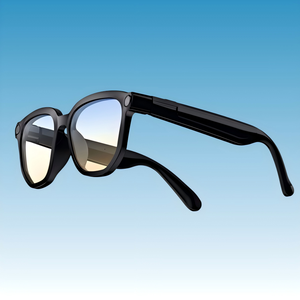
Directly from our Shenzhen manufacturing center: high-performance Android watches, wearable camera modules, real-time AI translation glasses, and biometric devices engineered for international B2B brands.
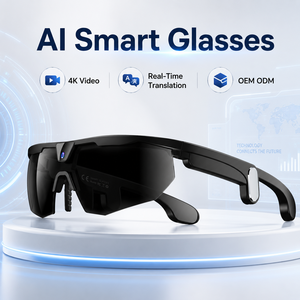
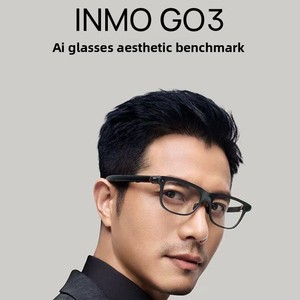
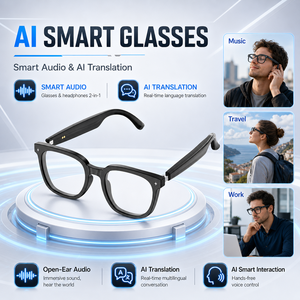
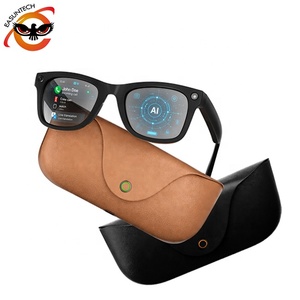
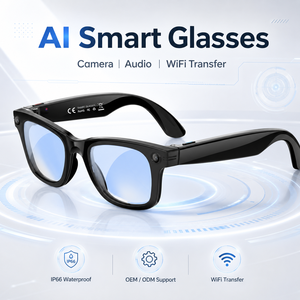

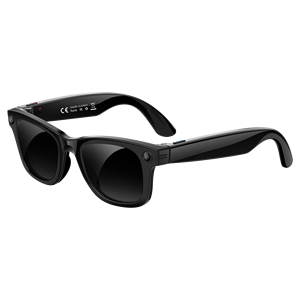
Headquartered in Shajing, Bao'an District, Shenzhen, Worldwell Technology Co., Ltd. operates a premier engineering hub for full-stack smart wearable design, hardware customization, and industrial manufacturing.
We provide end-to-end service spanning concept ideation, mechanical tooling, PCBA layout, custom firmware development, and companion app customization (iOS/Android).
Our engineering team masters high-density SMT layout, low-power microcontrollers (MCU), dual-engine Bluetooth chipsets, and optical sensor calibration for clinic-grade biometric tracking.
Operating within dust-free cleanrooms, our quality control workflow covers 100% incoming component inspection, automated optical inspection (AOI), and multi-stage ingress testing.
Choosing the correct system architecture is critical when specifying smartwatches for enterprise deployment, standalone cellular communication, or extended fitness telemetry.
| Architecture Criteria | Full Android OS (AOSP) | Wear OS by Google | Real-Time OS (RTOS) | Wearable AI Hybrid Platform |
|---|---|---|---|---|
| Primary Target Use Case | Standalone 4G Smartwatches, Independent Apps | Premium Retail Brands, Play Store Ecosystem | Fitness Trackers, Long Battery Life Watch | AI Translation Glasses, Camera Wearables |
| Processor Architecture | Quad-Core / Octa-Core (e.g., MTK6739 / UNISOC) | Qualcomm Snapdragon Wear 5100 / SW5100 | Low-Power MCU (Apollo4, Realtek, Bestechnic) | Dual RISC-V + NPU Edge Processor |
| Battery Life Range | 24 to 48 Hours (Cellular active) | 24 to 36 Hours | 7 to 14 Days | 6 to 12 Hours (Continuous video/audio AI) |
| App Extensibility | Full APK Compatibility (Native Android) | Google Play Wearable Ecosystem | Fixed Firmware / Pre-compiled Mini-Apps | Cloud-Linked LLM / Micro-App Extensions |
| OEM Customization Depth | Highest: Complete Kernel & Launcher Control | Restricted: Google Partner Standard UI | High: Complete ROM / UI Customization | High: Custom Prompting, API & Audio Paths |
For procurement officers, brand managers, and B2B distributors, staying ahead of technology shifts is essential for continuous market leadership. Here are the core hardware trends defining the next generation of wearables.
Modern Android watches and smart glasses are shifting heavy voice processing and contextual awareness from cloud servers directly to localized NPU chips embedded on the PCB. This reduces latency to under 200ms for real-time language translation, local voice control, and predictive health alert algorithms without requiring constant LTE/WiFi connections.
To bridge the gap between high-computing Android functionality and long battery life, manufacturers are deploying co-processor topologies. A high-performance application processor (AP) boots Android for complex tasks, while an ultra-low-power MCU manages background PPG heart rate sensing, step tracking, and Always-On Display (AOD) drive routines.
Standard single-green-LED sensors are being upgraded to multi-spectral optical clusters using green, red, and infrared wavelengths combined with dual-channel PPG receivers. This setup provides high accuracy for continuous SpO2 readings, arterial stiffness estimation, body temperature variation, and stress level monitoring via Heart Rate Variability (HRV).
The boundary between smartwatches, smart rings, and AI audio glasses is merging into unified wearable ecosystems. Using Bluetooth LE Audio, Auracast, and high-bandwidth local sync protocols, data collected by smart rings or glasses seamlessly feeds into central Android watch hubs or custom cloud dashboards.
Mitigate supply chain risk and accelerate time-to-market by following Worldwell's standardized engineering execution model.
Define hardware specifications including target display resolution (AMOLED vs. TFT), waterproof requirement (IP68 vs. 5ATM), battery capacity, and OS platform (Android AOSP, Wear OS, or custom RTOS).
Rapid 3D modeling and CNC prototype fabrication allow physical verification of ergonomics, antenna gain performance, and thermal dissipation before full-scale steel mold tooling opens.
In parallel with structural tooling, software teams compile the OS kernel, configure wireless FOTA servers, brand companion apps, and integrate target cloud API endpoints.
Essential answers regarding factory MOQs, software customization, global safety certifications, and supply chain logistics.
Connect directly with our engineering sales team in Shenzhen. Request product catalogs, precise BOM costing breakdown, or evaluate physical golden sample units today.