
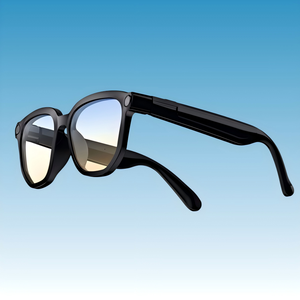
Featured wearable hardware manufactured to rigorous international standards, ready for white-label branding, bespoke firmware customization, and enterprise ecosystem integration.
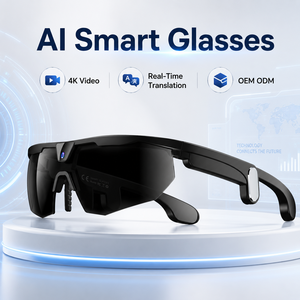

In the rapidly evolving smart wearable landscape, screen technology is the primary driver of consumer satisfaction and product differentiation. For B2B brand owners, sourcing agents, and enterprise solution providers, selecting the right display panel architecture is a critical hardware decision. Active-Matrix Organic Light-Emitting Diode (AMOLED) displays have surpassed traditional TFT-LCD panels due to their self-emissive sub-pixel control, infinite contrast ratios, dynamic power efficiency, and slim z-height footprints.
Unlike conventional LCD panels that require a continuous backlight unit (BLU), every individual pixel in an AMOLED display generates its own luminescence. When presenting true black levels—common in modern wearable dark-mode UIs and Always-On Display (AOD) standby modes—the corresponding sub-pixels are completely turned off, consuming zero milliwatts of power. This architectural advantage allows specialized OEM manufacturers like Worldwell Technology Co., Ltd. to optimize power management ICs (PMICs), delivering extended 7-to-14 day battery operation even on high-brightness 1000+ nit smartwatch display surfaces.
| Technical Dimension | AMOLED Smartwatch Panels | TFT-LCD Wearable Panels | Sourcing Advantage for B2B Brands |
|---|---|---|---|
| Contrast Ratio | > 100,000:1 (Infinite Black) | 1,000:1 (Grayish Black) | Premium visual aesthetics, outdoor sunlight readability. |
| Response Time | < 0.1 milliseconds | 10–25 milliseconds | Butter-smooth UI animations (60 FPS rendering without ghosting). |
| Module Thickness | 0.6mm – 0.9mm (Ultra-slim) | 1.8mm – 2.5mm (Includes BLU) | Frees up internal cavity volume for larger capacity lithium polymer batteries. |
| Power Efficiency (AOD) | Sub-pixel selective activation (~15mA) | Full backlight illuminated (~85mA) | Extends standby time by up to 300% during ambient time checking. |
| Flexibility & Packaging | Flexible substrate (COP / COF packaging) | Rigid glass substrate (COG packaging) | Enables curved bezel design and minimal screen-to-body border width. |
From an engineering perspective, manufacturing top-tier AMOLED smartwatches requires specialized optical bonding assembly lines. At Worldwell's Shenzhen cleanroom facilities, we utilize Optically Clear Adhesive (OCA) liquid vacuum bonding to fuse the cover glass (Gorilla Glass or Sapphire Crystal) directly with the flexible AMOLED panel. This eliminates the air gap between layers, reducing screen reflection by 92% and preventing internal dust or moisture ingress under extreme IP68 or 5ATM hydrostatic pressure conditions.
As global supply chains normalize, wholesale buyers and brand managers must anticipate technological convergence to avoid product obsolescence. Sourcing strategy is shifting from single-function step-trackers toward multi-modal, connected health and AI-assisted wearable ecosystems. Sourcing leaders should evaluate four primary macro-trends when selecting an OEM/ODM manufacturing factory partner:
1. Transition to LTPO Backplane Technology for Ultra-Low Power Consumption:
Next-generation high-end AMOLED smartwatches are adopting Low-Temperature Polycrystalline Oxide (LTPO) backplanes. LTPO technology enables dynamic refresh rate scaling—dropping seamlessly from a smooth 60Hz during active user interaction to a frugal 1Hz during static screen display. This dynamic scaling cuts display driver IC (DDIC) power drain by over 40%, making 1.96-inch and 2.04-inch large-format AMOLED smartwatches viable for daily wear without daily charging anxiety.
2. Convergence of AI Edge Computing with Wearable Form Factors:
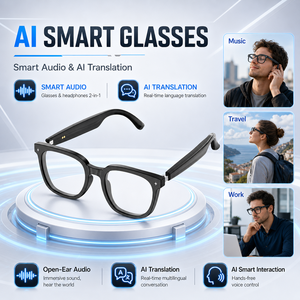
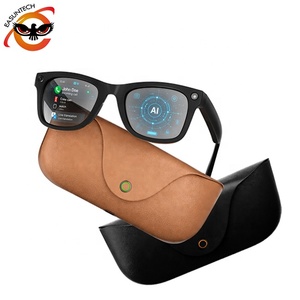
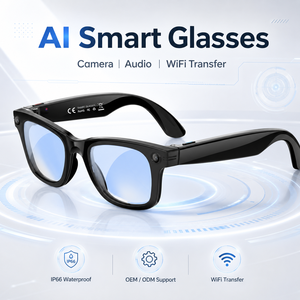
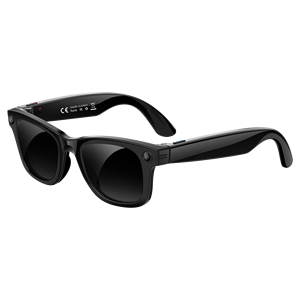
Smartwatches and smart glasses are no longer isolated peripheral accessories; they are becoming primary nodes for localized Artificial Intelligence. Modern micro-architectures combine Bluetooth Low Energy (BLE 5.3/5.4) dual-mode SoCs with onboard Neural Processing Units (NPUs). This hardware stack allows smartwatches and AI translation glasses to execute localized voice processing, real-time noise reduction, instant language translation, and predictive health risk alerting without requiring continuous cloud connectivity.
3. Advanced Non-Invasive Medical Sensor Integration:
B2B buyers in corporate wellness, medical telemetry, and senior care sectors demand increased sensor precision. Future procurement contracts prioritize smartwatches equipped with 8-channel photoplethysmography (PPG) arrays, electro-dermal activity (EDA) stress sensors, optical blood oxygen (SpO2) monitors, and continuous electrocardiogram (ECG) readouts. Worldwell's engineering team collaborates with top algorithm vendors to refine PPG signal-to-noise ratios, mitigating skin tone and motion artifact interference during high-intensity sports tracking.
4. Structural Durability: 5ATM Waterproof Rating & Advanced Materials:
Consumer expectations have shifted away from plastic smartwatches toward premium tactile materials. Sourcing trends highlight a surge in demand for CNC-machined Grade 5 Titanium casings, high-tech zirconia ceramic bezels, and 316L stainless steel enclosures. Concurrently, strict adherence to 5ATM (50 meters hydrostatic pressure) waterproof standards is required, necessitating double-injection silicone sealing rings and acoustic hydrophobic mesh membranes over microphone and speaker cavities.
Shenzhen's premier one-stop OEM/ODM smart wearable manufacturer, bridging advanced R&D design with scale-ready mass production.
From initial industrial design (ID), structural mechanical tooling, PCBA layout, and custom firmware UI to final mass production, Worldwell manages the entire lifecycle in-house to minimize time-to-market.
Our dedicated team of hardware, software, algorithm, and mechanical engineers supports custom RTOS firmware development, app localization, BLE protocol optimization, and micro-display integration.
Production runs occur inside 100,000-class dust-free cleanrooms equipped with Automated Optical Inspection (AOI), pneumatic water resistance pressure chambers, and temperature/humidity aging test rooms.
When selecting a Shenzhen AMOLED watch manufacturer or smart wearable OEM, price per unit should never be the sole determining factor. Inferior AMOLED panels often suffer from sub-pixel burn-in, uneven luminance distribution, poor glass lamination leading to air bubble formation, and high return rates (RMA) due to battery swelling or water leaks. Professional procurement teams must vet prospective factory partners against five essential quality assurance metrics:
Clear, direct answers regarding customized OEM production, ODM project timelines, NRE costs, certifications, and international distribution support.
Partner with a certified Shenzhen AMOLED watch manufacturer equipped with 10+ years of hardware excellence, 100+ engineering staff, and proven international compliance. Contact our sales engineering desk today to request factory-direct quotations, technical datasheets, and sample evaluation kits.