
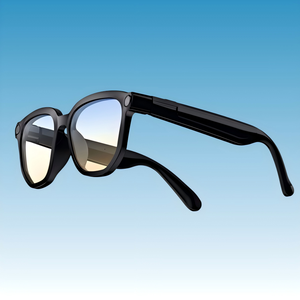
High-precision smart optical frames, anti-shake camera glasses, and multi-language translation smart eyewear engineered for fast turnaround and private labeling.
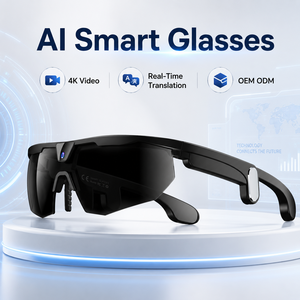

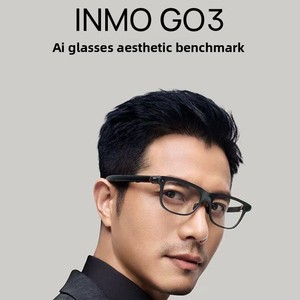
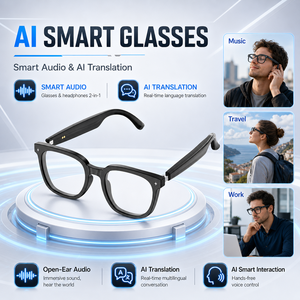
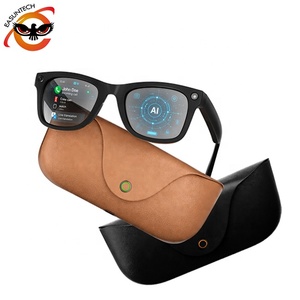
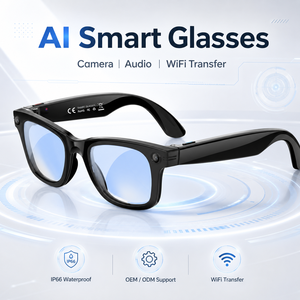
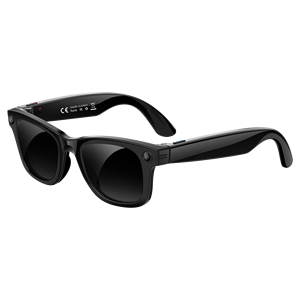
From optical engine micro-assembly to custom AI model cloud-to-edge synchronization, Worldwell supplies B2B global brands with verified precision and regulatory peace of mind.
Our 300+ staff operate high-precision SMT surface mount technology lines and Class 10,000 cleanroom optical module bonding facilities, eliminating dust artifacts during lens micro-integration.
Dedicated teams for spatial acoustic tuning, low-latency Bluetooth 5.4 protocols, dual-beamforming MEMS microphones, RTOS kernel customization, and iOS/Android white-label SDK development.
Every product series holds accredited CE, FCC, RoHS, and REACH testing reports. We assist enterprise buyers with UN38.3 battery transport safety and local telecommunications regulatory filings.
The global smart wearable industry is undergoing a structural paradigm shift. Audio-only glasses and basic fitness bands are transitioning into fully autonomous, multi-modal AI Smart Glasses powered by cloud Large Language Models (LLMs), edge neural processing units (NPUs), and micro-waveguide optical systems. For B2B procurement directors, brand executives, and consumer electronics distributors, selecting a top-tier OEM/ODM factory in Shenzhen requires evaluating not just frame aesthetic design, but core electronic architecture, acoustic beamforming, thermal dissipation, battery energy density, and long-term firmware upkeep.
When evaluating top trusted AI smart glasses manufacturers, tier-one buyers focus on four essential pillars that separate standardized novelty products from commercial-grade enterprise hardware:
Eyewear is inherently personal. Consumers refuse to wear devices exceeding 45 grams for extended periods. Worldwell’s latest architecture utilizes ultra-light TR90 memory materials combined with aircraft-grade aluminum hinges, keeping total frame weight as low as 35g (e.g., our MT5 ULTRA series). Crucially, micro-processing components—such as Wi-Fi 6 chips, Bluetooth 5.4 chipsets, and high-resolution camera ISPs—generate localized heat. Advanced ODM factories utilize graphite thermal sheets inside temple arms to radiate heat away from the wearer’s skin, preventing thermal throttling while maintaining continuous 4K video recording or multi-hour voice AI translation sessions.
Modern end-users expect their smart glasses to seamlessly interpret visual environments and vocal inputs. Through BLE/Wi-Fi dual-mode connectivity, Worldwell AI glasses communicate directly with smartphone companion applications to trigger API pipelines connecting ChatGPT-4o, Claude 3.5, and Whisper translation engines. Supporting over 164 languages and regional accents, our open-ear business glasses convert foreign speech into real-time audio streams or projected HUD text in under 350 milliseconds. Micro-electromechanical system (MEMS) dual-microphone arrays with noise-suppression algorithms isolate the target speaker's voice even in ambient noise environments like trade shows or airport lounges.
Open-ear audio leakage is a primary friction point for business executives. Advanced factories solve this through reverse sound wave phase cancellation and custom-tuned directional speaker cavities. Sound waves are directed straight toward the user's ear canal, reducing sound spillover by over 85% at a distance of 0.5 meters. This enables crystal-clear phone calls, private AI assistant interactions, and confidential business translation without compromising wearer awareness of surrounding city traffic.
| Technology Architecture | Core Advantage | Primary Application Field | OEM Target Weight Range | Procurement Feasibility |
|---|---|---|---|---|
| Open-Ear Voice + Camera AI | Low power, lightweight, high battery density, 4K snapshot capability | Vlogging, translation, voice query, sport tracking | 32g – 38g | High / Fast Time-to-Market |
| MicroLED Diffractive Waveguide | High contrast, daylight outdoor readable HUD, ultra-thin lens display | Teleprompter, turn-by-turn navigation, AR notification | 40g – 52g | Medium / Advanced ODM Program |
| MicroOLED BirdBath Optical Engine | Rich color depth, wide FOV movie viewing & immersive video media | Gaming, virtual cinema screen replacement | 65g – 85g | Specialized Enterprise Niche |
The next half-decade will solidify AI smart glasses as the primary gateway for spatial computing. To maintain competitive advantage, B2B procurement managers must understand the critical component updates currently undergoing engineering iteration inside tier-one factories:
Because wearable battery capacity inside temple arms is limited to 100mAh–280mAh due to strict weight bounds, energy efficiency is paramount. Modern architectures utilize Low-Power Bluetooth 5.4, ultra-low standby RTOS platforms, and high-density lithium-polymer coin cells. Worldwell has pioneered custom high-capacity magnetic charging cases (ranging from 1200mAh to 2000mAh) that provide 6 to 10 full recharges on the go. This effectively boosts total operation time to over 48 hours, eliminating consumer battery anxiety during international travel.
Recording smooth 1080P or 4K first-person perspective (POV) video from eyewear requires specialized camera sensor tuning. Head movement introduces micro-vibrations that distort video. By integrating 6-axis Gyroscope/Accelerometer ICs directly with spatial software Electronic Image Stabilization (EIS) algorithms, Worldwell’s camera-equipped AI smart glasses capture steady, high-definition action footage and clear image stills even while walking, running, or cycling. Captured content can be instantly synced to mobile devices via 5GHz Wi-Fi high-speed transfer protocols.
Speed to market is essential in consumer tech. Building a new smart glasses platform from scratch can require 9 to 12 months of tooling and engineering validation. Worldwell offers pre-certified, modular PCBA platforms that allow B2B clients to customize frame shapes (Wayfarer, Round, Executive Half-Rim, Aviator), rim finishes, lens tinting (polarized, photochromic, anti-blue light), logo placement, and companion app branding (UI design, localized app store deployment) within 4 to 6 weeks.
A major challenge facing global buyers importing smart wearables from China is unit-to-unit consistency. Reliable manufacturing partners mitigate defects through automated testing pipelines and rigorous quality management systems:
1. SMT & Component Inspection: Every incoming micro-chipset, sensor, microphone, and lens module undergoes strict AQL 0.65 sampling. Automated Optical Inspection (AOI) machines verify precision soldering on multi-layer flexible PCBAs.
2. Cleanroom Optical Alignment: Camera modules and waveguide optical engines are mounted inside dust-free cleanrooms to prevent microscopic particles from occluding sensors or display paths.
3. Acoustic Anchoic Chamber Calibration: Microphones and micro-speakers are individually calibrated inside anechoic acoustic test boxes to ensure frequency response matches target curves and noise cancellation algorithms perform accurately.
4. Environmental Stress & Waterproof Validation: Finished glasses undergo drop tests (1.5 meters), temple hinge flexing tests (over 20,000 continuous opening cycles), salt-spray corrosion exposure, and IP65/IP66 ingress protection water jet validation.
Everything international buyers need to know about starting an OEM/ODM AI Smart Glasses project with Worldwell Technology.
Get direct factory pricing, request functional evaluation samples, or schedule a technical consultation with our senior smart wearable engineering team today.