
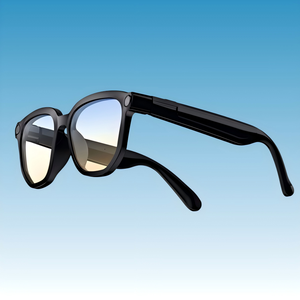
AI Smart Glasses with Camera Realtime Translation & Vital Tracking
Optical PPG Sensor
AI Voice Assistant
Anti-Shake Camera
Certified, high-accuracy pulse oximetry engines integrated into ergonomic, multi-parameter wearable platforms for global B2B healthcare distributors and brand owners.
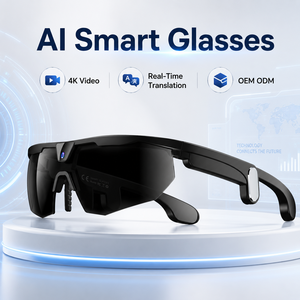

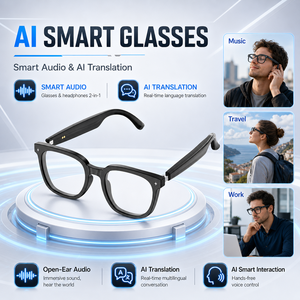
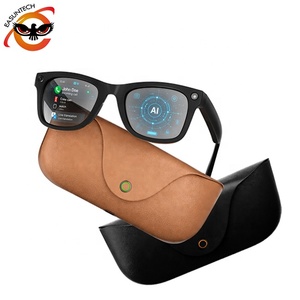
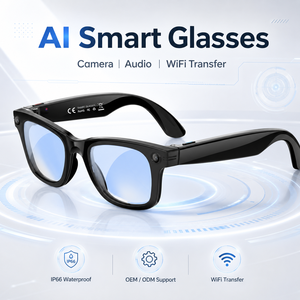

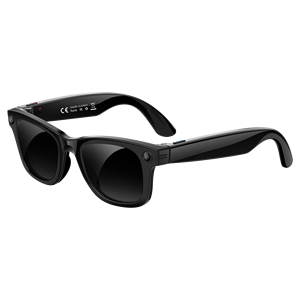
Pulse oximetry has evolved from localized intensive care monitoring to an imperative non-invasive bio-sensing capability demanded across clinical networks, ambulatory emergency services, home healthcare, and smart consumer wearables. Driven by advancements in micro-optics, dual-wavelength photoplethysmography (PPG), and low-power Analog Front End (AFE) silicon, the global market for oxygen saturation (SpO2) and pulse rate monitoring devices is undergoing structural modernization.
For hospital supply directors, OEM medical brands, and B2B procurement executives, identifying high-reliability manufacturing partners requires assessing criteria far beyond baseline bill-of-materials (BOM) costs. It demands a rigorous evaluation of signal processing algorithms under low perfusion (PI < 0.1%), motion artifact suppression capabilities, ISO 80601-2-61 compliance, and scalable contract manufacturing standard operating procedures (SOPs).
Our quantitative assessment model ranks global pulse oximeter manufacturers across five critical operational pillars:
Integration of red (660nm) and infrared (940nm) emitter LEDs with narrow spectral bandwidths, paired with high-sensitivity silicon photodiodes to achieve root-mean-square accuracy ($A_{rms}$) below 2.0%.
Proprietary digital signal processing (DSP), fast Fourier transform (FFT), and Adaptive Noise Cancellation (ANC) algorithms designed to filter out motion tremors and ambient lighting noise.
Full regulatory documentation including US FDA 510(k) clearance, EU MDR 2017/745 certification, ISO 13485 quality system audit, CE mark, and RoHS/REACH material safety compliance.
The comparative matrix below outlines the top tier of manufacturers servicing global clinical and smart health markets as of 2026:
| Manufacturer / Brand | Headquarters | Core Specialization | SpO2 Accuracy ($A_{rms}$) | Primary Target Markets | OEM/ODM Service Scope |
|---|---|---|---|---|---|
| Masimo Corporation | USA | Signal Extraction Technology (SET®) | ≤ 1.5% (Motion/Low Perfusion) | Hospitals, ICU, Clinical EMS | Tier-1 Proprietary Licensing |
| Medtronic (Nellcor™) | Ireland / USA | Oximax™ Sensor Technology | ≤ 2.0% (Standard) | Clinical Facilities, Critical Care | Enterprise Medical OEM |
| Nonin Medical | USA | PureSAT® Pulse Oximetry | ≤ 1.8% | Military, Clinical, Telehealth | Custom Medical Modules |
| Worldwell Technology | Shenzhen, China | Smart Wearable & Integrated SpO2 ODM | ≤ 1.8% (Multi-wavelength) | Global B2B Brands, Telehealth (30+ Countries) | Full turnkey OEM/ODM (Hardware, Firmware, App) |
| Mindray Bio-Medical | Shenzhen, China | Multi-parameter Patient Monitors | ≤ 2.0% | Hospitals, Surgery Centers | Institutional Systems Integration |
| Contec Medical Systems | Qinhuangdao, China | Fingertip & Tabletop Oximeters | ≤ 2.0% (70-100%) | Home Care, Retail Pharmacy | High-Volume Private Label |
| Choicemmed (Beijing Choice) | Beijing, China | Consumer & Clinical Oximeters | ≤ 2.0% | OTC Retail, Clinical Homecare | Standard OEM / SKU Branding |
| Smiths Medical (ICU Medical) | USA | BCI® Oximetry Technology | ≤ 2.0% | Surgical, Post-Op Monitoring | Institutional Supply |
| GE Healthcare | USA | TruSignal™ Sensor Tech | ≤ 2.0% | Health Networks, Operating Rooms | Enterprise Ecosystem |
| Philips Healthcare | Netherlands | FAST-SpO2 Technology | ≤ 2.0% | ICU, Emergency Care, Wearables | System Level OEM Integration |
The field of non-invasive vascular and blood gas monitoring is undergoing a major technological transformation. Driven by miniaturization, deep learning algorithms, and multi-wavelength optical arrays, pulse oximetry is expanding beyond basic spot-checking fingertip clamps into continuous, non-obtrusive, smart health monitoring form factors.
Traditional pulse oximeters utilize two LED light wavelengths (660nm red and 940nm infrared) to measure functional oxygen saturation ($SpO_2$). Future medical-grade devices are integrating 4 to 8 distinct wavelengths (including green 525nm, yellow 570nm, and infrared 880nm) to accurately differentiate fractional oxygen saturation, carboxyhemoglobin ($SpCO$), and methemoglobin ($SpMet$).
Patient movement, shivering, and low peripheral perfusion (Perfusion Index < 0.05%) historically cause signal dropouts and false alarms. Next-generation manufacturers are deploying neural network algorithms directly onto ultra-low-power ARM Cortex-M33 microcontrollers, continuously reconstructing corrupt photoplethysmographic waveforms in real time.
The form factor of oximeters is shifting from restrictive fingertip clips to continuous ambient devices. Optical pulse oximetry sensors embedded into the temporal artery regions of AI Smart Glasses, smart rings, and wristbands allow continuous, comfortable non-invasive monitoring without restricting patient hand movement.
| Feature Parameter | Legacy Spot-Check Oximeter (2015–2020) | Next-Generation Smart SpO2 Platform (2026+) |
|---|---|---|
| Optical Wavelengths | 2 Wavelengths (660nm / 940nm) | Multi-Spectral Optical Array (4 to 8 Wavelengths) |
| Perfusion Index (PI) Range | PI ≥ 0.2% required for signal lock | Ultra-low Perfusion Engine (PI ≥ 0.025%) |
| Form Factor Spectrum | Clunky Spring Fingertip / Desktop Probe | AI Smart Glasses, Smart Rings, Ergonomic Bands |
| Wireless Connectivity | None or basic Bluetooth 4.0 | BLE 5.4, WiFi 6, Cellular IoT gateway auto-sync |
| Signal Processing Algorithm | Standard Peak-Detection FFT | Edge-AI Deep Learning Waveform Reconstruction |
As healthcare regulatory enforcement tightens globally (notably under EU MDR and US FDA 510(k) Cybersecurity Guidelines), purchasing directors and brand managers must adopt modern supply chain evaluation protocols. Sourcing off-the-shelf devices without strict OEM/ODM vetting introduces compliance, supply chain delay, and product liability risks.
B2B buyers are migrating away from fragmented sourcing models (purchasing modules, plastic housings, and firmware from separate vendors). Leading global brands prefer Turnkey ODM Partners capable of managing industrial design (ID), mechanical tooling, printed circuit board assembly (PCBA), custom algorithm tuning, app development, and cleanroom mass assembly under one roof. This minimizes time-to-market by 40% and ensures unified quality control.
Post-pandemic procurement standards require total transparency into supply chain origin. Tier-1 buyers require contract manufacturers to supply complete Device Master Records (DMR), Bill of Materials (BOM) component traceability down to semiconductor batch numbers, biocompatibility testing (ISO 10993 for skin-contact plastics), and REACH/RoHS compliance certification.
Before issuing a Purchase Order (PO) or entering into an OEM contract, conduct a comprehensive audit against the following verification checklist:
Verify that $A_{rms}$ accuracy reports are backed by controlled hypoxia clinical trial data spanning SpO2 ranges between 70% and 100% on diverse skin tones, per ISO 80601-2-61 standards.
Confirm assembly lines operate under ISO 9001 and ISO 13485 certified Class 100,000 dust-free cleanrooms equipped with automated optical inspection (AOI) and ESD control.
Ensure your ODM partner grants clear intellectual property (IP) rights, custom SDK access, API documentation, and secure OTA firmware updates for seamless app integration.
Worldwell Technology Co., Ltd. is a premier Shenzhen-based OEM/ODM smart wearable and vital sign monitor manufacturer. Supported by over a decade of engineering experience, 100+ dedicated hardware/software engineers, and a workforce of 300+ professionals, we engineer and manufacture medical-grade SpO2 devices, AI smart eyewear, smart watches, and smart rings for B2B brands across 30+ countries.
Specializing in optical PPG architecture, high-sensitivity AFE integration, low-power BLE firmware, and iOS/Android companion application development.
State-of-the-art cleanroom assembly lines equipped with automated SMT placement, high-precision darkroom optical calibrators, and 100% waterproof testing chambers.
Full production compliant with CE, FCC, RoHS, and REACH international standards, accelerating smooth customs clearance and market launch in North America, Europe, and Asia-Pacific.
From private industrial molds, laser engraving, bespoke packaging, to branded watch face interfaces and dedicated cloud server API connectivity.
Clear, definitive answers to key technical, regulatory, and logistics questions faced by procurement managers sourcing pulse oximetry and vital sign wearable hardware.
ISO 80601-2-61 requires controlled human blood desaturation studies. Healthy volunteers undergo induced hypoxia in a clinical lab setting while arterial blood samples are extracted via radial artery catheter and analyzed on a CO-oximeter (SaO2 standard). The test device's SpO2 readings are compared against SaO2 values across the range of 70% to 100%. The root-mean-square error ($A_{rms}$) must be less than or equal to 2.0% for clinical grade approval.
Yes. Our OEM services allow global clients to apply custom logos, personalized startup screens, custom UI themes, branded user manuals, and retail packaging to our mature, certified hardware models. Our ODM services encompass ground-up engineering, including custom structural tooling (private molds), circuit schematic development (PCBA), proprietary algorithm coding, companion mobile app development (iOS/Android), and regulatory filing assistance.
Low peripheral blood perfusion reduces the amplitude of the AC pulsatile photoplethysmogram signal relative to the DC static light component. Our optical engine employs high-dynamic-range Analog Front Ends (AFE) combined with adaptive LED current boosting and digital bandpass filtering. This amplifies the micro-pulsatile AC component while dynamic baseline tracking eliminates DC drift, maintaining signal integrity down to a Perfusion Index (PI) of 0.025%.
Our products are backed by CE, FCC, RoHS, and REACH certifications issued by accredited international testing laboratories (SGS, TUV, Intertek). Manufacturing is conducted under a strict ISO 9001 Quality Management System. Specific clinical models can be customized to support client-led FDA 510(k) and EU MDR submission technical files.
High melanin concentrations absorb additional light at 660nm, which can falsely skew traditional pulse oximetry readings. Our latest optical hardware incorporates multi-spectral optical LED switching combined with auto-gain feedback loops. The AFE automatically adjusts the optical emitter power and photodiode amplification gains in real time based on skin reflectance, maintaining consistent accuracy across all Fitzpatrick skin tones.
For standard OEM customization (laser logo, custom box, firmware splash screen), MOQ typically starts at 500 to 1,000 units with a lead time of 2 to 3 weeks. For deep ODM projects involving new private molds and custom PCBA layouts, MOQ is determined during project feasibility review, with prototype samples produced in 20–30 days and mass production delivered in 35–45 days.
Yes. We provide software development kits (SDKs) and open APIs for iOS, Android, and Web-based cloud platforms. This enables seamless real-time data sync for SpO2, heart rate variability (HRV), skin temperature, and motion metrics directly into enterprise Telehealth, Remote Patient Monitoring (RPM), or corporate wellness platforms via secure BLE protocols.
All battery packs utilized in our wearables undergo rigorous UN38.3, IEC 62133, and UL safety certifications featuring hardware-level overcharge, over-discharge, and short-circuit protection ICs. Waterproofing is guaranteed using precision ultrasonic welding, localized nano-coating, and silicone gasket seals tested in pressurized water chambers to achieve IP67, IP68, or 5ATM ratings.
To ensure a prompt, accurate quotation, please share: 1) Target market & geographic distribution; 2) Estimated initial batch order volume and annual demand forecast; 3) Desired hardware form factor or reference model number; 4) Customization scope (UI/UX, logo, packaging, housing colors, app white-labeling); 5) Required regulatory compliance certificates; 6) Target launch timeline.
We provide a comprehensive 12-to-24 month factory warranty across our wearable hardware lines. Our dedicated engineering support desk provides firmware patch updates, app maintenance, hardware spare parts allowance (typically 1% spare units or components included with bulk shipments), and direct technical escalation support for enterprise distributors.
Contact our senior engineering and sales team today to request complete product specifications, clinical test reports, wholesale pricing, or sample evaluation kits.