Direct-from-factory OEM/ODM wearable architectures equipped with advanced bio-sensor arrays, real-time spatial computing, and extended battery runtime.

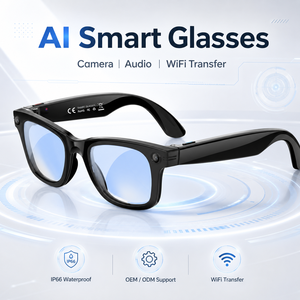

The global wearable technology sector has undergone a structural transformation. What began as simple tri-axial accelerometer step-counting wristbands has evolved into sophisticated medical-grade health telemetry, spatial computing, and AI-assisted biometric monitors. For B2B brand owners, importers, consumer electronics distributors, and enterprise sourcing executives, identifying the right manufacturing partner among the thousands of suppliers in East Asia requires a deep understanding of bill-of-materials (BOM) management, firmware architecture, optical sensor accuracy, and regulatory compliance.
Shenzhen, China remains the undisputed epicenter of smart wearable production, producing over 85% of the world's fitness watches, smartbands, and hybrid wearable devices. The convergence of dense electronic component supply chains, mature Surface Mount Technology (SMT) infrastructure, and specialized software engineering hubs enables Shenzhen factories to offer unmatched scaling speed and cost-efficiencies. However, quality variance between tier-1 original design manufacturers (ODMs) and white-label assembly shops is substantial.
Evaluating vendor quotes requires evaluating the internal micro-architecture of the fitness watch. Suppliers offering deceptively low unit prices frequently compromise on component tiers, resulting in high field return rates (RMA) due to battery swelling, Bluetooth disconnections, or inaccurate photoplethysmography (PPG) readings. A premium tier fitness watch OEM BOM typically consists of:
A rigorous engineering audit checklist to benchmark potential OEM/ODM suppliers prior to contract execution.
| Evaluation Parameter | Tier 1 Factory Benchmark (e.g. Worldwell) | Mid-Tier Assembly Factory | Low-Cost Sourcing Risk |
|---|---|---|---|
| R&D & Firmware Engineering | 100+ In-house Engineers, Native SDK & Algorithm Control | 10-20 Engineers, Outsources Firmware | Zero Software Team, Generic Stock Firmware |
| Quality Management System | ISO 9001, ISO 13485 (Medical Aligned), Class 100k Dust-Free | Basic ISO 9001 Standard Cleanliness | No Formal QMS, Manual Assembly Line |
| Waterproof Testing | 100% Dual-Chamber Static Vacuum & Dynamic Pressure Testing | Batch Sampling (5-10% Inspection) | Visual Inspection Only, High Field Failure |
| Biometric Accuracy | Medical-Grade PPG Algorithms, Clinical Trial Validation | Standard Dynamic Heart Rate Tracking | Static Heart Rate Only, Simulated Data Risk |
| Export Compliance | CE, FCC, RoHS, REACH, Telec, Anatel Pre-Certified | Basic CE / RoHS Certificates | Forged or Expired Test Reports |
| Defect Rate (PPM) | < 1,500 PPM (< 0.15%) | ~ 5,000 PPM (0.5%) | > 20,000 PPM (> 2.0%) |
Headquartered in Bao'an District, Shenzhen, Worldwell Technology Co., Ltd. represents the apex of modern B2B smart wearable research, design, and mass manufacturing.
From initial industrial design sketches, 3D rapid prototyping, PCBA layout, optical light-guide engineering to custom mold fabrication, our engineering team manages the complete lifecycle under one roof.
Our multidisciplinary team specializes in low-power firmware development, AI biometric voice algorithms, cloud application integration (iOS/Android), and RF antenna layout optimization for flawless BLE stability.
Operating under ISO 9001 certified protocols, our production floor includes Class 100,000 dust-free cleanrooms for optical bonding, automatic SMT placement, ultrasonic welding, and 100% waterproof testing.
As competition intensifies across retail, corporate wellness, and tele-health sectors, remaining ahead of technological curves is essential for brand managers. When selecting a long-term fitness watch factory partner, ensure their R&D roadmap aligns with these emerging technological paradigms:
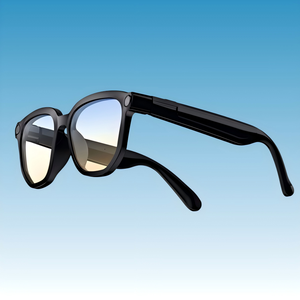
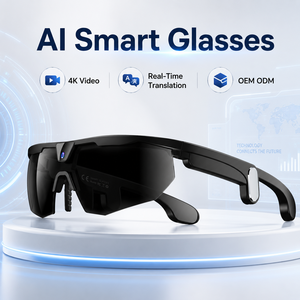
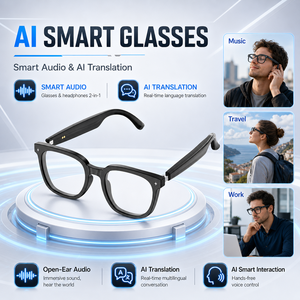
The integration of on-device light LLMs (Large Language Models) and natural language processing allows smartwatches and companion smart glasses to transition from simple notification display terminals into intelligent personal context engines. Advanced models feature real-time voice translation across 160+ languages, automated workout audio coaching, and conversational health telemetry summaries.
Next-generation PPG sensor clusters utilize multi-channel photodiode matrix arrangements operating across green (525nm), red (660nm), and infrared (940nm) wavelengths. This hardware enhancement, paired with machine-learning signal processing, enables dynamic blood pressure trend estimation, continuous arterial stiffness assessment, nocturnal HRV (Heart Rate Variability) analysis, and early detection of atrial fibrillation (AFib).
Global regulatory pressure, particularly within the European Union (CE / REACH / WEEE standards), is compelling factories to adopt sustainable materials. Modern procurement criteria increasingly prioritize post-consumer recycled (PCR) aluminum enclosures, ocean-bound plastic straps, bio-based TPU materials, and modular screwless assembly techniques designed for automated battery recycling disassembly.
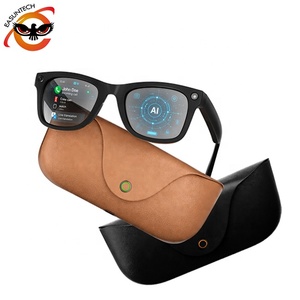
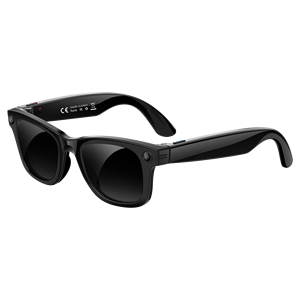
Brands are expanding beyond single-device offerings toward unified health ecosystem suites. Forward-looking factories are building multi-device companion SDKs that seamlessly sync data between smartwatches (high-interaction visuals), smart rings (unobtrusive 24/7 sleep/biometric tracking), and AI smart glasses (augmented spatial display and hands-free video capture).
Direct answers to critical questions regarding OEM/ODM customization, certification compliance, minimum order quantities, and quality assurance workflows.