


1. Executive Summary: The Evolution of Smart Wearable Procurement
The global smart wearable market has undergone a paradigm shift, transitioning from basic pedometers to highly integrated, multi-modal biometric intelligence engines and micro-display platforms. B2B importers, consumer electronics brand owners, and telecommunications distributors face an increasingly technical sourcing landscape. Sourcing fitness trackers, smart rings, and AI-enabled smart glasses requires an acute understanding of system-on-chip (SoC) micro-architectures, optical sensor Signal-to-Noise Ratios (SNR), PPG dynamic algorithm precision, and rigorous international medical-compliance protocols.
This industry whitepaper evaluates the top global fitness tracker suppliers and exporters, analyzing the technical standards separating Tier-1 manufacturers from commodity assemblers. Furthermore, we outline key procurement benchmarks for hardware engineering, private-mold tooling, customized companion application SDKs, and global regulatory certifications necessary to capture market share in 2026 and beyond.
2. Market Landscape: Strategic Global Sourcing Hubs
When selecting a manufacturing partner for smart wristbands, AMOLED fitness watches, ceramic smart rings, or AR-assisted translation glasses, evaluating geographic component supply chains is paramount. Shenzhen, China remains the undisputed epicenter of smart wearable research, industrial design (ID), PCBA SMT surface-mount processing, and mass assembly.
| Global Manufacturing Hub | Primary Core Competencies | Supply Chain Integration | Target B2B Segment |
|---|---|---|---|
| Shenzhen, China (Bao'an / Nanshan) | End-to-End OEM/ODM, Micro-Assembly, SMT, Custom SDKs | Vertical integration (Sensors, Display, Battery, Mold) | High-Volume Brands, Enterprise White-Label, Private Mold ODM |
| Taiwan Tech Cluster | RF IC Design, Precision Optical Lenses, Wafer Packaging | Upstream Component Supply & Semiconductor Design | Bespoke Component R&D and Specialty Sub-assemblies |
| Vietnam / Southeast Asia | High-Volume Final Packaging & Manual Sub-assembly | Import-Dependent Components (PCBA imported from China) | Low-Mix High-Volume Basic Fitness Trackers |
| European Union & USA | MedTech Firmware, Clinical Validation, Proprietary Cloud AI | Specialized Regional Assembly & Medical Regulatory Labs | Class IIa Clinical Wearables & Niche Enterprise Health |
3. Evaluation Criteria: Top 10 Fitness Tracker Suppliers & Exporters Benchmark
In analyzing leading global exporters, enterprise buyers must evaluate suppliers against six critical engineering and operational benchmarks:
1. Biometric Sensor SNR
Integration of dual/quad green+IR LEDs with high-sensitivity photodiode arrays capable of penetrating dense tissue for continuous 24/7 PPG heart rate, SpO2, and HRV extraction.
2. Ultra-Low Power BLE 5.4
Architectures built on ultra-low sleep current chipsets (Nordic, Realtek, Dialog) paired with high-density lithium-polymer cells ensuring 7–14 days of typical operating battery life.
3. In-House SMT & Tooling
Ownership of SMT lines and high-precision CNC mold shops. Direct control over plastic injection and ceramic/stainless steel machining ensures strict tolerance control.
4. Ingress Protection (IP68/5ATM)
100% automated pressure testing for water resistance (IP68 dust/water immersion and 5ATM/50-meter dynamic hydrostatic pressure testing for swimming tracking).
5. Firmware & SDK Modularization
Full ownership of RTOS-based firmware source code, offering enterprise buyers customizable watch-face engines, multi-language UI, and open BLE API/SDK data access.
6. International Certifications
Mandatory factory compliance including ISO 9001 quality management, alongside product-level CE, FCC, RoHS, REACH, and UN38.3 lithium battery transport safety clearance.
4. Future Sourcing & Technology Trends (2026–2030)
B2B procurement teams must look beyond current-generation hardware specs to future-proof their product catalogs. The market for fitness trackers and wearable smart devices is converging with edge AI, micro-photonics, and continuous health telemetry.
A. Convergence of AI Large Language Models (LLMs) & Open-Ear Audio Eyewear
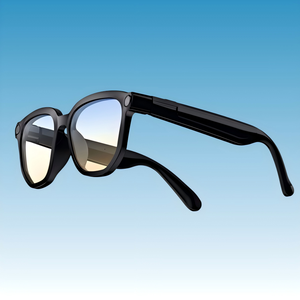
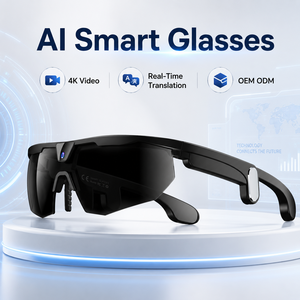
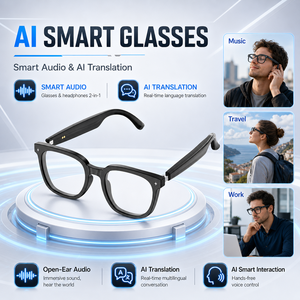
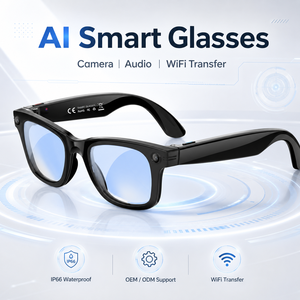
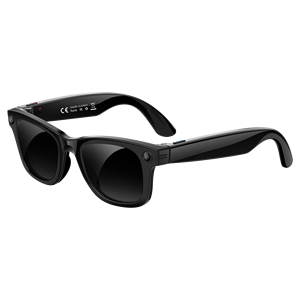
As demonstrated in our latest AI Smart Glasses series, traditional fitness tracking is extending to head-worn optical wearables. Integrated micro-cameras, MEMS directional noise-canceling microphone arrays, and Bluetooth 5.4 audio pipelines now stream bio-data directly to edge-AI voice assistants. These devices offer real-time translation across 164+ languages while capturing high-definition first-person spatial video.
B. Multi-Modal Sensor Fusion (PPG + ECG + Bio-Impedance)
The standard single-channel optical photoplethysmography sensor is being replaced by multi-channel sensor hubs combining:
- Continuous Optical PPG: Multi-wavelength emission (Green, Red, Infra-Red) for accurate arterial oxygen saturation (SpO2) and pulse wave velocity tracking.
- Single-Lead Electrocardiogram (ECG): Medical-grade dry-electrode contact modules capable of detecting Atrial Fibrillation (AFib) and early arrhythmia signals.
- Bioelectrical Impedance Analysis (BIA): Micro-current sensors assessing body composition ratios (body fat percentage, skeletal muscle mass, and cellular hydration levels).
C. Miniaturization into Ceramic & Titanium Smart Rings
Smart rings represent the fastest-growing form factor in the fitness tracking ecosystem. Sourcing high-yield smart rings requires specialized manufacturing capabilities: flexible curved PCBA boards, ultra-compact wireless induction charging coils, and bio-compatible outer shells (such as high-density zirconia ceramic or Grade 5 titanium alloy) certified to 5ATM waterproof standards.
Why Worldwell Lead the Global Wearable OEM/ODM Ecosystem
Headquartered in the Bao'an District of Shenzhen, Worldwell Technology Co., Ltd. operates state-of-the-art ISO 9001 certified cleanroom production facilities backed by over 100 dedicated R&D hardware, software, and industrial design engineers.
End-to-End Turnkey OEM/ODM
From initial industrial design sketches, private-mold plastic/metal injection tooling, and SMT circuit layout to firmware UI design, companion app branding, and mass assembly—all under one roof.
Rigorous Quality Assurance Matrix
100% automated optical inspection (AOI), ultrasonic waterproof testing, high-impact drop tests, thermal shock chamber validation, and battery cycle testing ensure less than 0.15% RMA defect rates.
Extensive Private Mold Catalog
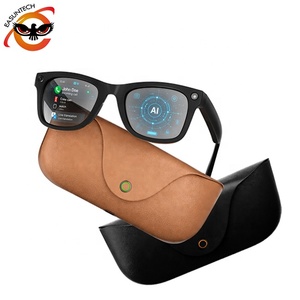
Over 50+ original private-mold models spanning smartwatches, slim fitness bands, zirconia smart rings, and AI camera translation glasses available for exclusive regional branding.
Global Regulatory Compliance
All products arrive fully certified with CE, FCC, RoHS, and REACH documentation, alongside complete SDS/UN38.3 battery shipping clearances for rapid customs release worldwide.
5. The 6-Stage Engineering Blueprint for Sourcing Fitness Trackers
When launching a custom fitness tracker or smart watch line with an OEM/ODM supplier like Worldwell, buyers should follow a structured Engineering Validation Process to minimize technical risk and guarantee launch deadlines:
- Phase 1: Architecture & Feasibility Study: Definition of functional requirements (SoC selection, PPG sensor pick, battery capacity target, and housing material).
- Phase 2: Industrial Design (ID) & Mechanical Design (MD): 3D CAD modeling, ergonomic wrist-curvature optimization, and structural finite element analysis (FEA).
- Phase 3: EVT (Engineering Validation Test): Fabrication of golden sample PCBAs to verify RF antenna performance, sensor calibration accuracy, and power consumption profiles.
- Phase 4: DVT (Design Validation Test): Execution of private-mold tooling, high-impact drop tests, IP68 immersion trials, and thermal endurance testing.
- Phase 5: PVT (Production Validation Test): Pilot production run on automated assembly lines to validate manufacturing yield rates and line balancing.
- Phase 6: Mass Production & Inspection: Full-scale manufacturing integrated with AQL 1.0/2.5 final quality inspection, sealed packaging, and direct export dispatch.