

1. The Evolution of OEM/ODM Smart Goggles & Intelligent Eyewear Manufacturing
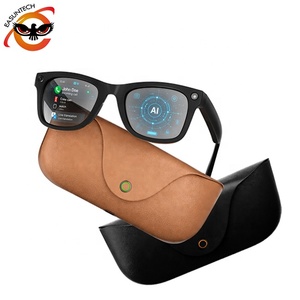
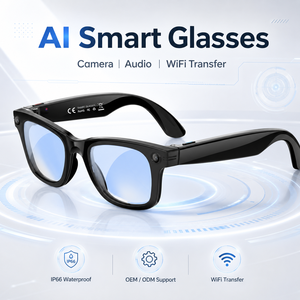
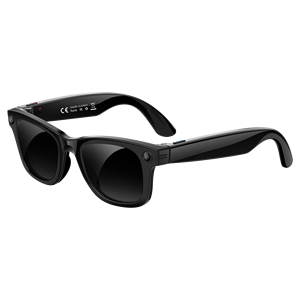
The global wearable device industry is undergoing a structural transition from basic activity trackers to spatial computing platforms and AI-augmented vision wear. Modern Smart Goggles and AI Smart Glasses represent the convergence of micro-optics, edge acoustic engineering, low-latency wireless communication, and generative AI inference. For B2B buyers, sourcing partners, and technology brands, selecting a qualified OEM/ODM manufacturer in Shenzhen—the hardware capital of the world—requires evaluating not merely assembly capability, but full-stack engineering proficiency spanning high-density PCBA layout, active optical alignment, and firmware customization.
Worldwell Technology Co., Ltd. has established itself as an authoritative leader in OEM/ODM smart wearable solutions. With a dedicated clean-room assembly plant, ISO 9001 certified quality control, and over 100 hardware and software engineers, Worldwell bridges the gap between conceptual industrial design and mass market-ready deployment. Our manufacturing framework addresses the most demanding engineering hurdles in smart eyewear production: thermo-dissipation within sub-40g frame budgets, optical alignment for optical waveguides, multi-microphone beamforming array calibration, and multi-language NPU translation integration.
Turnkey ODM Engineering
Complete project ownership spanning Industrial Design (ID), Mechanical Engineering (MD), PCBA layout, antenna tuning (Wi-Fi 6 & BT 5.4), private tooling mold fabrication, and custom companion mobile app development (iOS/Android).
Advanced Optical Assembly
State-of-the-art clean-room environments for micro-optical display engine installation, diffractive/reflective waveguide alignment, UV lens sealing, and IP65/IP66 ingress protection testing.
Global Compliance Assurance
Fully compliant with international regulatory benchmarks including CE, FCC, RoHS, REACH, and UN38.3 battery transport standards, backed by certified lab test reports for seamless market entry in North America and Europe.
2. Key Technological & Market Development Trends in Smart Goggles (2025–2030)
Procurement directors and product managers must align their manufacturing roadmaps with emerging technological paradigms. Sourcing obsolete hardware architectures leads to rapid product obsolescence. Below are the key engineering breakthroughs defining next-generation Smart Goggles and AI Eyewear:
A. On-Device AI Inference & Multimodal Large Language Models (LLMs)
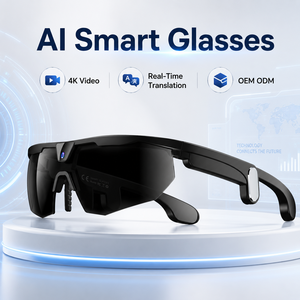
First-generation smart glasses relied entirely on smartphone tethering to process voice interactions. Current-generation designs incorporate specialized low-power Neural Processing Units (NPUs) directly into the eyewear chipset. This enables real-time, zero-latency speech identification, context-aware visual query processing, and offline language translation across 164+ global languages and regional dialects. Anti-shake camera modules paired with computer vision models allow automatic document scanning, object recognition, and hands-free video recording.
B. Micro-Acoustic Engineering & Directional Audio Isolation
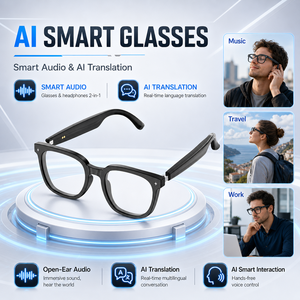
Open-ear audio technology has eliminated the need for uncomfortable in-ear buds. However, sound leakage has historically compromised user privacy. Advanced ODM factories now utilize dual reverse-phase acoustic cavities and directional beamforming speaker modules. This focuses audio waves precisely toward the user's ear canal while cancelling ambient sound propagation, ensuring privacy during confidential phone calls and AI assistant interactions.
C. High-Efficiency Power Management & Lightweight Frame Ergonomics
The primary barrier to consumer adoption has been weight and battery endurance. Achieving an ultra-lightweight frame profile (< 38 grams) requires high-density battery chemistries (e.g., custom curved lithium-polymer batteries housed within the temple stems) coupled with aggressive firmware power gating. Modern smart goggles utilize Bluetooth 5.4 Low Energy (LE) audio profiles and Wi-Fi 6 video offloading to maximize operational uptime while preserving sleek form factors.
Comparative Engineering Benchmark: Standard Smart Glasses vs. Worldwell Next-Gen Smart Goggles
| Performance Specification | Legacy OEM Smart Glasses (2021-2023) | Worldwell Next-Gen ODM Smart Goggles (2025+) | Manufacturing Impact & Benefit |
|---|---|---|---|
| Weight Distribution | 55g – 80g (Front-Heavy) | 35g – 42g (Ergonomic 50/50 Balance) | All-day wearable comfort, minimal nasal pressure. |
| Camera & Video Engine | 720P / 1080P basic CMOS sensor | 8MP 4K with EIS Anti-Shake & AI Tracking | Crisp first-person action capture & video streaming. |
| Translation Capabilities | Cloud-dependent, high latency (2-4s) | On-device NPU + Cloud hybrid, <0.6s latency | Seamless cross-border business conversation. |
| Wireless Connectivity | Bluetooth 5.0 / 2.4GHz Wi-Fi | Bluetooth 5.4 LE Audio + Wi-Fi 6 Dual-Band | Ultra-fast 4K media transfer & zero audio delay. |
| Ingress Protection | Unrated or basic IPX4 | IP65 / IP66 Certified Dust & Water Resistance | Durable performance in heavy rain and sports use. |
| Auxiliary Battery Case | Not included or simple USB plug | 2000mAh Fast-Charging Magnetic Docking Case | Extends field operation to over 36 hours. |
3. Future B2B Procurement Trends for Global Brand Sourcing
As international demand for AI smart glasses surges across enterprise logistics, medical diagnostics, outdoor sports, and consumer retail, B2B procurement strategies are shifting radically. Hardware distributors and brand owners must adapt to three core sourcing trends:
Strategic Procurement Shifts in the Smart Wearable Industry
- Transition from Ready-Made Stock to Deep ODM Customization: Tier-1 buyers no longer buy off-the-shelf white-label items. Procurement now demands proprietary industrial design molds, custom companion app SDK integrations, private cloud server routing, and brand-specific voice wake-up triggers.
- Modular Hardware Architectures for Faster Time-to-Market: To mitigate high upfront tooling costs, leading factories offer pre-certified modular PCBA platforms. Brands can customize the outer acetate or TR90 frame styling while using pre-validated electronics cores, cutting development cycles from 12 months down to 90 days.
- Strict ESG & Ethical Supply Chain Audit Readiness: Global buyers require detailed material traceability, conflict-free mineral sourcing certificates, REACH chemical compliance for skin-contact frame plastics, and ISO 14001 environmental management protocols.
4. Enterprise Manufacturing Advantages: Why Partner with Worldwell
Located in the Shajing tech corridor of Bao'an District, Shenzhen, Worldwell Technology Co., Ltd. operates as a true premier one-stop partner for smart wearable solutions. Our integrated production matrix is specifically built to support global B2B brands, importers, and OEM client networks across 30+ countries.
Full-Chain R&D Capabilities
Our team of over 100 R&D engineers encompasses structural designers, optical engineers, RF firmware developers, embedded Linux/Android developers, and algorithm experts. We handle complex hardware-software integration completely in-house.
ISO 9001 Dust-Free Production Lines
Quality reliability is non-negotiable. Our manufacturing facility features class 10,000 dust-free cleanrooms for optical lens mounting, automated SMT surface mounting lines, precision ultrasonic welding, and 100% aging test chambers.
From initial preliminary feasibility studies and rapid 3D prototyping to pre-mass production DFM (Design for Manufacturability) audits and drop-test validation, Worldwell ensures your private label product hits the market with zero technical defects.