Turnkey Hardware & Firmware Frameworks Engineered for Fast Customization, Brand Integration, and Scalable Mass Production.
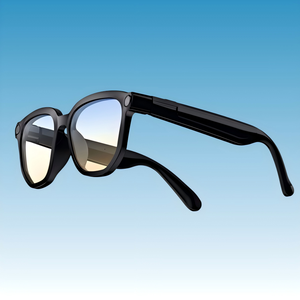
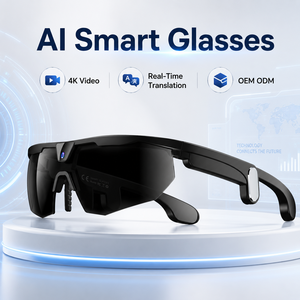
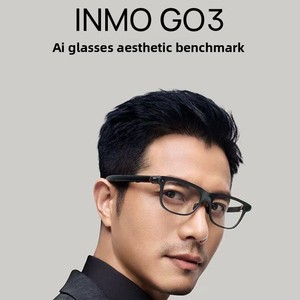
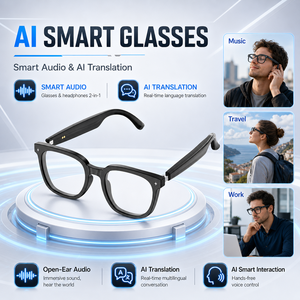
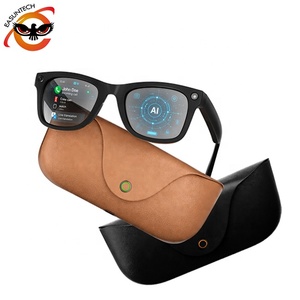
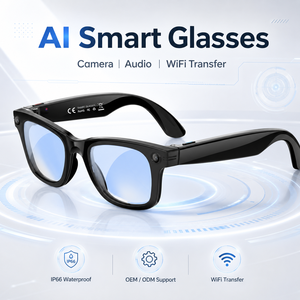

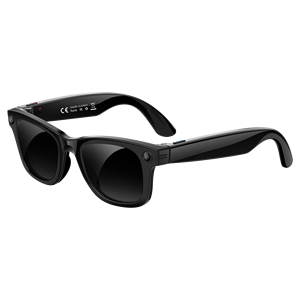
Combining Advanced Micro-Optics, Embedded AI Architecture, and Dust-Free Cleanroom SMT Lines to Deliver Market-Ready Smart Eyewear Solutions.
From initial industrial design (ID) and structural mechanical modeling to custom PCBA layout, optical wave-guide calibration, companion app integration, and packaging design. We provide complete end-to-end accountability under one roof.
Our in-house firmware development team specializes in embedding Large Language Model (LLM) APIs, speech-to-text algorithms, noise-canceling beamforming DSPs, and real-time translation engines capable of supporting over 164 languages and dialects.
Manufactured in Shenzhen, China under strict Class 100,000 dust-free cleanrooms. Every unit undergoes automated optical inspection (AOI), IP65/IP66/IP68 ingress testing, drop tests, thermal stress cycles, and complete radio frequency (RF) calibration.
The global wearable computing market is undergoing a paradigm shift. Smart glasses are transitioning from simple open-ear Bluetooth audio accessories into powerful spatial computing hubs equipped with contextual Artificial Intelligence, micro-displays, and advanced sensor fusion. For enterprise B2B buyers and brand owners, staying competitive requires selecting an OEM/ODM partner capable of mastering four key technical domains:
While early-generation smart glasses relied on heavy prism optics or simple audio-only architectures, the market is moving rapidly toward MicroLED coupled with optical diffractive waveguides. MicroLED displays offer ultra-high luminance exceeding 3,000,000 nits, allowing high-contrast text and graphical overlays to remain crisp and visible even under direct sunlight. OEM buyers looking for true Augmented Reality (AR) teleprompters, navigation, and heads-up translation visualizers must evaluate optical efficiency (nits/lumen) to prevent rapid thermal dissipation issues.
The integration of multimodal AI models (such as GPT-4o, Claude 3.5, and proprietary on-device SLMs) has revolutionized smart glasses. Modern OEM smart glasses utilize dual-chip hardware architectures where an ultra-low-power MCU manages continuous background sensor telemetry (voice activity detection, gesture recognition) while a primary system-on-chip (SoC) connects to cloud-based neural networks when processing complex tasks. This dual-mode approach enables real-time speech translation across 164+ languages with latency under 500 milliseconds.
Audio privacy remains a primary concern for business users. ODM smart glasses now employ inverted phase acoustic dipole speakers. By generating opposing soundwaves outside the speaker cavity, acoustic leakage is reduced by up to 95%, ensuring phone calls and voice assistant responses remain confidential even in crowded environments. Coupled with dual or quad beamforming microphones and AI environmental noise suppression (ENC), voice capture remains crystal clear under 45 dB ambient noise conditions.
Weight distribution and heat dissipation dictate wearer comfort. Premium OEM smart glasses utilize ultra-flexible TR90 memory plastic, titanium alloy hinges, and biocompatible silicone nose pads. Heat generated by high-definition camera encoding chips (4K/1080P) and Wi-Fi 6 transceivers is dissipated through internal graphite thermal sheets integrated directly into the temple arms, keeping surface temperatures strictly below 38°C during continuous video recording.
Sourcing smart wearables involves managing complex supply chain dependencies including camera sensors, optical displays, battery safety certifications, and cross-border firmware compliance. B2B buyers must adapt to several evolving procurement trends:
Brands no longer request completely customized silicon from scratch. Instead, buyers leverage pre-certified modular PCBA platforms, specifying custom camera sensor resolutions, frame aesthetics, lens treatments, and companion application software layer customization to drastically reduce time-to-market from 18 months down to 90 days.
Global customs authorities are enforcing tighter battery safety, hazardous substance, and radio frequency standards. Established suppliers must provide comprehensive compliance documentation including CE, FCC, RoHS, REACH, UN38.3 (for battery transport), and MSDS certifications prior to shipment clearance.
Selecting the Right Service Level for Your Brand Strategy, Budget, and Market Launch Timeline.
| Service Category | OEM (Original Equipment Mfg) | ODM (Original Design Mfg) | Turnkey Private Label |
|---|---|---|---|
| Hardware Modification | Custom structural molds & physical enclosure | Full custom circuit board, optics & housing | Standard existing tooling model |
| Firmware & Software | Custom UI theme, boot logo, app SDK | Bespoke OS feature set & custom API integration | Custom app logo & brand color mapping |
| Development Lead Time | 60 – 90 Days | 120 – 180 Days | 15 – 30 Days |
| MOQ Requirement | 1,000 – 3,000 Units | 5,000+ Units | 500 – 1,000 Units |
| Target Buyer Profile | Established Consumer Tech Brands | Tech Enterprises & Telecom Operators | E-commerce Distributors & Retailers |
Direct Answers to Common Engineering, Sourcing, and Quality Assurance Questions Asked by Global Buyers.
Yes. We offer complete OEM services (applying your brand logo, custom frame finishes, custom optical lenses, bespoke packaging, and branded firmware UI onto our pre-engineered hardware platforms) as well as full ODM services (building custom tooling molds, tailored PCBA layout, optical wave-guide integration, and specialized companion app ecosystems from scratch based on your product specs).
All smart glasses manufactured in our facilities comply with international trade and safety standards. Products hold CE (EMC & LVD), FCC, RoHS, and REACH certifications issued by accredited third-party laboratories (SGS / TUV). Furthermore, our manufacturing facility operates strictly under an ISO 9001 certified quality management system.
Yes. Our in-house software engineering team supports localized language translation engines (covering 164+ languages), customized Android/iOS companion apps with private server cloud routing, custom SDK API connections (e.g. OpenAI, Microsoft Azure Speech, Google Cloud Translation), and customized watch/eyewear UI boot animations.
For standard private-label OEM branding on stock hardware platforms, MOQs typically start at 500 to 1,000 units with sample delivery in 7-10 days and mass production in 20-30 days. For full custom ODM projects requiring private plastic/metal injection molds and unique PCBA architectures, MOQs start at 3,000 to 5,000 units with full development cycles spanning 90 to 120 days.
Safety and comfort are paramount. We use high-density, UN38.3-certified lithium polymer batteries equipped with hardware-level Power Management Integrated Circuits (PMIC) for overcharge, over-discharge, and short-circuit protection. Thermal heat generated by HD video recording processors is passively managed through internal structural graphite heat spreaders that channel heat away from the user's head.
To receive an accurate engineering and pricing proposal, buyers should specify: (1) Target sales region and compliance needs, (2) Desired core features (e.g., Audio-only vs. Camera vs. AR Display), (3) Estimated annual and per-order volume, (4) Software customization requirements (SDK, cloud translation APIs, app rebranding), and (5) Expected launch timeline.
Partner with a trusted Shenzhen OEM/ODM manufacturer backed by 10+ years of wearable engineering excellence, 100+ R&D engineers, and proven global export capabilities.
Get a Quote