
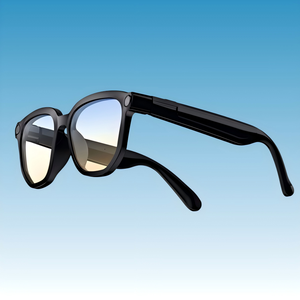
AI Smart Glasses with Camera Realtime Translation & Voice Assistant
- Anti-Shake Camera
- Real-Time AI Audio
- Open-Ear Sound
Explore our flagship turn-key hardware platforms available for custom branding, private molds, optical waveguide customization, and software SDK integration.
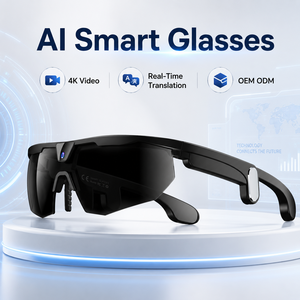
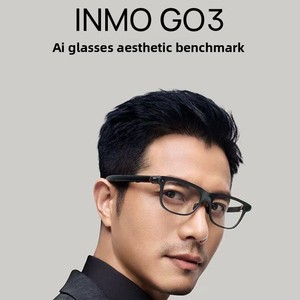
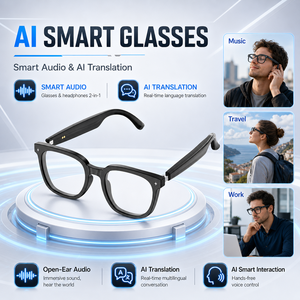
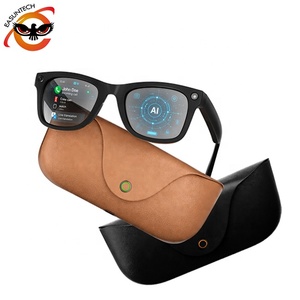
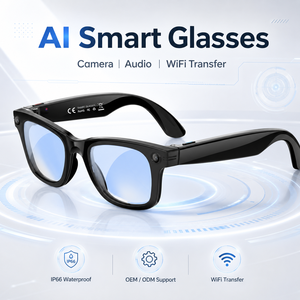

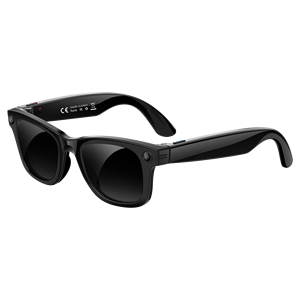
An operational breakdown for hardware procurement officers, AR product managers, and enterprise brand leaders selecting custom OEM AR glasses suppliers.
The global Augmented Reality (AR) glasses and smart eyewear procurement ecosystem is undergoing a dramatic shift from bulky developer kits to sleek, consumer-grade everyday smart glasses. Procurement officers and B2B buyers are no longer looking merely for raw display specs; the emphasis has pivoted toward lightguide efficiency, thermal dissipation architecture, low-latency edge AI LLM computing, and custom ergonomics. As enterprise brands attempt to capture market share, working with a tier-1 OEM AR glasses supplier capable of executing complex optical-mechanical-electronic integration has become a core competitive strategy.
Over the next five years, procurement contracts will be dominated by three optical technology breakthroughs: Micro-LED combined with Surface Relief Waveguides (SRG), directional open-ear acoustic dipoles, and multi-modal sensory AI integration. Suppliers capable of providing scalable ODM white-label platforms alongside fully bespoke private mold development will lead the supply chain. OEM buyers must prioritize suppliers who maintain rigorous in-house optical alignment setups, automated active alignment (AA) SMT processes, and dust-free ISO Class 5 to Class 7 assembly cleanrooms.
Next-gen Micro-LED engines offer up to 3,000,000 nits source brightness, enabling crystal-clear outdoor daylight readability under 3g optical engine weight constraints.
Diffractive surface-relief optical waveguides achieve high transmission luminance with thickness down to 0.7mm, delivering typical eyewear aesthetics.
Integrated Qualcomm Snapdragon / BES platforms supporting zero-latency voice recognition, continuous translation in 164+ languages, and visual query processing.
When selecting a custom OEM AR glasses manufacturing partner, evaluating the optical display engine architecture is the single most critical decision. Below is an engineering comparison matrix prepared by our optical engineering team to guide procurement decisions based on field of view (FOV), transparency, ambient brightness, and mass-production yield rates.
| Optical Architecture | Luminance Efficiency | Transparency % | Thickness / Form Factor | B2B Manufacturing Cost | Primary Target Applications |
|---|---|---|---|---|---|
| Micro-LED + Diffractive Waveguide | Extreme (>100,000 Nits to Eye) | > 85% Transparent | Ultra-Slim (<1.0 mm) | High (Premium OEM) | Everyday AI Smart Glasses, Real-Time Translation, Navigation |
| Micro-OLED + Birdbath Optics | Moderate (1,000–3,000 Nits) | ~ 25–30% Semi-Transparent | Bulky (25–35 mm depth) | Cost-Effective / Mature | Immersive Gaming, Private Video Theater, Fixed Desk XR Workstations |
| Micro-OLED + Freeform Surface | High (3,000–5,000 Nits) | ~ 50–60% Transparent | Medium (15–20 mm) | Moderate OEM Cost | Enterprise Logistics, Industrial Maintenance, Remote Inspection |
| LCOS + Holographic Waveguide | Moderate to High | > 80% Transparent | Slim (1.2–1.8 mm) | High Engineering Tooling | Custom Teleprompters, Head-Up Display (HUD) Eyewear |
A. Advanced Ergonomic & Lightweight Chassis Engineering: Modern smart eyewear consumers demand frames under 40 grams. Achieving this target requires custom titanium alloy hinges, magnesium-aluminum temple chassis, and high-density poly-carbonate lens frames. Our factory utilizes multi-axis CNC micro-machining and ultra-precise injection tooling to house dual SMT PCBA motherboards inside ultra-thin temple arms without compromising mechanical structural integrity.
B. Multi-Microphone Beamforming Arrays & Directional Acoustic Cavities: Audio privacy and vocal clarity are non-negotiable for enterprise business glasses. Custom OEM builds incorporate 2-mic or 4-mic beamforming noise cancellation (ENC) algorithms to isolate the speaker's voice even in 85dB noisy ambient environments. Simultaneously, phase-reversed reverse acoustic cavities prevent sound leakage, ensuring confidential business phone calls remain private.
C. Intelligent Power Allocation & Magnetic Quick-Charge Ecosystems: Balancing power consumption against weight limits is solved through system-level power management IC (PMIC) tuning. By pairing ultra-low power Bluetooth 5.4 / WiFi 6 connectivity with fast-charging lithium polymer button cells integrated into the frame tips, custom OEM AR models achieve 6 to 14 hours of active operational time. High-capacity custom magnetic charging cases provide up to 2,000mAh reserve battery capacity.
With a decade of dedicated smart wearable production in Shenzhen, China, we offer global enterprise clients direct factory sourcing, end-to-end hardware customization, and certified compliance.
From industrial ID sketching, 3D optical simulation, and private mold tooling to custom PCBA layout, firmware SDK compiling, and companion iOS/Android app white-labeling.
Optical waveguides and micro-display modules are assembled in ISO Class 5 cleanrooms to ensure zero particulate contamination, superior optical alignment precision, and maximum manufacturing yield.
All custom smart glasses platforms come standard with international regulatory compliance certificates, full battery safety documentation (UN38.3, MSDS), and SAR testing for frictionless global logistics.
In-house team specialized in micro-optical systems, low-power Bluetooth audio protocols, camera ISP tuning, AI speech translation algorithms, and spatial IMU tracking.
Clear answers to crucial hardware, firmware, licensing, and supply chain questions asked by enterprise procurement buyers.
Contact our senior hardware sales engineers today for a detailed engineering consultation, private mold evaluation, hardware sample kit, or instant B2B wholesale quotation.