High-yield, export-ready intelligent wearable devices powered by real-time spatial processing, multi-modal biometric sensors, and ultra-low power wireless architectures.
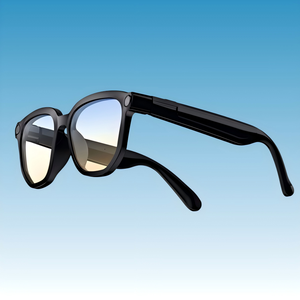
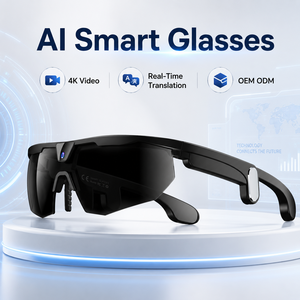

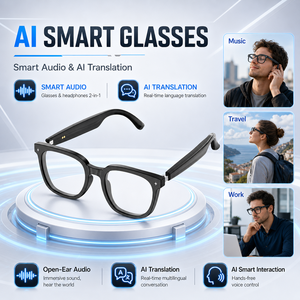
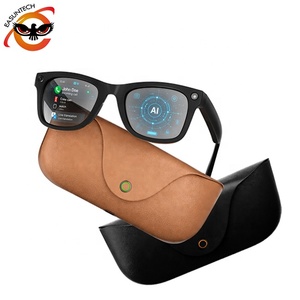
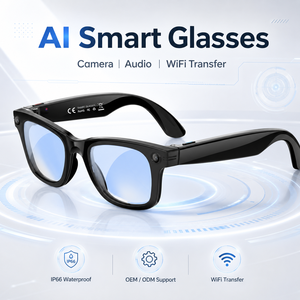

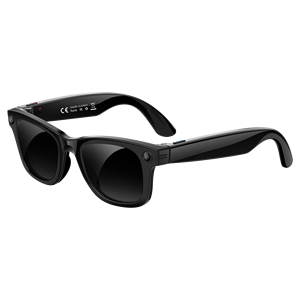
From custom SMT surface mounting to specialized bio-sensor integration, our Shenzhen facility provides enterprise-grade infrastructure engineered for international brand scaling.
Assembly lines operating under strictly controlled ISO Cleanroom conditions eliminate micro-dust contamination for optoelectronic display panels, camera lenses, and optical photoplethysmography (PPG) sensors.
Our 100+ engineer software matrix builds bespoke RTOS firmware, custom UI themes, native iOS/Android SDK extensions, and secure multi-language cloud platform sync for true private-label customization.
Every Smart Strap, Smart Ring, and AI Glass architecture is prefabricated to conform with strict CE (RED Directives), FCC ID Part 15B, RoHS 2.0, REACH, and UN38.3 battery shipping protocols.
The global smart wearable ecosystem is undergoing a generational shift. Where smartbands and fitness trackers historically served as passive biometric display units, modern enterprise supply chains require Smart Straps, AI-augmented eyewear, and biocompatible smart rings to act as active, edge-computing telemetry nodes. As a premier China wholesale smart strap supplier and exporter, Worldwell Technology Co., Ltd. resolves the core trade-off in wearable engineering: balancing multi-channel optical micro-sensing density against thermal efficiency, battery cycle stability, and structural ergonomics.
Information Gain Insight: Modern B2B smart strap procurement requires evaluating dynamic strain resistance (dynamic flex cycles >100,000 passes), skin contact biocompatibility under ISO 10993 standards, and impedance-matched signal paths for high-frequency PPG and ECG sensor loops.
Smart straps are no longer simple inert silicone or leather enclosures. High-margin B2B distribution relies on advanced strap-embedded and chassis-integrated sensor modules. Our SMT production lines integrate specialized micro-electronic components into flexible printed circuit boards (FPC) encased within high-durability elastomers:
Selecting the optimal material matrix dictates product lifespan, waterproof integrity, and consumer skin comfort. Worldwell’s material laboratory subjects all smart straps and wearable frames to rigorous physical and chemical stress testing:
| Substrate Material | Tensile Strength (MPa) | Waterproof Rating Limit | Biocompatibility Standard | Primary B2B Target Market |
|---|---|---|---|---|
| Fluoroelastomer (FKM) | 18.5 MPa | 5ATM / 50 Meters | ISO 10993-10 Compliant | Industrial, Outdoor & Military Wearables |
| Medical-Grade TPU | 14.2 MPa | IP68 Waterproof | FDA Skin Contact Safe | Mass-Market Fitness Bands & Straps |
| Liquid Silicone Rubber (LSR) | 9.5 MPa | 5ATM / 50 Meters | Hypoallergenic Grade | Medical-Grade Telehealth Tracking |
| Aerospace Titanium & Ceramic | 450+ MPa | 10ATM Custom Molds | Full Neutral Inertness | Premium Executive Smart Rings & Watches |
As international buyers, retail brands, and health-tech enterprises source smart straps and smart wearable electronics from China, supply chain dynamics have evolved beyond baseline unit pricing. Sustainable market dominance requires analyzing emerging technological vectors and optimizing supply chain resilience.
Off-the-shelf white-label products face aggressive price compression on global marketplaces. Leading B2B buyers now leverage China’s rapid prototyping tooling infrastructure to manufacture private-mold smart straps, bespoke bezel geometries, and proprietary sensor layouts. By creating protected IP frameworks through non-disclosure agreements (NDAs) and custom tooling, brands build defensible market moats while enjoying lower per-unit cost curves.
Historically, wearable raw data (accelerometer streams, PPG photodiode voltages) were dumped raw over Bluetooth Low Energy (BLE) to a companion mobile application, creating latency and high battery drain. Modern smart straps and smart glasses supplied by Worldwell integrate dual-core ARM Cortex-M33 microcontrollers running ultra-compact neural network micro-models at the edge. The device computes activity identification, noise filtering, and gesture recognition locally, transmitting only clean data packets—extending operating battery life from hours to weeks.
Corporate wellness programs, remote patient monitoring (RPM) providers, and insurer networks demand open access to raw biometric data. Forward-thinking smart strap exporters must provide raw sensor payload SDKs (supporting Flutter, React Native, Swift, and Android Native Java) alongside RESTful cloud endpoints. Worldwell provides enterprise clients with full API documentation, permitting direct integration into third-party hospital management software, corporate health dashboards, or AI athletic coaching apps.
| Sourcing Dimension | Standard Wholesale Procurement | Custom OEM Branding | Full Architectural ODM Co-Development |
|---|---|---|---|
| MOQ Requirement | 100 – 500 Units | 1,000 – 3,000 Units | 5,000 – 10,000+ Units |
| Time-to-Market | 1 to 2 Weeks | 3 to 4 Weeks | 8 to 14 Weeks (Tooling Included) |
| Firmware Flexibility | Fixed UI / Language Packs | Custom Boot Logo & UI Theme | Full Source Code SDK & API Key Control |
| Supply Chain Protection | Low (Shared Market Models) | Medium (Exclusive Branding) | Maximum (Patented Private Tooling) |
Exporting complex smart straps and electro-optical smart wearables across North America, Europe, Australia, and Asia requires rigorous quality control processes. At Worldwell, every batch undergoes a strict multi-tier quality gate compliant with ISO 9001:2015 guidelines and MIL-STD-105E sampling standards.
100% inspection of incoming silicon MCUs (Nordic, Dialog, Realtek), optical photodiode ICs, display panels, and raw TPU/FKM material batches prior to SMT mounting.
Automated Optical Inspection (AOI) scans SMT solder joints, followed by ultrasonic sealing validation to guarantee IP68/5ATM waterproof integrity.
Thermal shock testing (-20°C to 60°C), salt spray corrosion testing (48 hours), tensional strap twist tests, and 1.5m drop testing onto hardwood blocks.
Final visual inspection, battery charge rate verification, Bluetooth RSSI signal testing, and packaging barcoding verification under strict AQL limits.
Essential guidance for global buyers, importers, and brand managers evaluating OEM/ODM smart wearable manufacturers in China.