High-precision zirconia ceramic hardware, 5ATM waterproofing, advanced biometric optical sensors, and custom software integration engineered in Shenzhen, China.
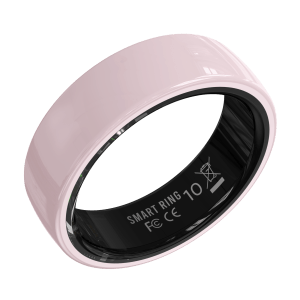
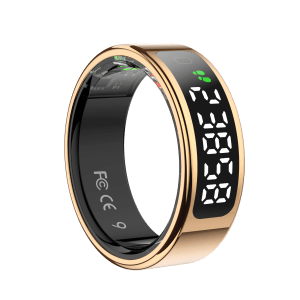

The global smart wearable ecosystem is undergoing a seismic architectural transition. As biometric sensors, ultra-low-power microcontrollers, and micro-lithium batteries become miniaturized, smart rings have emerged as the premier form factor for non-intrusive 24/7 physiological monitoring. Among all chassis materials—ranging from aerospace-grade titanium alloys to medical stainless steel and polycarbonates—micro-crystalline zirconia ceramic (ZrO2) stands out as the ultimate material for high-tier B2B smart ring manufacturing.
China's manufacturing ecosystem, centered in the technology hubs of Shenzhen and advanced ceramic processing corridors of Southern China, leads the world in industrial-scale production of Yttria-Stabilized Tetragonal Zirconia Polycrystal (Y-TZP) smart ring shells. When global brands audit China wholesale ceramic ring factories, understanding the physics and material science behind ceramic ring production is vital for specifying robust OEM/ODM programs.
Information Gain Insight: Zirconia ceramics provide a dielectric constant (εr ≈ 28-30) that permits near-zero RF signal shielding for Bluetooth Low Energy (BLE 5.4) and NFC 13.56 MHz antennas. Unlike titanium or steel rings, which suffer from Eddy current losses and require complex antenna break-outs, a mono-body ceramic ring casing serves as a transparent radome for internal micro-antennas, maximizing battery life and wireless coupling efficiency.
| Material Metric | Micro-Crystalline Zirconia (ZrO2) | Titanium Alloy (Ti-6Al-4V) | 316L Stainless Steel | Medical Polycarbonate |
|---|---|---|---|---|
| Vickers Hardness (Hv) | 1,500 – 1,650 Hv | 320 – 360 Hv | 200 – 240 Hv | 15 – 20 Hv |
| Thermal Conductivity | 2.5 – 3.0 W/(m·K) (Skin Comfort) | 6.7 W/(m·K) (Cold feel) | 16.3 W/(m·K) (Cold feel) | 0.2 W/(m·K) (Poor dissipation) |
| RF / Dielectric Permeability | 100% Signal Transparent | RF Shielding (Requires Gap) | RF Shielding (Requires Gap) | Transparent (Low Durability) |
| Hypoallergenic Rating | 100% Biocompatible (ISO 10993) | High Biocompatibility | Contains Nickel (Risk) | Varies by Resin Grade |
| Scratch Resistance | Diamond-Grade (Mohs 8.5) | Prone to Micro-Scratches | Susceptible to Wear | Extremely Poor |
As demonstrated in the evaluation table above, micro-crystalline ceramic offers an unyielding scratch-resistant surface combined with a soft, warm tactile skin feel due to its low thermal conductivity. For premium consumer electronics brands, jewelry labels, and healthcare solution providers, sourcing custom zirconia ceramic smart rings from established Chinese manufacturers ensures product longevity without aesthetic degradation over time.
Manufacturing a functional, multi-sensor smart ceramic ring requires high-temperature powder metallurgy combined with ultra-precision CNC diamond grinding. At Worldwell Technology Co., Ltd., our Shenzhen manufacturing facility operates under an ISO 9001 certified quality management system, employing over 100 hardware and software engineers dedicated to perfecting smart wearable assemblies.
Yttria-stabilized zirconia powder is cold-isostatically pressed and sintered at 1,450°C for 72 hours, resulting in zero porosity and ultra-dense ceramic blanks.
Diamond-tipped CNC cutters machine internal optical sensor cavities, charging pin recesses, and outer facets with tolerances tight to ±0.005mm.
Photoplethysmography (PPG) sensors, skin temperature thermistors, and flexible circuit boards (FPC) are potted using bio-compatible optical epoxy under Class 10,000 cleanrooms.
Worldwell provides turnkey OEM and ODM solutions for global brand owners, distributors, and SaaS digital health startups. Our engineering stack encompasses:
B2B buyers sourcing smart rings from Chinese suppliers must anticipate technological shifts over the next three to five years to ensure product lines remain competitive. As consumer expectations shift from basic step-counting to medical-grade actionable insights, the hardware specifications of wholesale ceramic rings are evolving rapidly.
Next-generation smart ceramic rings integrate advanced multi-spectral optical clusters. Beyond standard pulse rate and oxygen saturation monitoring, 2026 ceramic ring platforms incorporate continuous peripheral vascular resistance analysis, blood pressure trend estimation via Photoplethysmogram Blood Pressure (PPG-BP) algorithms, and multi-point skin temperature thermistors for circadian rhythm and female cycle predictions.
Traditional pogo-pin physical contacts are vulnerable to oxidation and sweat corrosion over prolonged wear. China's leading wholesale factories are transitioning toward total seamless encapsulation using magnetic resonant wireless charging docks or near-field contact charging. Integrated with high-density lithium-polymer battery chemistry or emerging micro solid-state cells, modern smart rings achieve 5 to 7 days of continuous tracking on a single 45-minute charge cycle.
The non-conductive property of zirconia ceramic makes it an ideal medium for embedding dual-chip modules—combining an ultra-low-power BLE chipset with an NFC Secure Element (NFC-SE). Wholesale buyers can now order private-label ceramic rings configured for contactless EMV payment networks, RFID smart door lock access, and hardware-level two-factor authentication (FIDO2 keys).
Strategic Buying Advice: When negotiating with China ceramic ring factories, ensure that the internal molding allows for modular chip replacement without requiring new ceramic shell tooling. This modular architecture significantly reduces long-term ODM development costs when upgrading to next-gen chipsets.
Selecting a reliable manufacturing partner in China requires looking beyond product catalog photos. Global brand buyers must evaluate factories across five critical operational benchmarks:
Verify that the factory performs 100% automated pressure testing (5ATM / 50 meters depth rating according to ISO 22810 standard) rather than statistical sampling.
Ceramic shrinks up to 20% during high-temperature sintering. Inquire about how the factory controls shrinkage to offer consistent standard US sizes 6 through 13.
Ensure all resin encapsulation, inner ring coatings, and ceramic polishes hold ISO 10993 cytotoxicity and primary skin irritation clearance test reports.
Partner with China's leading smart wearable OEM/ODM manufacturer. Speak directly with our sales engineering team to receive tailored product specs, factory pricing, and sample evaluation kits.
Get a Quote