
AI Spatial
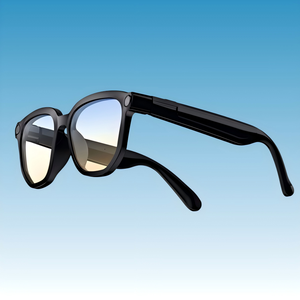
AI Smart Glasses with Camera Realtime Translation & Voice Assistant
- Anti-Shake Capture
- Real-Time AI Voice
- Open-Ear Audio
Direct from our ISO 9001 certified manufacturing hub in Shenzhen. Engineered with real-time translation, anti-shake camera modules, and ultra-lightweight ergonomic chassis for enterprise buyers worldwide.
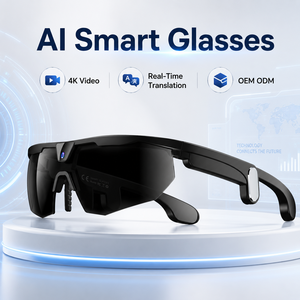
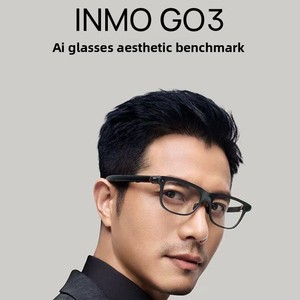
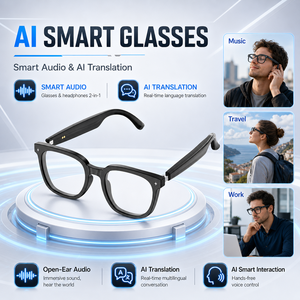
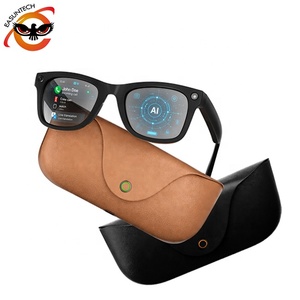
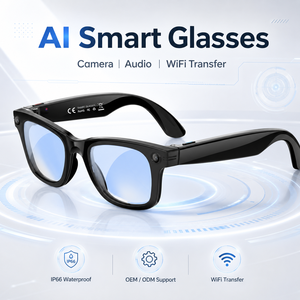

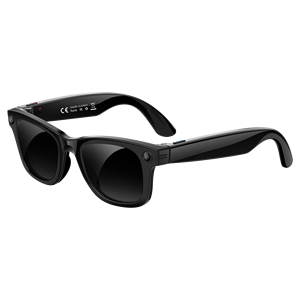
As global spatial computing moves from heavy immersive headsets toward lightweight, AI-augmented wearables, enterprise procurement teams are re-evaluating their sourcing strategies. China has evolved from a basic contract assembly hub into the epicenter of advanced optical engines, Micro-OLED wafer integration, Pancake lens design, and ultra-low-latency wireless PCB assembly (PCBA). Identifying the best China VR headset supplier and exporter requires analyzing beyond assembly volume; it demands examining optical throughput, thermal management, software SDK support, and strict ISO 9001 cleanroom compliance.
Key Procurement Insight: Sourcing extended reality (XR) hardware from top-tier Shenzhen suppliers reduces time-to-market by an average of 45% compared to Western assembly lines, primarily due to localized component clusters for Micro-OLED displays, waveguides, and precision molds.
Legacy virtual reality headsets relied on bulky Fresnel lenses that produced peripheral optical aberration and excessive neck torque due to front-heavy leverage. Contemporary supply chains in Shenzhen have pioneered compact Pancake optical modules that shorten the optical distance (TTL) by over 50%, shrinking headset thickness to under 40mm while delivering visual resolution exceeding 3,000 PPI (Pixels Per Inch).
| Optical Architecture | Primary Use Case | Transmissivity / Clarity | Form Factor Weight | Manufacturing Complexity |
|---|---|---|---|---|
| Pancake Lens System | Immersive Enterprise VR / Simulation | High Contrast / Zero Distortion | Medium (180g – 320g) | High (Multi-layer polarization alignment) |
| Birdbath Optics | Media Consumption / AR Smart Glasses | 25%–30% Optical Pass-Through | Lightweight (70g – 110g) | Moderate (Beamsplitter coating) |
| Diffractive Optical Waveguide | AI Smart Glasses & Industrial HUDs | 85%+ Ambient Transparent | Ultra-Light (28g – 45g) | Very High (Nanometer nano-imprinting) |
For B2B importers, selecting between fully immersive VR headsets and lightweight AI-powered AR glasses comes down to operational context. While enterprise VR excels in immersive industrial simulation, medical surgery training, and remote digital twin control, AI-driven smart glasses with real-time HUD translation and anti-shake cameras dominate field service, logistics picking, and executive translation scenarios.
One of the primary engineering hurdles in high-performance XR wearables is managing component thermal output without adding excessive heat-sink weight. Leading Chinese OEM/ODM factories utilize custom copper vapor chambers (VC), liquid graphite thermal sheets, and active low-noise micro-fans capable of exhausting heat from 5W+ SOC processors while maintaining contact temperature below 38°C on user-facing frames.
How enterprise buyers, global distributors, and private-label brands can optimize supply chain resilience and maximize product margins over the next decade.
Future VR and smart glasses procurement is rapidly shifting away from hardware-only specifications toward integrated Spatial AI. Overseas buyers now demand onboard neural processing units (NPUs) capable of offline real-time translation, object recognition, live transcription, and cloud LLM API connectivity with ultra-low latency.
To reduce risk and tooling overhead, global B2B clients are adopting modular ODM platforms. Rather than tooling a headset or frame completely from scratch, brands leverage pre-certified base PCBA motherboards and custom-mold exterior housings, shaving 6 to 9 months off product development cycles.
Importers facing European Union and North American regulatory mandates require suppliers with verified certifications. Forward-looking buyers mandate CE, FCC, RoHS, REACH, and UN38.3 battery shipping certifications directly from the manufacturer to eliminate cross-border customs bottlenecks.
Key technological shifts defining the next generation of smart headsets, spatial optics, and bio-telemetry wearables.
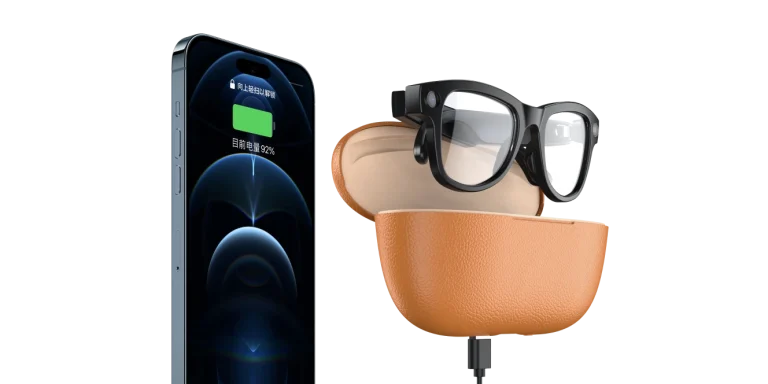
Advancements in plastic molded optics and integrated micro-displays allow AI smart translation glasses to match standard prescription eyewear in weight and aesthetics, breaking consumer adoption barriers.
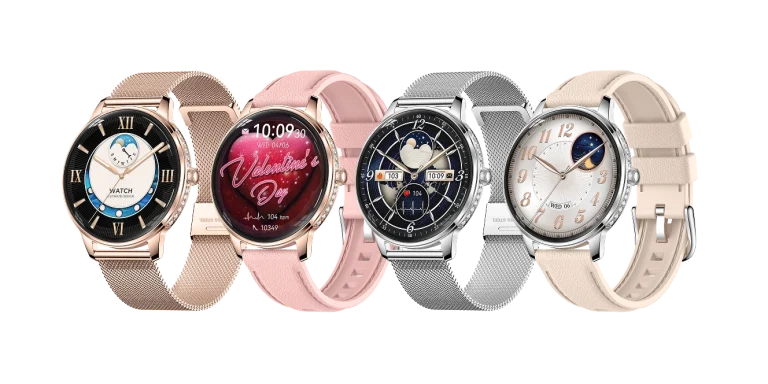
Combining spatial display tech with companion bio-wearables (smart rings, health watches) provides comprehensive biometric telemetry—crucial for enterprise safety monitoring, athletic training, and medical diagnostics.
Shenzhen's leading B2B hardware engine with over a decade of dedicated wearable precision manufacturing.
Our engineering division encompasses hardware circuit design, RF antenna tuning, optical simulation, firmware C/C++ architecture, iOS/Android companion app development, and AI cloud algorithm pairing.
Production takes place inside dust-free cleanrooms equipped with automated surface-mount technology (SMT), high-precision optical alignment systems, and rigorous IP65/IP68 ingress testing rigs.
We routinely supply B2B brands, telecom carriers, and enterprise distributors across North America, Europe, Australia, and Asia-Pacific, delivering complete international compliance documentation.
Essential guidance for B2B importers, brand owners, and procurement managers before placing OEM/ODM orders.
Partner with China's leading OEM/ODM supplier. Contact our engineering team now to request technical datasheets, sample pricing, and manufacturing timelines.