2025 Industry Procurement Whitepaper & Sourcing Guide

China Best Smart Eyewear Factories & Supplier

The Definitive B2B Strategic Sourcing Analysis on OEM/ODM AI Smart Glasses, AR Optical Displays, Real-Time Translation Wearables, & High-Precision Audio Eyewear Manufacturing Excellence in Shenzhen

Verified Manufacturer Catalog

Top-Rated China Smart Eyewear Flagship Models

Explore our engineering-validated OEM/ODM smart glasses portfolio, equipped with multimodal AI, ultra-low latency real-time translation, 4K anti-shake capture, and open-ear audio tech.
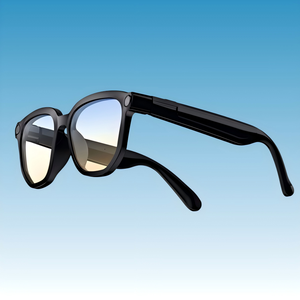
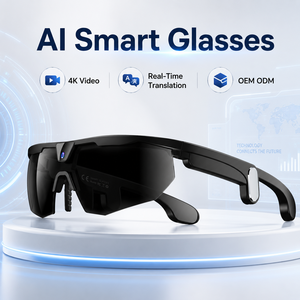
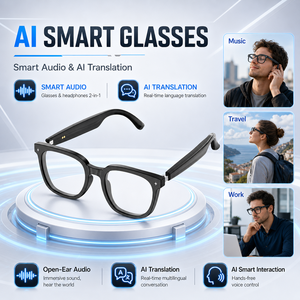
AI Smart Glasses with Camera Realtime Translation Voice Assistant

AI Smart Glasses with Camera Realtime Translation Voice Assistant Anti-Shake AI Capture

  • 4K/1080P Anti-Shake EIS Camera
  • Multi-Modal LLM Realtime Translation
  • Dual-Mic Beamforming Noise Cancellation
Inquire Now
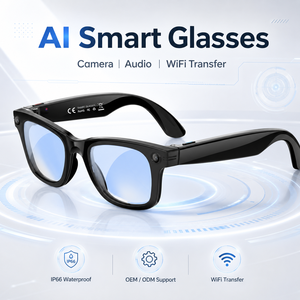
AI Smart Glasses With Camera Video Recording IP66 Waterproof

AI Smart Glasses With Camera Video Recording Real-Time Translation IP66 Waterproof

  • IP66 Dust & Water Resistance
  • First-Person Video Recording
  • Custom SDK & SDK App White-Labeling
Inquire Now
AR Smart AI Glasses Real-Time Translation Speech Identification

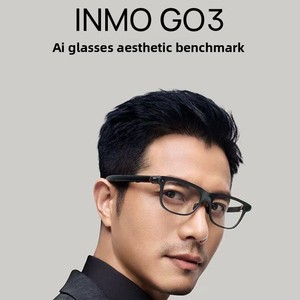
For INMO GO3 Real-time Translation AR Smart AI Glasses with XR Technology

  • Diffractive Optical Waveguide HUD
  • Instant Speech Identification
  • Ultra-Lightweight Ergonomic Frame
Inquire Now
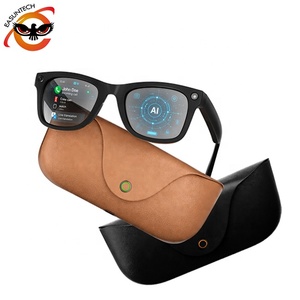
AI Smart Glasses App Control Open-Ear Music Calls Touch Control

AI Smart Glasses App Control | Open-Ear Music Calls Touch Control Audio Recording

  • Directional Acoustic Audio Drivers
  • Intuitive Temple Touch Gesture Control
  • Seamless Cloud AI Voice Assistant
Inquire Now
MT5 ULTRA AI Assistant Powered Smart Glasses 8MP 4K Camera WiFi 6 BT 5.4

MT5 ULTRA AI Assistant Powered Smart Glasses 8MP 4K Camera WiFi 6 BT 5.4 (35g)

  • WiFi 6 & Bluetooth 5.4 Chipset
  • 35g Featherweight Body with 2000mAh Case
  • 8MP CMOS Sensor for Ultra-HD Photos
Inquire Now
Smart Glasses With Camera Custom Logo Bluetooth Audio WiFi Transfer

Smart Glasses With Camera Custom Logo OEM/ODM Video Recording Eyewear

  • High-Speed WiFi Data Offloading
  • Full OEM Brand Logo Customization
  • Polarized UV400 Anti-Glare Lenses
Inquire Now
Professional AI Smart Translation Glasses 164+ Languages

Professional AI Smart Translation Glasses 164+ Languages Anti-Blue Light Business Eyewear

  • 164+ Language Real-Time Translation
  • Anti-Blue Light Half-Rim Business Frame
  • Low Latency Sound Delivery (<200ms)
Inquire Now
AI Assistant Smart Glasses Camera 1080P Video Real-time Translation

AI Assistant Smart Glasses Camera 1080P Video Real-time Translation & Activity Tracking

  • 1080P FHD Hands-Free Video Recording
  • Integrated Health & Step Monitoring
  • Voice Command Smart Home Control
Inquire Now
10+
Years R&D Expertise
100+
In-House Engineers
30+
Export Nations
ISO 9001
Certified Clean-Room Assembly

Technical Development Trends in Smart Eyewear (2025–2030)

The global consumer electronics market is experiencing a massive paradigm shift from traditional audio wearables and bulky VR headsets toward lightweight, invisible-tech smart glasses. According to global hardware benchmarking analyses, smart eyewear is transitioning from basic Bluetooth audio accessories to autonomous, AI-driven spatial computing devices. As a leading manufacturer in Shenzhen, China, we monitor four key technological vectors currently reshaping product development for B2B brands worldwide.

1. Multimodal Edge-AI and LLM Integration

Modern smart glasses are no longer tethered strictly to simple voice queries. The convergence of Large Language Models (LLMs)—such as OpenAI's GPT-4o, Google Gemini, and localized edge AI models—allows frames to process visual data in real time. Through built-in 8MP/4K micro-cameras, smart glasses can recognize objects, translate foreign street signs instantly, read thermal indicators, and summarize dense printed documents directly into an audio feed or Micro-OLED Heads-Up Display (HUD).

2. Advanced Waveguide Optics and Micro-Display Modules

The quest for stylish, everyday-wearable optics has rendered bulky refraction prisms obsolete. Future-ready factories in China are now scaling manufacturing for Diffractive Surface Relief Waveguides (SRG) paired with MicroLED optical engines. This combination yields visual modules smaller than 0.5cc while boasting brightness levels exceeding 3,000 nits—ensuring crystal-clear augmented reality text and navigation arrows even under direct sunlight.

MicroLED + Waveguide

Peak brightness up to 4,000 nits, ultra-high transparency (>85%), sub-35g total frame weight. Ideal for business HUDs & translation glasses.

Directional Open-Ear Audio

Dual-driver acoustic dipoles cancel reverse soundwaves, preventing audio leakage during sensitive business calls while preserving situational awareness.

Electrochromic Tint Lenses

Voltage-regulated molecular lens tinting changes from 90% clear indoors to 15% dark outdoors within 300 milliseconds automatically.

3. Low-Power SoC Architecture and Thermal Management

The ultimate challenge in smart eyewear manufacturing is squeezing High-Performance Computing (HPC), Bluetooth 5.4, WiFi 6, and battery cells into a frame under 40 grams without overheating temple arms against the human skin. Modern OEM designs utilize 4nm and 6nm low-power SoC architectures coupled with phase-change heat-dissipation graphite sheets. This ensures extended battery longevity while keeping operational skin-contact temperatures below 37.5°C during continuous 4K video recording or live multi-lingual translation streams.

Information Gain Insight: Sourcing smart eyewear equipped with custom battery management cases (charging cases up to 2000mAh) increases operational device endurance by 400%, solving the consumer pain point of limited frame-battery capacity without increasing on-face weight.

Global B2B Procurement Trends for Smart Eyewear Buyers

For brand owners, enterprise buyers, telecom operators, and consumer electronics distributors, navigating China's manufacturing ecosystem requires understanding evolving procurement strategies. Buyers are shifting away from generic white-label off-the-shelf electronics toward high-margin, bespoke ODM ecosystems.

1. Deep Customization: From Private Molds to Custom Firmware UI

Leading global brands are demanding full stack control. Sourcing partners no longer accept fixed factory applications. The industry norm now requires custom Android/iOS companion apps with private-brand cloud API integrations, customizable touch-control gesture mapping, localized voice prompts, and bespoke frame aesthetics utilizing Swiss TR90 memory polymers, titanium alloys, or handmade acetate components.

2. Strict Regulatory & Certification Alignment

Exporting smart eyewear to high-barrier markets such as North America, Europe, Australia, and Japan requires comprehensive certification portfolios. Reliable Chinese suppliers must provide turn-key regulatory compliance portfolios including:

  • EMC & Radio Compliance: FCC ID (USA), CE-RED (EU), TELEC (Japan) for Bluetooth 5.4 and WiFi 6 modules.
  • Hazardous Materials: RoHS 2.0, REACH, and California Proposition 65 testing for skin-contact frame plastics.
  • Ophthalmology & Optical Safety: IEC 62471 Photobiological safety testing for micro-displays, UV400 certification, and FDA Class I registration for prescription optical frames.
  • Ingress Protection: IP65 to IP66 dust and water jet resistance validation.

3. Risk Mitigation via Shenzhen Integrated Supply Chains

Establishing OEM/ODM partnerships directly in Shenzhen—the global epicenter of smart wearable electronics—shortens time-to-market by up to 60%. An integrated factory ecosystem brings PCBA surface-mount technology (SMT), acoustic chamber testing, optical alignment labs, and tooling shops under one unified quality management system (QMS), eliminating multi-vendor latency.

Why Partner with Worldwell Technology? Enterprise Manufacturing Advantages

As a premier Shenzhen-based OEM/ODM smart wearable manufacturer, Worldwell Technology Co., Ltd. combines over a decade of engineering domain expertise with advanced industrial production capabilities. We empower global brands in over 30 countries to bring cutting-edge wearable technology to market efficiently and reliably.

100+ R&D Engineering Team

Our dedicated team of hardware, firmware, acoustic, optical, and mobile app engineers supports rapid prototyping and end-to-end ODM product engineering.

One-Stop ODM Turn-Key Solutions

From initial industrial design (ID) and private mold development to PCBA engineering, SDK integration, packaging design, and mass assembly.

ISO 9001 Certified Quality System

Our dust-free cleanrooms, automated SMT lines, thermal shock chambers, and 100% optical/acoustic testing guarantee consistent batch-to-batch precision.

Whether you require low-MOQ private-label logo printing on our flagship smart glasses or complex bespoke electronics development from scratch, our technical sales engineers provide structured project management, transparent milestone timelines, and complete IP protection for your proprietary hardware designs.

Connect with an Engineer Now

Frequently Asked Sourcing & Manufacturing Questions (FAQ)

Clear, direct answers to common questions international procurement managers ask before starting an OEM/ODM smart eyewear project with Chinese factories.

1. What is the difference between OEM and ODM programs for smart glasses?
OEM (Original Equipment Manufacturing): We apply your custom brand logo, bespoke laser etching, localized packaging, and customized app splash screen to our existing, standardized smart glasses models (such as #MT5 ULTRA or #INMO GO3). OEM programs offer low MOQs and rapid delivery timelines (typically 2 to 3 weeks).
ODM (Original Design Manufacturing): We partner with you to build a completely custom product from the ground up. This includes private industrial design (ID), custom optical engine selection, specialized PCBA layout, unique frame mold tooling, custom firmware features, and bespoke companion app architecture. ODM timelines range from 3 to 6 months depending on tooling complexity.
2. How do you handle real-time translation server APIs and multi-language engine licensing?
Our translation smart glasses integrate with top-tier cloud translation engines (such as Google Translate API, Microsoft Azure Speech, and specialized LLM API connectors). We offer white-label mobile applications where buyers can either plug in their own proprietary API keys or use our pre-licensed, multi-engine translation server infrastructure covering over 164 languages and regional accents with under 200ms latency.
3. Can prescription (myopia/astigmatism) lenses be fitted into your smart frames?
Yes. Our smart frame structures are designed with modular lens rim channels. We supply magnetic prescription lens inserts, detachable inner frames, or standardized optical rim profiles compatible with standard prescription lens cutting equipment used by optical laboratories globally.
4. What is the Typical Minimum Order Quantity (MOQ) and Lead Time for Sourcing?
For standard OEM brand printing on ready-to-ship catalog models, MOQ starts as low as 100 to 500 units with a lead time of 10 to 15 business days. For customized colorways, specialized material coatings, or custom firmware integration, the standard MOQ is 1,000 units. Full private-mold ODM projects typically require an initial run of 3,000 to 5,000 units depending on tooling complexity.
5. How do you guarantee acoustic privacy and prevent sound leakage?
We utilize dual-speaker directional acoustic technology. By positioning miniature sound vents at precise angles along the temple arm and generating inverted phase acoustic waves, we direct soundwaves directly into the user's ear canal while cancelling external sound dissipation. This prevents bystanders from hearing phone conversations or AI voice feedback even in quiet indoor settings.
6. What quality control steps are performed prior to international shipment?
Every production batch undergoes a 100-point inspection protocol in accordance with AQL 1.0/2.5 standards:
• 100% automated optical inspection (AOI) for PCBA solder joints.
• Acoustic frequency response & directional leakage chamber testing.
• 10,000-cycle temple hinge stress and drop testing.
• Continuous 48-hour burn-in battery cycling and thermal camera validation.
• IP65/IP66 waterproof chamber validation.

Ready to Scale Your Smart Eyewear Brand?

Connect with our Shenzhen engineering and sales team today to request hardware evaluation samples, custom mold quotes, or detailed technical whitepapers.

Inquire Now