Explore our factory-direct ISO/IEC 14443 & NFC compliant payment rings, engineered with advanced micro-ceramic sintering, tungsten carbide, and epoxy encapsulated dual-chip technology.
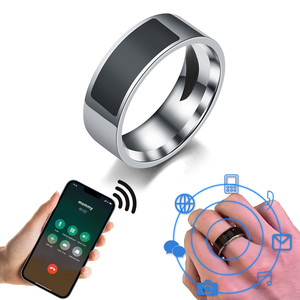
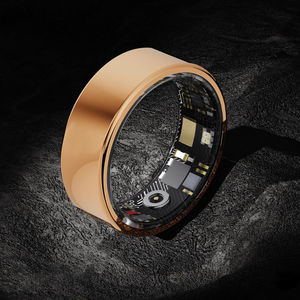
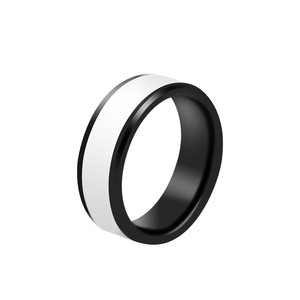
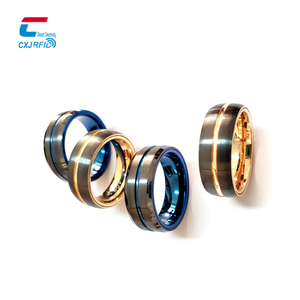
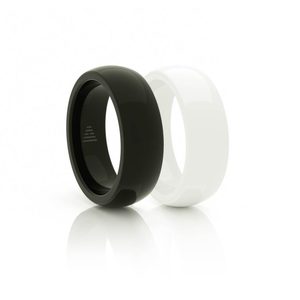
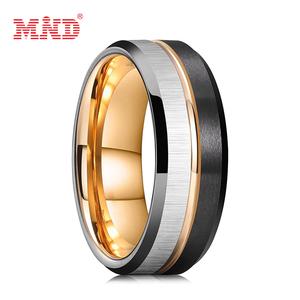
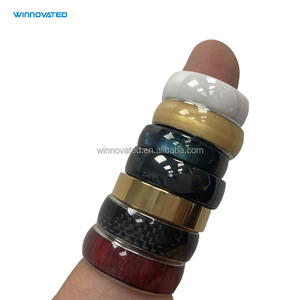
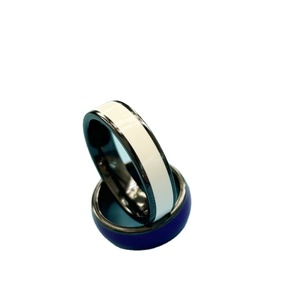
Understanding the technical paradigms, RF tuning parameters, and manufacturing metallurgy required for enterprise-grade contactless payment wearables.
The global smart payment wearable market has transitioned from legacy silicon wristbands to high-density ceramic, tungsten steel, and carbon fiber micro-form factors. As financial institutions, fintech issuers, transit operators, and luxury ring brands look to embed contactless EMVCo and RFID access control capabilities into sleek jewelry, the demand for **CE Certified Payment Ring Factories & Suppliers** with deep RF engineering expertise has escalated globally.
Unlike standard passive RFID keyfobs or active smartwatches that rely on lithium-ion batteries and bulk internal space, a passive contactless payment ring operates under strictly constrained electromagnetic parameters. It functions entirely via magnetic induction harvesting power directly from a Point-of-Sale (POS) terminal's 13.56 MHz High Frequency (HF) RF field. Ensuring stable coupling, sufficient power delivery to the Secure Element (SE), and reliable transaction speeds across various hand orientations requires specialized physical and electrical engineering.
A CE certified payment ring contains no battery. When placed within 1 to 4 cm of an NFC-enabled payment terminal, the terminal's reader coil generates an alternating magnetic field (13.56 MHz). The micro-coil embedded inside the ring’s ceramic or epoxy cavity intercepts these magnetic flux lines, converting magnetic energy into an electrical voltage via Faraday's Law of Induction. This induced voltage powers the onboard ISO/IEC 14443 microchip or Secure Element, allowing it to complete cryptographic handshake protocols within 300 milliseconds.
To deliver an uncompromised user experience, OEM buyers must evaluate suppliers based on their capability to solve key physical challenges: signal attenuation caused by metal ring bodies, dielectric distortion from human skin contact, and structural micro-fractures during high-pressure ceramic sintering. Worldwell Technology Co., Ltd. addresses these engineering barriers through automated cleanroom assembly, proprietary anti-metal ferrite shielding, and precision RF tuning.
Analyzing how Zirconia Ceramic, Tungsten Carbide, Carbon Fiber, and Epoxy Resin affect RF propagation and structural durability.
Sintered at 1500°C for 72 hours, Zirconia ceramic features an extremely low magnetic permeability, making it the premier material for NFC transmission. It is scratch-resistant (Mohs hardness 8.5), skin-safe, and allows 360-degree omnidirectional RF radiation.
Engineered for high density and luxurious weight. Because raw tungsten is conductive and reflects RF signals, our factories insert custom anti-metal ferrite layers beneath the ring channel to isolate the coil and maintain reader compatibility.
Ideal for cost-effective mass production and customizable artistic designs. Epoxy encapsulation provides absolute IP68/5ATM waterproofing, protecting internal microchips (NTAG213 / dual-frequency chips) from shock and chemical corrosion.
| Material Category | Dielectric Constant (εr) | RF Performance | Waterproof Rating | Biocompatibility (ISO 10993) | Primary Commercial Application |
|---|---|---|---|---|---|
| Zirconia Ceramic (ZrO2) | 28 - 30 | Excellent (0% RF attenuation) | IP68 / 5ATM Sealed | 100% Hypoallergenic | Fintech Bank Payments, Luxury Wearables |
| Tungsten Steel + Ferrite | N/A (Conductive outer) | Good (Directional anti-metal tuned) | IP68 Encapsulated | Nickel-Free Certified | Executive Fashion, Cashless POS Rings |
| Carbon Fiber Composite | 3.5 - 5.0 | High Propagation | IP68 Liquid Sealed | Skin Safe (RoHS/REACH) | Sports Wearables, Active Access Control |
| Epoxy + PVC Inner Core | 3.0 - 4.0 | High Sensitivity | 100% Waterproof | Non-toxic Polymer | Promotional, Social Media Sharing, Hotels |
Why premier global brands partner with Worldwell Technology Co., Ltd. for turnkey wearable deployment.
Headquartered in Bao'an District, Shenzhen, Worldwell operates an end-to-end wearable manufacturing ecosystem spanning over 10 years of market leadership. Our integrated production matrix combines structural engineering, custom silicon assembly, RF tuning labs, and dust-free cleanrooms operating under ISO 9001 certified quality control systems.
Our dedicated engineering team handles hardware architecture, custom antenna geometry modeling, chip firmware optimization, and companion mobile application integration (iOS/Android).
Every batch undergoes 100% automated RF resonance scanning, thermal shock endurance (-20°C to 70°C), micro-drop testing, and salt spray corrosion resistance for global compliance.
We provide comprehensive certification documentation (CE RED 2014/53/EU, REACH chemical safety, EN 62479 human exposure) required for seamless customs clearance in Europe and North America.
Emerging shifts in payment ecosystem integration, multi-app tokenization, and biometrically secured smart rings.
As retail buyers, financial institutions, and tech brands plan their product roadmaps for 2025 and beyond, the payment ring sector is undergoing four pivotal technological shifts:
1. Dual-Chip and Multi-Frequency Convergence: Enterprise clients no longer request single-function RFID rings. Modern procurement trends show an 85% increase in demand for hybrid rings containing both high-frequency (13.56 MHz NFC) and low-frequency (125 kHz access control) chips or dual-NFC setups (one secure payment element alongside a programmable NTAG213 chip for digital business cards and social media link sharing).
2. Open-Loop EMVCo Tokenization: Banks and fintech platforms are moving rapidly toward tokenization services (e.g., Fidesmo Pay, Digiseq, or proprietary banking SDKs). Ring factories must provide custom-tuned ICs capable of supporting secure token personalization during mass production or over-the-air (OTA) provisioning via smartphone apps.
3. Seamless Transit & Micropayments Integration: Smart rings are expanding beyond retail terminals into public transit networks (e.g., London Underground, New York OMNY, Tokyo Suica). This requires precise antenna Q-factor calibration so the ring operates under low RF field strengths produced by turnstiles.
4. Biometric Authentication Hybrid Wearables: Next-generation ODM research at Worldwell includes merging passive payment ICs with micro-fingerprint optical sensors and PPG health tracking arrays, offering zero-power payment credentials validated by the wearer's real-time biometric signature.
Navigating the regulatory landscape to ensure zero legal friction across international markets.
Importing smart rings into key regulatory jurisdictions like the European Union requires strict compliance with international electromagnetic, health, and environmental standards. Worldwell supplies complete testing dossiers for every product line:
Complies with 2014/53/EU Directive covering ETSI EN 300 330 for short-range device 13.56 MHz magnetic field strength, ensuring the ring does not cause or suffer from harmful RF interference.
All ceramic resins, metallic binders, and epoxy potting materials are verified under EU RoHS 2011/65/EU and REACH SVHC, certifying zero heavy metals, lead, cadmium, or toxic plasticizers.
Tested for prolonged skin contact according to ISO 10993 cytotoxicity standards. Guarantees zero skin irritation, nickel release, or thermal accumulation during continuous daily wear.
A practical framework for procurement officers and product managers evaluating smart ring manufacturers in China.
When selecting an OEM factory for custom payment rings, verifying digital marketing claims against actual manufacturing capability is critical. Below is the technical audit checklist developed by our senior quality engineering team:
| Audit Dimension | Technical Verification Criteria | Worldwell Standard |
|---|---|---|
| 1. Antenna Tuning Apparatus | Does the factory utilize Vector Network Analyzers (VNA) to measure S11 return loss and resonance frequency ($f_0 = 13.56 \text{ MHz}$)? | 100% automated VNA testing on all coil sub-assemblies before ceramic overmolding. |
| 2. Waterproof Test Infrastructure | Are rings subjected to vacuum bubble testing and high-pressure water chamber testing (5 bar / 50 meters)? | Every mass-production batch undergoes 5ATM hydrostatic chamber verification. |
| 3. Mold Precision & Sizing | Does the vendor support complete international ring sizing (US sizes 4 through 14) with tighter than ±0.1mm tolerance? | Full set of ultra-precision steel molds supporting standard US/EU ring sizes. |
| 4. Cleanroom Assembly Environment | Is IC bonding and epoxy resin potting conducted in a dust-controlled cleanroom to prevent air voids? | ISO Class 7 dust-free cleanroom assembly for zero air-bubble entrapment. |
| 5. Firmware & SDK Support | Can the factory program custom NDEF payloads, serial numbers, or integrate cryptographic keys during production? | In-house software team provides chip encoding, app SDKs, and cryptographic injection. |
Direct technical and operational answers to common questions asked by B2B buyers, product designers, and brand managers.
Partner with Worldwell Technology Co., Ltd. for factory-direct engineering, ISO 9001 quality assurance, and complete CE compliance support. Speak with our hardware experts today.