Explore our flagship OEM/ODM hardware platforms engineered with clinical-grade PPG sensors, AI voice assistant capabilities, real-time biometrics, and multi-language translation algorithms.

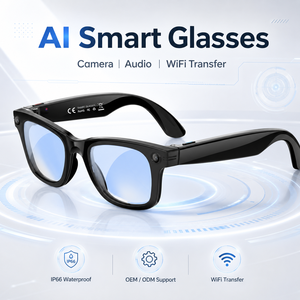

An authoritative technical evaluation of multi-channel Photoplethysmography (PPG), ECG sensor integration, regulatory compliance frameworks, and motion-artifact cancellation in smart wearables.
In modern wearable cardiology, achieving clinical-grade accuracy within ultra-compact form factors—such as smart rings, AMOLED watches, and AI smart glasses—requires solving complex optical physics and signal noise challenges. As a leading CE Certified Heart Monitor Manufacturer & Supplier based in Shenzhen's tech corridor, Worldwell Technology Co., Ltd. integrates state-of-the-art dual-wavelength green (535nm) and infrared (840nm) optical paths coupled with high-sensitivity photodetectors (PD).
Standard consumer pulse meters often suffer from severe motion artifacts caused by epidermal micro-movements, changes in ambient light, and peripheral skin perfusion variations. Our engineering team addresses these limitations through a proprietary multi-sensor fusion matrix:
For international B2B buyers, importing medical and consumer health wearables into the European Union demands absolute adherence to stringent regulatory frameworks. CE compliance for heart rate monitoring devices spans both electromagnetic compatibility and medical safety directives.
Key technological shifts reshaping the procurement strategies of global distributors, medical brands, and consumer technology retailers.
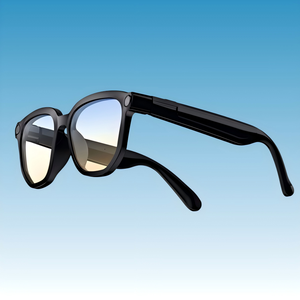
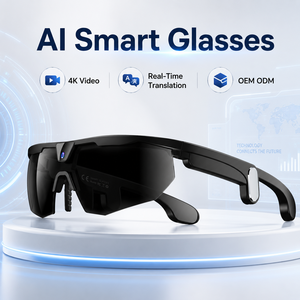
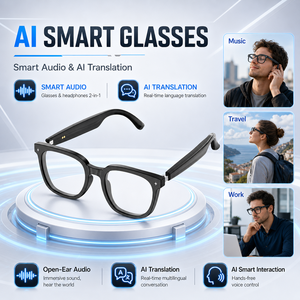
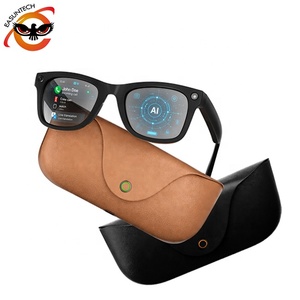
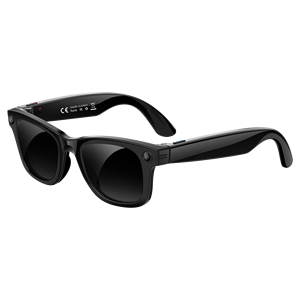
The wearable industry is witnessing a rapid shift from traditional wristbands to multimodal biometric wearables. Smart glasses incorporating camera capture, real-time AI voice translation (supporting 164+ languages), and temporal artery optical heart monitoring are becoming prime revenue drivers for tech brands seeking high margin differentiation.
Future B2B procurement mandates edge computing capabilities. Rather than streaming raw biometric signals to cloud servers, next-generation smart rings and watches employ localized neural processing units (NPUs) to detect Atrial Fibrillation (AFib), premature ventricular contractions (PVC), and sleep apnea indices directly on chip.
Battery longevity remains a core user friction point. Industry trends favor low-quiescent microcontrollers, dual-display architectures (AMOLED + ambient memory LCD), and micro-magnetic fast charging, enabling 7-to-14 day continuous heart rate tracking without sacrificing sensor frequency.
Shenzhen's premier turnkey OEM/ODM smart wearable manufacturer with integrated R&D engineering, dust-free cleanroom manufacturing, and full export compliance.
With a dedicated team of over 100+ hardware and software engineers, Worldwell owns the complete intellectual property stack. From industrial aesthetic design (ID) and structural engineering (MD) to high-density 10-layer PCBA layouts, custom Bluetooth firmware, and iOS/Android companion application development, we reduce time-to-market by up to 45% compared to conventional supply chains.
Our Shenzhen production hub spans state-of-the-art SMT lines and Class 100,000 dust-free cleanrooms. Every manufactured cardiac monitor undergoes 100% automated optical inspection (AOI), 5ATM/IP68 pressure chamber liquid ingress testing, high-temperature thermal cycling, and functional optical signal calibration before entering automated packaging.
Comprehensive technical and commercial answers tailored for enterprise sourcing directors, private-label brand managers, and medical device distributors.
Yes. Our OEM services allow global clients to apply private-label branding, customized packaging, laser etching, and tailored UI watch faces to our proven hardware platforms. Our full ODM program encompasses ground-up product engineering, custom ID molds, PCBA layout redesign, proprietary PPG/ECG algorithm tuning, and app SDK integration.
All Worldwell products are engineered to meet strict international market entry requirements. Our hardware holds valid CE (MDR/RED/EMC/LVD), FCC, RoHS, and REACH certificates issued by accredited third-party testing labs (TÜV, SGS, Intertek). Production operates under a certified ISO 9001 quality management framework.
We combine high-frequency multi-wavelength LED arrays with 6-axis motion sensors. Our software engine applies digital signal processing (DSP) adaptive noise cancellation algorithms to isolate pure pulsatile arterial signals from motion noise, ensuring high correlation (>98%) with clinical ECG Holter references.
Absolutly. Our software engineering team provides fully customizable iOS and Android apps under your brand name. We provide comprehensive API and SDK documentation enabling seamless biometric data sync into enterprise electronic health record (EHR) systems or third-party cloud infrastructure.
For standard OEM logo branding on established hardware models, MOQs typically start at 500–1,000 units with delivery within 15–20 days. Full ODM private mold development timelines range from 45 to 60 days including T1 sample validation and certification testing.
To expedite quotation and engineering review, please provide your target sales region, required certifications (CE/FCC/RoHS), target unit volume, specific biometric feature requirements (e.g., PPG heart rate, ECG, SpO2, AI translation, 4K camera), and targeted launch timeline.
Connect directly with our senior hardware engineers and international OEM sales team to discuss custom tooling, component specifications, and factory-direct volume pricing.