A Stainless Steel Fitness Tracker must do more than look polished beneath a cuff. Buyers need to assess sensor consistency, battery life, app compatibility, warranty terms, and the quality of the steel itself. A brushed case can resist everyday scuffs, but the finish alone does not prove durability. Ask manufacturers for material specifications, water-resistance test details, and clear information about replacement bands.
The wider market offers useful context. IDC reported 534.6 million wearable-device shipments worldwide in 2024, a 6.1% increase from 2023, in its Worldwide Quarterly Wearable Device Tracker. That figure covers multiple wearable categories, not stainless steel trackers alone. It signals a large buying environment, but not a guarantee of product quality. Details matter. IDC research director Jitesh Ubrani’s market commentary provides a relevant buyer takeaway: growth across wearables makes product differentiation increasingly important. In practice, compare the clasp, sensor contact, charging method, and companion-app support—not just the polished product photos. A tracker may feel premium in a showroom yet prove awkward after a full workday. This guide examines manufacturers through practical criteria, including materials, customization, quality control, and after-sales support. Use those details to shortlist suppliers, then verify claims with samples and written specifications.
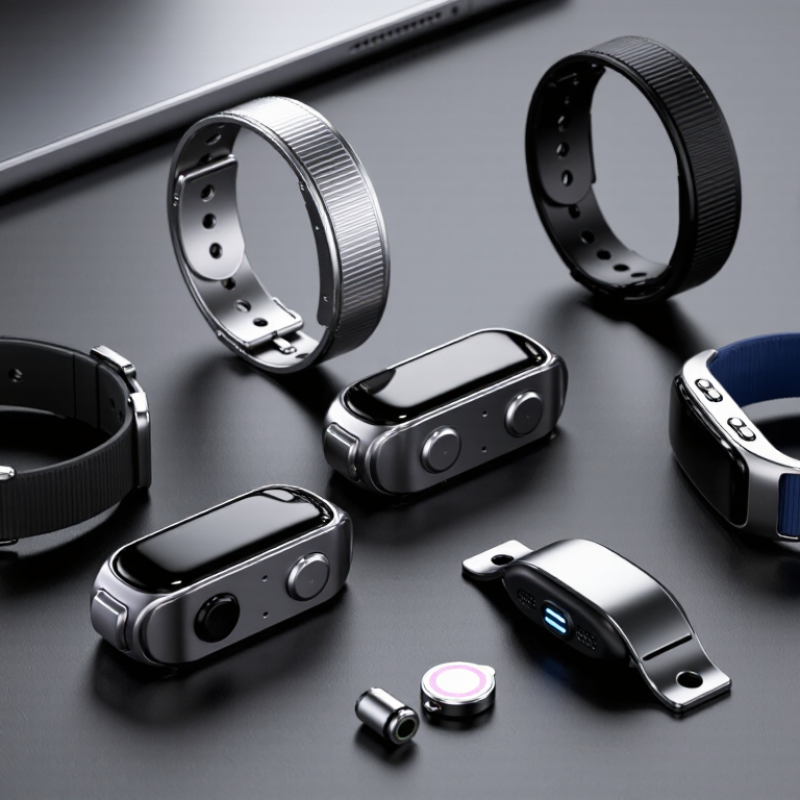
Top Stainless Steel Fitness Tracker Manufacturers for Buyers
Understanding Stainless Steel Fitness Trackers
A stainless steel fitness tracker combines activity-monitoring features with a metal case or band. The steel can feel cool and solid against the wrist, while its finish gives the device a more formal look than many plastic models. “Stainless” does not mean it can never show scratches or wear. Surface quality, coating, and daily handling all matter.
Buyers should check which parts use steel: the case, the bracelet, or both. A steel band may look durable, but it can feel heavy during running or sleep. Check the clasp for secure closure and the links for smooth edges. Small detail, big difference. Also consider skin comfort. Some people find metal bands irritating, especially when sweat or moisture stays underneath. A removable band can make cleaning and replacement easier, though it adds another part to assess.
Sensor performance depends on more than the casing. Fit matters: a loose tracker may move during exercise, while a tight one can feel uncomfortable. Review the display, battery life, charging method, and water-resistance information for the activities you plan to do. Specifications can sound impressive, but they do not guarantee a comfortable daily experience. I would not choose steel for appearance alone; weight and fit deserve equal attention.
Typical specification ranges for the chemical composition of stainless steel grades 304 and 316L, often considered for wearable components. Values are percentage by mass; they describe grade specifications, not measurements of finished trackers.
Grade 316L specifies molybdenum, which can improve corrosion resistance in certain environments. Actual suitability depends on the component design, finish, manufacturing process, and applicable material standard.
For a stainless steel fitness tracker, compare the case material, surface finish, and skin-contact parts separately. A stated steel grade is useful, but ask suppliers for material documentation and sample units. Check edges around the clasp and caseback; rough transitions can irritate skin during long workouts. Finish matters, too. Brushed surfaces may hide small scratches better than polished ones, while coatings can wear at contact points. A simple test helps: wear a sample for several hours, then inspect the underside and clasp. It is not a laboratory test, but it can reveal overlooked comfort issues.
Sensor specifications need context. Optical heart-rate readings depend on fit, movement, skin contact, and workout intensity. Compare readings during walking and faster arm movement, not only while sitting still. Accelerometers support step and activity tracking, while GPS can improve outdoor distance estimates but may affect battery life. Ask how the manufacturer validates sensor performance and whether results are tested across different wrist sizes. Check whether the screen stays readable outdoors, buttons work with damp fingers, and the charging contacts resist corrosion. Small details matter. Water-resistance claims should match the intended use, and buyers should review the test conditions rather than relying on a number alone. I would avoid choosing from a feature list only; actual sample performance can be less polished than the specification sheet.
Leading stainless steel fitness tracker manufacturers combine precise metalworking with reliable electronics assembly. The case deserves close attention: dimensions should stay consistent, edges should feel smooth, and the finish should resist visible wear. Small details matter. A clasp that pinches or a rough seam can make a well-designed tracker uncomfortable. Buyers can ask how samples are measured and how production tolerances are monitored.
A capable manufacturer should explain its stainless steel options, finishing methods, and assembly process in clear terms. Request material records and sample units, then inspect the clasp, sensor window, buttons, and joints under ordinary lighting. Check whether the tracker sits securely during movement and whether charging contacts align cleanly. These checks are practical, not glamorous. Still, they can reveal problems early. Supplier answers should be specific; vague promises make comparison difficult.
Production consistency matters as much as an attractive sample. Ask how the factory handles defects, communicates design changes, and checks finished units before shipment. Even a skilled supplier may need several sample rounds, and rushing that stage is tempting but unwise. A polished case can hide a weak hinge or uneven coating. No checklist catches everything, so buyers should keep notes and compare each revision against the agreed specifications.
Choosing a stainless steel fitness tracker manufacturer requires more than comparing unit prices. Ask for the exact steel grade used in the case and clasp. Request material certificates tied to the production batch, not just a generic brochure. A polished case can look convincing; it proves little about alloy composition. Ask for evidence. If possible, have an independent lab check a sample against the stated specification.
Verify performance claims on the exact model you plan to order. Request test reports for water resistance, battery runtime, and sensor accuracy, including test conditions and sample sizes. A battery figure measured with the screen off may not reflect daily use. Compare the report with your own sample: wear it during exercise, check data consistency, and inspect the charging contacts after repeated use. Small discrepancies matter.
Assess the factory’s quality controls, too. Ask how incoming steel is identified, how dimensions are checked, and whether failed units are recorded by batch. Review a recent inspection record with identifying details removed. Confirm that the sample, report, and production version share the same design and materials. Even a credible report leaves room for variation between batches, so set written acceptance criteria before ordering. I would not rely on promises alone; a neat checklist can still miss a weak point.
Choosing a stainless steel fitness tracker manufacturer means checking more than the sample’s shine. IDC’s Worldwide Quarterly Wearable Device Tracker reported 534.6 million wearable-device shipments in 2024, up 6.0% year over year. Grand View Research estimated the global wearable technology market at USD 84.2 billion that year. These figures signal a crowded, fast-moving category, but they do not guarantee reliable suppliers. Ask what stainless steel grade is used, how edges are finished, and whether coating and sweat-resistance tests are documented. Ask for proof. A polished sample can hide inconsistent batches, so compare several units and inspect clasp alignment, seams, and surface marks under bright light.
Review the manufacturer’s quality controls, production capacity, minimum order quantity, and defect-resolution process before discussing price. Request material certificates and test records, and clarify who owns tooling and how design changes are approved. For a tracker worn against skin during workouts, comfort matters: check for sharp edges, rough welds, and finishes that discolor after repeated cleaning. Confirm that the factory can trace materials by batch and share realistic lead times. Small details matter. No checklist catches every issue; even a thorough audit cannot predict every production problem. Ask how the supplier handles failed inspections, replacement parts, and delivery delays. A written answer is more useful than a confident promise.
| Buying Dimension | Practical Specification or Check | Why It Matters | What to Request or Verify |
|---|---|---|---|
| Stainless steel grade | Specify the grade for each metal part, such as the case, bezel, clasp, or band. 304 and 316L are distinct stainless steel grades; 316L contains molybdenum and is generally more resistant to chloride-related corrosion than 304. | The appropriate grade depends on the intended environment, design, and budget. A grade name alone does not establish the quality of a finished product. | Request material specifications and traceable material documentation for the components covered by the order. |
| Skin-contact materials | Identify every component that may contact skin, including coatings, plating, pins, and clasp parts. | The complete assembly—not only the main case—can affect comfort, durability, and regulatory suitability. | Request a component-level materials list and applicable chemical-compliance documentation for the destination market. |
| Water resistance | Define the required rating and test method. An IP rating is based on tests specified by IEC 60529; water-resistance claims should state the test conditions and limitations. | A rating does not mean that every activity or exposure is safe. A pressure rating should not be read as a guaranteed real-world diving depth. | Request the test report for the finished tracker and written guidance on swimming, showering, and other intended use. |
| Case and band fit | Agree on case dimensions, band width, adjustment range, clasp type, and compatibility between the band and case. | Fit affects comfort, usability, and whether buyers can replace or adjust the band. | Review dimensioned drawings and a production-representative sample; confirm the measurement tolerances in the purchase specification. |
| Finish and edge quality | Specify the required finish, such as brushed or polished, and define acceptable appearance and edge conditions. | Finishing affects appearance and hand feel. Scratches, burrs, and sharp edges can reduce perceived quality and comfort. | Approve a reference sample and document visual inspection criteria for finished metal parts. |
| Band and clasp durability | Set test procedures for clasp operation, band adjustment, and connection points based on expected use. | These moving or load-bearing parts can wear or loosen during repeated use. | Request the test method, sample size, acceptance criteria, and results; do not rely on an unspecified “durability tested” claim. |
| Fitness and sensor functions | List the required functions, such as step counting, heart-rate monitoring, sleep tracking, and phone connectivity. | Sensor performance can vary with device design, fit, activity, and user characteristics. Feature lists alone do not prove measurement accuracy. | Request function-specific test results, supported phone and operating-system details, and clear descriptions of measurement limitations. |
| Battery and charging | Define target operating conditions, charging method, and the battery information required for the product and its shipment. | Battery life depends on settings and usage, while battery transport and labeling requirements may apply to shipments. | Request battery specifications, a stated battery-life test scenario, charging instructions, and applicable transport documentation. |
| Quality control | Agree on inspection stages and acceptance criteria for incoming materials, assembly, and finished goods. | Written criteria make quality expectations clearer and help identify defects consistently. | Request the inspection plan, defect definitions, sampling approach, and example inspection records before production approval. |
| Order quantity and lead time | Confirm minimum order quantity, sample timing, production lead time, and reorder terms for the specific design and order volume. | These commercial details depend on the supplier, materials, customization, and production schedule; there is no universal industry figure. | Obtain a written quotation and production schedule that specify quantities, assumptions, and delivery terms. |
| Customization and documentation | Define any custom case, band, finish, packaging, or software requirements before approving production. | Late changes can affect tooling, validation, cost, and delivery dates. | Confirm ownership and approval of drawings, samples, packaging artwork, and market-specific product documentation. |
Buyer note: Use these points as a supplier-evaluation checklist. Confirm specifications, test conditions, compliance requirements, and commercial terms for the exact product and destination market before placing an order.
Steel may cover the case, bracelet, or both. Check the specifications; the finish alone can be misleading.
It can feel solid and look formal, but may feel heavy during running or sleep. Try the fit first.
Test the clasp, links, and edges. Small detail, big difference. Rough seams or sharp edges can irritate your wrist.
Request the exact steel grade and batch-linked material certificates. A shiny surface proves little. Consider independent sample testing.
Ask for test reports for the exact model, including conditions and sample sizes. Then compare the claims with a unit you wear.
Check the sensor window, buttons, joints, charging contacts, and clasp under ordinary lighting. Wear it during movement, too.
Ask how it tracks defects, checks dimensions, and records batch results. Compare production units with the approved sample.
No. Weight, fit, comfort, battery life, and cleaning matter too. I might still miss a detail, so keep notes while comparing samples.
Choosing a Stainless Steel Fitness Tracker requires more than comparing appearance or price. Buyers should understand how stainless steel affects durability, comfort, weight, and everyday wear, then compare the materials used throughout the device. Important considerations include sensor accuracy, battery life, water resistance, display readability, app compatibility, and the fitness and health metrics the tracker can measure.
When assessing manufacturers, review their production capabilities, quality-control procedures, customization options, communication, and after-sales support. Verify product claims by requesting clear specifications, sample units, and relevant test documentation, and confirm that the stated features match the device’s actual performance. The right manufacturer will depend on your order size, target market, budget, and product requirements. A careful comparison helps buyers select a dependable partner and a tracker that balances functionality, comfort, and lasting quality.