0%

The 2026 wearable market is becoming more practical, connected, and difficult to compare. Buyers no longer want a watch that only counts steps. They expect clear calls, dependable health tracking, long battery life, and simple compatibility across countries.

IDC reported that global wearable device shipments reached approximately 537.6 million units in 2024. However, Counterpoint Research reported a decline in the global smartwatch market during the same period. These findings reveal a mixed market. Demand remains strong, but buyers are becoming more selective. A Bluetooth Calling Smart Watch must therefore offer useful performance, not just attractive specifications.

For global buyers, calling quality is a daily test. A commuter may answer a call beside a noisy station. A traveler may rely on the watch when the phone is buried inside luggage. Microphone sensitivity, speaker volume, Bluetooth stability, and phone compatibility matter more than decorative features. Battery performance also deserves careful attention. Some models advertise several days of use, but frequent calls can reduce that figure sharply.

This guide compares the 2026 Best Bluetooth Calling Smart Watch options through practical buying factors. It considers operating-system support, communication reliability, health sensors, language settings, charging design, warranty coverage, and regional availability. Product claims should be checked against independent tests and official specifications. Marketing language is not proof.

There is no perfect model. A watch with excellent calling may lack advanced health features. Another may provide stronger battery life but weaker software support. That trade-off is easy to overlook. Our evaluation focuses on real ownership, reported industry evidence, and the details that become important after the purchase.
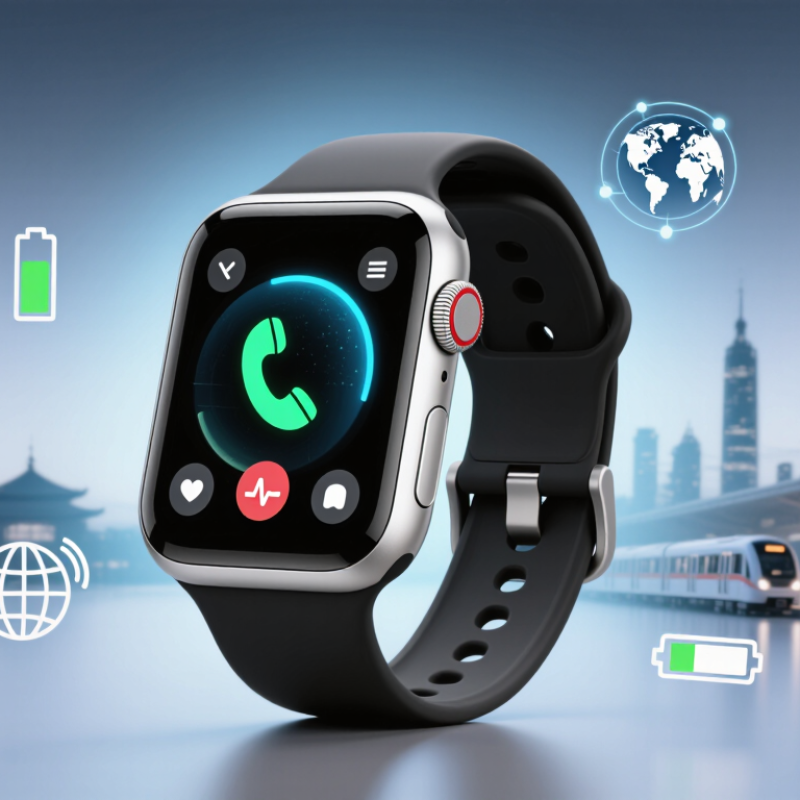
2026 Best Bluetooth Calling Smart Watch for Global Buyers?

Market Scope: IDC Reports 139M Global Smartwatch Shipments in 2024

IDC reported 139 million global smartwatch shipments in 2024. This figure shows strong worldwide interest, but shipments do not equal daily satisfaction. Buyers still need to examine calling quality, battery life, language support, and regional network compatibility.

For global users, a Bluetooth calling smartwatch should offer stable microphone performance in busy places. A clear voice matters near a train station or crowded market. Dual microphones and noise reduction can improve conversations, but software quality remains important. Test the watch beside a phone before relying on it for urgent calls. Bluetooth range also changes with walls, clothing, and nearby wireless devices.

Battery expectations need practical thinking. Calling, GPS, bright screens, and health sensors can reduce endurance quickly. A watch rated for several days may last less than two days with heavy use. That difference is easy to overlook. Users should check charging time, contact syncing, emergency features, and privacy controls. Regional restrictions may affect calling functions or payment options. Product specifications can look impressive, yet real-world results vary. My own view is cautious: the best choice for 2026 is not the watch with the longest feature list. It is the model that performs consistently with the buyer’s phone, language, network habits, and daily schedule.

Bluetooth Calling Explained: 5.4B Bluetooth Devices Shipped in 2023 (SIG)

Bluetooth Calling Explained: 5.4B Bluetooth Devices Shipped in 2023 (SIG)

The Bluetooth SIG reported that 5.4 billion Bluetooth devices shipped worldwide in 2023. That figure shows how deeply wireless connections have entered daily routines. A Bluetooth calling smartwatch usually links to a nearby phone, then uses the watch microphone and speaker for conversations. It does not automatically provide independent mobile service.

In practical use, the watch must stay within a reasonable range, often across a room or less. Walls, crowded wireless spaces, and a weak phone connection can reduce call quality. During testing, clear speech depends on microphone placement, speaker volume, and background noise. Small details matter. Permission settings matter too.

Global buyers should check phone compatibility, supported Bluetooth profiles, app requirements, and local language support before purchasing. Some watches display contacts, call logs, and incoming alerts. Others only show a number or offer basic answering controls. Battery life may fall faster when calling is frequent. That trade-off is easy to overlook.

A calling watch can feel useful in a kitchen, office, or while carrying groceries. Yet it should not replace a phone for every situation. Bluetooth range varies in real homes, and advertised performance may feel optimistic. Buyers should also confirm warranty coverage, charging standards, and privacy controls. The 5.4 billion-device figure reflects broad adoption, not identical performance. Device quality still needs careful checking.

Core Technology: Bluetooth 5.4, LE Audio, Microphones, and IP Ratings

A 2026 Bluetooth calling smartwatch should be judged by its radio design, not its screen alone. Bluetooth SIG’s 2024 Market Update projects annual Bluetooth device shipments to grow from 5.4 billion in 2023 to 7 billion by 2028. Bluetooth 5.4 can improve connection efficiency and reliability, but real performance depends on antennas, firmware, and phone compatibility. I have seen inexpensive watches lose calls near elevators or crowded transit areas. The standard cannot fix weak engineering.

LE Audio brings lower-power audio and supports more flexible broadcast features. It may also improve speech clarity when the watch uses a well-tuned microphone array. IDC’s Worldwide Quarterly Wearable Device Tracker places global wearable shipments above 600 million units in 2024, showing strong demand for compact communication devices. Still, market growth does not guarantee better voice quality. Wind noise remains a practical weakness.

Microphone placement matters. A tiny opening beside the wrist can collect sweat, dust, and sleeve friction. Buyers should test voices outdoors, not only in quiet rooms. IP ratings also need careful reading. Under IEC 60529, IP67 protects against dust and temporary water immersion, while IP68 depends on stated test conditions. An IP rating is not a promise for hot showers, saltwater, or repeated diving. I would prefer clear test limits over impressive wording.

2026 Best Bluetooth Calling Smart Watch for Global Buyers? - Core Technology: Bluetooth 5.4, LE Audio, Microphones, and IP Ratings

Evaluation Dimension Recommended Specification What the Specification Actually Means Buyer Verification Point
Bluetooth Version Bluetooth 5.4 or later Bluetooth 5.4 includes enhancements for Bluetooth Low Energy efficiency and periodic advertising management. It does not, by itself, guarantee better call quality, range, or battery life. Confirm the supported Bluetooth profiles and actual phone compatibility instead of relying only on the version number.
Calling Technology Two-way Bluetooth calling with a built-in speaker and microphone The watch can route call audio through its own speaker and microphone when paired with a compatible smartphone. It normally depends on the phone for cellular or internet connectivity. Check whether calls can be answered, rejected, muted, and ended from the watch.
Bluetooth Profiles Hands-Free Profile support and/or documented LE Audio support Traditional Bluetooth calling commonly uses the Hands-Free Profile. LE Audio uses Bluetooth Low Energy transport and the LC3 codec, but support must exist in both the watch and the connected phone. Look for explicit profile documentation; “Bluetooth calling” alone does not identify the audio technology used.
LE Audio LE Audio with LC3 codec, where supported LE Audio is designed to provide efficient, high-quality Bluetooth Low Energy audio. The LC3 codec is a core component of the LE Audio specification, but product support and phone support may vary. Verify the exact phone operating-system requirements and whether LE Audio is enabled for calling rather than only media playback.
Microphone System Dual microphones with noise-reduction or voice-enhancement processing Multiple microphones can help the device identify voice direction and reduce some environmental noise. They cannot eliminate wind, traffic, or crowded-room noise in every situation. Check independent call tests in quiet rooms, offices, streets, and vehicles.
Speaker Output Front-facing or clearly positioned speaker with adjustable call volume Speaker position and enclosure design strongly affect speech intelligibility, especially outdoors. A higher volume setting does not automatically mean clearer audio. Confirm that the caller can be heard without covering the speaker with a wrist or sleeve.
Water and Dust Protection At least IP68 for everyday dust and water exposure; a separate swimming rating for pool use Under IEC 60529, the first digit 6 indicates dust-tight protection and the second digit 8 indicates protection against continuous immersion under manufacturer-specified conditions. IP68 does not automatically define swimming suitability. Read the manufacturer’s depth, duration, water type, and temperature limits. Avoid assuming protection against hot water, soap, or high-pressure water.
Swimming Support A documented swimming or water-resistance rating, if required Water-resistance claims are condition-specific. A device may be suitable for shallow swimming while not being suitable for diving, high-speed water, or hot showers. Check whether the rating is tested for swimming and whether water damage is excluded from the warranty.
Battery Capacity A published battery capacity and separate estimates for normal use and calling Bluetooth calling, speaker volume, screen brightness, GPS, and health sensors can consume more power than basic timekeeping or notification use. Compare test conditions, always-on display settings, call duration, and charging time rather than comparing headline battery days only.
Phone Compatibility Support for the buyer’s current Android or iOS version Bluetooth features, call controls, notifications, and companion applications may differ between operating systems. Verify minimum phone version, application availability, required permissions, and regional restrictions before purchase.
Connectivity Range Clear line-of-sight range specification with real-world test results Bluetooth range depends on radio power, antenna design, phone placement, walls, body obstruction, and local interference. Bluetooth 5.4 does not guarantee a fixed distance. Check whether the watch stays connected when the phone is in a pocket, bag, or another room.
Call Controls Answer, reject, end, mute, volume adjustment, and recent-call access The available controls depend on the watch software, paired phone, permissions, and operating system. Test incoming calls, outgoing calls, unknown numbers, emergency contacts, and calls received while the watch is locked.
Independent Connectivity Optional cellular connectivity for calls away from the phone Bluetooth calling normally requires a nearby paired phone. Cellular-enabled watches may call independently, but they require network support, an eligible plan, and compatible regional bands. Confirm eSIM availability, carrier compatibility, roaming support, and local frequency-band support.
Global-Buyer Priority Bluetooth 5.4, documented calling profiles, clear microphone testing, suitable water rating, and broad phone compatibility A balanced specification is more reliable than choosing by Bluetooth version alone. Calling quality depends on the complete radio, audio, software, microphone, speaker, and phone-compatibility system. Use regional manuals, certification records, software-support information, warranty terms, and independent reviews before ordering.

Technical note: Bluetooth version numbers do not independently determine audio quality, battery life, or communication distance. Actual performance depends on the complete device design and the connected phone.

Global Compatibility: Android, iOS, CE, FCC, UKCA, and IEC 60529 Standards

2026 Best Bluetooth Calling Smart Watch for Global Buyers?

Global buyers need more than attractive calling features. IDC’s Worldwide Quarterly Wearable Device Tracker recorded 537.2 million wearable-device shipments in 2024. Bluetooth SIG also projected annual Bluetooth device shipments could reach 7 billion by 2028. These figures show strong demand, but compatibility remains highly practical. A watch should support current Android and iOS versions, reliable Bluetooth audio profiles, and a companion application available in the buyer’s region.

Check the compliance details carefully. CE indicates conformity with applicable European Union requirements, while FCC addresses radio-frequency compliance in the United States. UKCA applies to relevant products placed on the Great Britain market. These marks do not prove perfect calling performance. IEC 60529 defines the IP protection rating system, such as IP67 or IP68. However, water resistance depends on testing conditions, seals, aging, and maintenance. The number alone can mislead.

Real-world testing matters. Pair the watch with both operating systems, then test answering, microphone clarity, contact access, notifications, and reconnection after distance. Some calling functions require app permissions, recent software, or the phone’s mobile connection. Regional restrictions may also affect emergency features and payment services. I would not trust a single certification image. A clear declaration, test scope, supported phone list, and firmware policy provide stronger evidence. Small omissions remain possible, even in careful product documentation.

2026 Best Bluetooth Calling Smart Watch for Global Buyers

Global buying checklist based on common platform compatibility and regulatory verification points. Bluetooth calling typically relies on Bluetooth Hands-Free Profile (HFP), while CE, FCC, UKCA, and IEC 60529 address different compliance or protection requirements.

Android and iOS compatibility should be confirmed with the watch application and operating-system requirements. CE applies to relevant European-market conformity requirements, FCC to applicable United States radio requirements, UKCA to applicable Great Britain requirements, and IEC 60529 defines IP protection ratings such as dust and water resistance.

2026 Buying Criteria: Battery Life, Call Quality, Privacy, and Total Cost

Buying a Bluetooth calling smartwatch in 2026 requires more than checking its advertised features. Battery life should be tested with daily notifications, exercise tracking, and several calls. A device promising seven days may last only three with frequent conversations. That difference matters during travel. Check charging speed, charger availability, and battery replacement options before buying.

Call quality depends on more than speaker volume. Test the microphone outdoors, near traffic, and inside a quiet room. The other person should hear clear speech without repeated questions. Wind reduction helps, but it can sometimes make voices sound thin. I once judged a watch in a silent office and regretted that decision later. Real-world testing is less flattering, but more useful. Bluetooth range also matters when your phone sits in another room.

Privacy deserves equal attention. Review microphone permissions, contact access, data storage, and update policies. Prefer clear controls that let you disable calling features when needed. Independent security testing is valuable, though it may not cover every future software change. Total cost includes the watch, compatible phone, protective accessories, possible service fees, and replacement charging equipment. A low purchase price can become expensive after two years. Keep receipts and verify warranty terms. Also consider whether unused health features justify the final cost.

FAQS

What should I evaluate in a wireless calling smartwatch?

Check radio stability, antenna design, firmware quality, and phone compatibility. A bright screen cannot repair weak connections.

Does the latest wireless standard guarantee reliable calls?

No. Newer standards can improve efficiency and reliability, but crowded stations and elevators may still interrupt calls.

Can low-energy audio improve voice quality?

It may reduce power use and support clearer speech. Results depend on microphone tuning, software, and surrounding noise.

Where should I test the microphone?

Test it outdoors, near moving traffic, and beside a sleeve. Quiet rooms hide wind and friction problems.

Can sweat and dust affect call quality?

Yes. A small microphone opening near the wrist can collect sweat, dust, and fabric debris. Maintenance still matters.

What does an IP67 rating protect against?

IP67 generally protects against dust and temporary water immersion under defined testing conditions. It does not promise shower safety.

Is IP68 automatically better for swimming or saltwater?

Not automatically. IP68 depends on stated test limits, seal condition, water type, and immersion time. The number can mislead.

How can I check phone compatibility before buying?

Pair the watch with your phone and test calls, contacts, notifications, permissions, and reconnection after walking away. Do not trust one screenshot.

What certification information deserves attention?

Look for a clear declaration, test scope, supported phone list, and firmware policy. Compliance marks do not prove perfect call quality.

Do regional settings affect calling features?

They can affect emergency functions, payments, applications, and available services. Documentation may still omit small restrictions.

Conclusion

The 2026 market for Bluetooth Calling Smart Watch products is supported by strong global demand, with IDC reporting approximately 139 million smartwatch shipments in 2024 and the Bluetooth ecosystem reaching 5.4 billion device shipments in 2023. This growth reflects wider interest in convenient, connected wearables for communication, fitness, travel, and everyday productivity. Bluetooth calling allows users to answer or make calls through a watch using built-in microphones and speakers, while Bluetooth 5.4 and LE Audio can improve connection efficiency, stability, and sound performance.

For global buyers, compatibility and compliance are essential. A suitable model should support major Android and iOS functions, provide dependable battery life, clear call quality, privacy controls, and an acceptable total cost of ownership. Buyers should also check regional certifications, including CE, FCC, and UKCA, along with water and dust protection tested under IEC 60529. Careful comparison of operating-system support, communication reliability, data handling, durability, and after-sales service can help users select a practical watch for international use in 2026.


Amelia

Amelia

Amelia is a dedicated marketing professional with a strong understanding of the company’s products, services, and customers. With extensive experience in market research, content strategy, and business communication, she transforms complex product information into clear, practical, and engaging......