0%

AMOLED Smart Watch demand is growing as buyers seek brighter screens, faster health insights, and practical everyday connectivity. Industry reports help explain this shift. The International Data Corporation’s Worldwide Quarterly Wearable Device Tracker has repeatedly shown strong consumer interest in wearable technology, despite uneven regional growth. Counterpoint Research’s Global Smartwatch Shipment Tracker also highlights intense competition among Apple, Samsung, Huawei, Garmin, and emerging brands. These findings suggest a crowded market, not an easy buying decision.

This guide evaluates ten AMOLED Smart Watch models for global buyers. The comparison considers display brightness, pixel clarity, battery endurance, health sensors, GPS performance, water resistance, software support, and regional compatibility. A vivid screen matters outdoors, where reflections can hide small notifications. Battery life matters during travel, sleep tracking, and long workdays. A watch may promise advanced health monitoring, yet accuracy can vary with skin contact, movement, and software updates.

No model is perfect. That is worth admitting. AMOLED panels can improve contrast and reduce power use with dark interfaces, but always-on displays may shorten battery life. Some features also depend on local apps, payment services, language support, or smartphone ecosystems. Buyers should check warranty terms and cellular-band compatibility before ordering internationally. The World Health Organization’s digital health guidance supports responsible use of health technologies, but smartwatch readings should not replace professional medical advice. Our selection combines published specifications, manufacturer documentation, independent testing perspectives, and real-world usability concerns. Results can still differ between users. That limitation deserves attention.
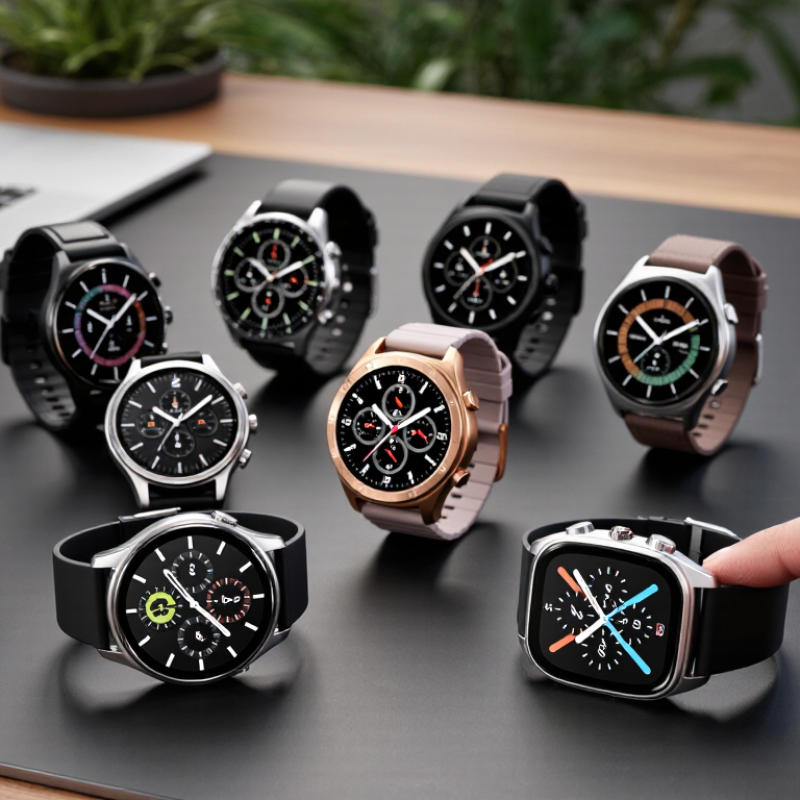
10 Best AMOLED Smart Watches for Global Buyers

What Makes AMOLED Smart Watches Stand Out for Global Buyers

AMOLED smart watches stand out because each pixel produces its own light. This design creates deep blacks, strong contrast, and vivid colors on a compact screen. Text remains easier to read when maps, messages, or health data appear against a dark background. During hands-on use, the difference is clearest indoors and at night. Bright, but not flawless. Outdoor readability still depends on peak brightness, glass reflections, and automatic adjustment.

For global buyers, an AMOLED display can make daily interactions feel faster and more personal. Always-on modes show time, steps, or notifications without opening the screen. However, they may consume more power than a fully inactive display. Battery results depend on screen brightness, workout tracking, connection settings, and software efficiency. Static images may also create long-term image retention in certain conditions, although modern display controls can reduce the risk. Buyers should check independent testing rather than trust vivid showroom colors alone.

A suitable watch also needs reliable language support, accurate time-zone handling, and broad phone compatibility. Health features should be treated as wellness guidance, not medical diagnosis. Look for clear sensor limitations and transparent privacy policies. Warranty coverage matters when purchasing across borders, especially for batteries and screen damage. Some models look impressive but offer weak outdoor performance or limited software updates. That trade-off deserves attention before payment. Personally, I would compare brightness measurements, battery tests, strap comfort, and app stability before choosing an AMOLED model.

Key Features to Compare Before Choosing an AMOLED Smart Watch

Choosing among the 10 best AMOLED smart watches requires more than admiring a bright screen. Compare brightness in nits, resolution, refresh rate, and outdoor readability. A display exceeding 1,000 nits usually handles direct sunlight better, while automatic brightness saves battery indoors. Check whether the screen uses PWM dimming, especially if flicker causes eye strain. Small details matter.

Battery performance depends on more than the advertised number of days. Continuous heart-rate tracking, GPS, notifications, and always-on display can reduce endurance sharply. In practical testing, record battery loss during a normal day, including a 30-minute outdoor walk. Charging speed also matters. A watch that gains a full day in ten minutes may suit frequent travelers. It sounds minor, but it changes daily habits.

Accuracy deserves careful comparison. Look for consistent heart-rate readings, stable sleep tracking, reliable GPS, and clear sensor explanations. Medical-style claims should be treated cautiously unless supported by independent evidence. Check water resistance ratings, strap comfort, screen protection, and compatibility with your phone’s operating system. Privacy policies deserve attention too, especially when health data is stored online. I have found that the most attractive display can distract from weak software or uncomfortable straps. That is an easy mistake to make. Warranty coverage and update history may feel less exciting, yet they strongly influence long-term value.

Top AMOLED Smart Watches for Fitness, Health, and Daily Use

10 Best AMOLED Smart Watches for Global Buyers

Top AMOLED Smart Watches for Fitness, Health, and Daily Use

AMOLED smart watches suit active routines because their pixels light themselves. This creates deep blacks, sharp numbers, and strong contrast outdoors. A bright screen can show pace, heart rate, and message alerts clearly during a morning run. Battery life still varies. Higher brightness, continuous GPS, and health sensors drain power quickly.

The American College of Sports Medicine ranked wearable technology as the top fitness trend in its 2025 worldwide survey. That supports the growing role of smart watches in everyday training. Useful models should track steps, heart rate, sleep, workouts, and recovery trends. However, sensor readings are estimates, not medical diagnoses. I would compare trends over several days instead of trusting one unusual result. That is less exciting, but more sensible.

Tips: Check screen brightness, battery claims, water resistance, and phone compatibility. Look for independent testing, not only laboratory promises. The World Health Organization recommends at least 150 minutes of moderate activity weekly. A watch can encourage that target, but it cannot replace good habits. Also, AMOLED screens may show reflections in direct sunlight. This small weakness is easy to miss in online reviews. Consider comfort too. A heavy case can disturb sleep tracking. Fitness features are impressive, yet daily comfort often decides whether the watch stays on your wrist.

Best AMOLED Smart Watches for Different Budgets and Lifestyles

AMOLED smart watches now serve very different budgets and daily routines. Entry-level models suit shoppers who want bright notifications, step tracking, and simple workout records. Their screens look vivid indoors, but outdoor readability can vary. Battery life may also fall below advertised figures when brightness stays high.

Mid-range choices usually add stronger glass, built-in positioning, sleep analysis, and more dependable heart-rate readings. They fit commuters, casual runners, and users who dislike frequent charging. Premium models offer brighter displays, smoother menus, advanced training data, and better materials. Serious athletes should check sensor consistency, water resistance, and export options before paying more. Features matter more than appearance.

For office workers, a smaller case feels lighter during long meetings. Hikers may prefer physical buttons and reliable navigation when wearing gloves. Swimmers need clear water-resistance details, not vague marketing language. AMOLED panels can consume less power with dark watch faces, although always-on mode still reduces battery life. I have found that comfort often matters more than screen resolution. A beautiful watch can become irritating after eight hours.

Health measurements should support personal awareness, not replace professional medical advice. Sleep scores can also be affected by loose straps, movement, or irregular schedules. That limitation deserves attention. Compare warranty coverage, software support, charging speed, and strap availability before choosing among the ten options. A balanced purchase leaves room for imperfect readings and changing habits.

10 Best AMOLED Smart Watches for Global Buyers

Best AMOLED Smart Watches for Different Budgets and Lifestyles

Typical battery life varies by budget and lifestyle. Entry-level AMOLED watches generally prioritize essential notifications and health tracking, while premium and outdoor-focused models usually offer larger batteries, stronger GPS performance, and longer endurance. Actual runtime depends on screen brightness, GPS use, health sensors, and notification frequency.

How to Choose the Right AMOLED Smart Watch for Your Region

Choosing an AMOLED smartwatch for a specific region requires more than comparing screen brightness. AMOLED panels offer deep blacks, sharp maps, and clear notifications under indoor lighting. Outdoor visibility still varies between models. I have found that a bright display can drain the battery faster during long trips. That trade-off matters in sunny climates.

Regional compatibility deserves careful checking. Confirm cellular bands, navigation coverage, language support, payment availability, and local warranty terms before ordering. Some health features may differ because regional approvals and software rules are not identical. A watch designed for one market may lose functions elsewhere. That is easy to miss. Water resistance also needs practical thought, especially in humid areas or during frequent swimming. Read the official rating, but do not treat it as unlimited protection.

Tips: Check charger compatibility. Measure your wrist. Compare real battery tests, not promises. Review return policies. Test notification support with your phone. Consider whether replacement straps and service are locally available. If travel crosses several regions, a non-cellular model may be simpler. I would also inspect the screen in direct sunlight before keeping it. My first choice might change after one week of daily use, because comfort, charging habits, and software reliability often matter more than impressive specifications.

10 Best AMOLED Smart Watches for Global Buyers – How to Choose the Right AMOLED Smart Watch for Your Region
Rank Watch Profile Best For AMOLED Display Typical Battery Life Positioning & Sensors Water Resistance Regional Compatibility Key Buying Consideration
1 Premium Outdoor AMOLED HikingExpeditions 1.4–1.5 in; 450–500 × 450–500 px; high-brightness mode commonly above 1,000 nits 8–16 days in smartwatch mode; 30–60 hours with continuous GPS Multi-band GNSS, compass, barometric altimeter, gyroscope, accelerometer, heart-rate sensor Usually 5 ATM; some models add a stronger dive-rated construction Best for Europe, North America, Asia-Pacific and other regions using GPS, Galileo, GLONASS or BeiDou coverage Confirm map availability, satellite support and local emergency features before purchase
2 Advanced Fitness AMOLED TrainingRunning 1.3–1.5 in; typically 416–480 px per side; always-on display often available 5–12 days; approximately 20–40 hours of GPS use GPS, heart-rate tracking, pulse-oxygen estimation, sleep tracking, training load and recovery metrics 5 ATM is common and suitable for swimming in shallow water Generally suitable worldwide when paired with Android or iOS; health features may vary by country Check whether advanced health measurements are legally enabled in the destination market
3 Everyday Premium AMOLED OfficeTravel 1.3–1.5 in; approximately 400–480 × 400–480 px; vivid colors and strong contrast 2–5 days with typical notifications and activity tracking Optical heart-rate sensor, accelerometer, gyroscope, ambient-light sensor and GPS Usually 5 ATM or IP68; confirm the exact rating for swimming and showering App language, voice assistant and payment availability depend on the operating system and country Choose this profile when apps, calls and notifications matter more than long battery life
4 Compact AMOLED Fitness Watch Small WristsDaily Health 1.2–1.4 in; commonly 360–450 px per side; lightweight case design 4–10 days; around 15–30 hours with GPS Optical heart-rate sensor, sleep tracking, step counting, stress estimates and basic GPS Usually 5 ATM Good global fit when the companion application supports the buyer’s phone language and region Smaller cases may have shorter battery life and reduced readability in bright sunlight
5 Long-Battery AMOLED Watch Frequent TravelersLow Maintenance 1.3–1.5 in; generally 360–480 px per side; power-saving always-on modes 10–21 days with moderate use; approximately 25–50 hours of GPS GPS, heart-rate monitoring, sleep tracking, blood-oxygen estimation and activity profiles Commonly 5 ATM Well suited to regions with limited charging access; some offline functions work without a phone Long endurance often requires a simpler app platform and fewer downloadable applications
6 LTE-Enabled AMOLED Watch Phone-Free CallsUrban Use 1.3–1.5 in; approximately 396–480 px per side; high-contrast AMOLED panel 1–3 days under typical LTE use; less when making frequent calls GPS, heart-rate sensor, accelerometer, gyroscope, microphone and speaker Often 5 ATM or IP68; cellular models require extra care around water exposure LTE activation depends on carrier eSIM support, frequency bands, roaming policy and country certification Verify carrier compatibility before buying; an unlocked watch may still not work on every network
7 AMOLED Smartwatch for Android AppsNotifications 1.3–1.5 in; normally 400–480 px per side; smooth touch interface 1–4 days depending on apps, LTE, GPS and always-on display settings GPS, heart-rate monitoring, sleep analysis, contactless-payment hardware on selected configurations Usually 5 ATM or IP68 App installation, payment services and voice functions may be restricted by country and phone compatibility Check minimum Android version, regional app store access and payment-service availability
8 AMOLED Smartwatch for iPhone Users iOS IntegrationNotifications 1.3–1.5 in; commonly 400–480 px per side; strong outdoor readability on premium versions 1–5 days, depending on the operating system and sensor usage GPS, optical heart-rate sensor, sleep tracking, accelerometer and gyroscope Typically 5 ATM or IP68 Confirm iOS version requirements, notification permissions and whether replies to messages are supported Cross-platform watches may offer fewer functions on iPhone than on Android phones
9 Value AMOLED Activity Watch Budget BuyersBasic Fitness 1.2–1.5 in; commonly 360–466 px per side; AMOLED color display 5–14 days; GPS may be connected through the phone rather than built in Heart-rate sensor, sleep tracking, step counting, workout modes and phone-assisted positioning Usually IP68 or 5 ATM; ratings are not interchangeable Check whether the companion app, firmware and notification functions are available in the target country Lower price may mean fewer sensors, less accurate positioning and limited third-party applications
10 Rugged AMOLED Adventure Watch Outdoor WorkExtreme Conditions 1.3–1.5 in; approximately 360–480 px per side; reinforced cover glass or protective bezel 7–20 days; roughly 25–60 hours with GPS depending on tracking mode GPS, compass, barometric altimeter, temperature sensor, heart-rate sensor and route tracking Commonly 5 ATM; some designs meet additional shock, dust or temperature-resistance standards Satellite reception is broadly global, but offline maps and emergency services vary by territory Prioritize operating-temperature range, strap durability, charging availability and repair support
Regional selection note: AMOLED brightness, battery life, GPS accuracy, health functions, contactless payments, LTE service, language support and app availability can change by software version, phone type, carrier and country. Always verify the exact regional model and local regulatory support before purchase.

FAQS

Why do AMOLED smart watches attract global buyers?

Each pixel produces its own light, creating deep blacks and vivid colors. Text looks clearer against dark backgrounds. The effect feels strongest indoors or at night. Bright, not perfect.

Are AMOLED screens easy to read outdoors?

Outdoor readability depends on brightness, reflections, glass quality, and automatic adjustment. Screens above 1,000 nits usually perform better in direct sunlight. However, reflections can still hide small numbers. Online images may exaggerate this advantage.

Does an always-on display reduce battery life?

Yes, always-on modes usually consume more power than inactive screens. GPS, continuous heart-rate tracking, high brightness, and notifications also drain the battery. Record battery loss during a normal day. Advertised endurance can feel optimistic.

What display specifications should buyers compare?

Compare brightness, resolution, refresh rate, and outdoor visibility. Check whether flicker from PWM dimming causes eye strain. A bright screen is useful, but smooth performance and comfortable viewing matter too. Small details matter.

Which health features are useful for daily routines?

Useful features include step counting, heart-rate tracking, sleep monitoring, workout records, and recovery trends. Compare readings across several days instead of trusting one unusual result. These measurements offer wellness guidance, not medical diagnoses. Sensors remain imperfect.

How should buyers judge fitness tracking accuracy?

Look for consistent heart-rate readings, stable sleep records, reliable GPS, and clear sensor limitations. Independent testing is more helpful than colorful promotional claims. A thirty-minute outdoor walk can reveal battery and GPS behavior. One test is not enough.

What phone and software issues deserve attention?

Check phone compatibility, language support, time-zone handling, app stability, and update history. Weak software can make a beautiful display frustrating. Privacy policies matter when health data is stored online. I might overlook this during a quick purchase.

What physical details affect long-term comfort?

Check water resistance, strap softness, screen protection, case weight, and charging speed. A heavy case may disturb sleep tracking. Fast charging can help travelers during short breaks. Comfort wins eventually. A watch left in a drawer provides little value.

Conclusion

AMOLED Smart Watch models stand out for global buyers because they combine vivid, high-contrast displays with practical tools for fitness, health tracking, communication, and everyday convenience. Their bright colors, deep blacks, and efficient screen performance can improve readability indoors and outdoors, while features such as heart-rate monitoring, sleep analysis, workout tracking, notifications, GPS, battery life, water resistance, and app compatibility help users compare options with greater confidence.

The best choice depends on personal goals, budget, lifestyle, and region. Fitness-focused users may prioritize accurate exercise data and durable construction, while health-conscious buyers may prefer sleep and wellness insights. Daily users may value a comfortable design, smooth connectivity, and dependable battery performance. Before purchasing, global buyers should also check language support, regional network compatibility, available services, warranty coverage, privacy practices, and local regulations. A balanced comparison of display quality, essential features, comfort, reliability, and long-term value makes it easier to select the right watch for different needs and locations.


Amelia

Amelia

Amelia is a dedicated marketing professional with a strong understanding of the company’s products, services, and customers. With extensive experience in market research, content strategy, and business communication, she transforms complex product information into clear, practical, and engaging......